 EN
EN


A construction site runs on movement. Sand, gravel, concrete mix, demolition debris, tools, and hardware all need to travel short distances hundreds of times per day, and delays in that movement quickly become labor costs. A heavy-duty wheelbarrow is vital because it turns repetitive hauling into a controlled, efficient workflow that one worker can manage safely. In practical terms, the right wheelbarrow reduces idle time, lowers physical strain, and keeps material flow steady between delivery points and active work zones.
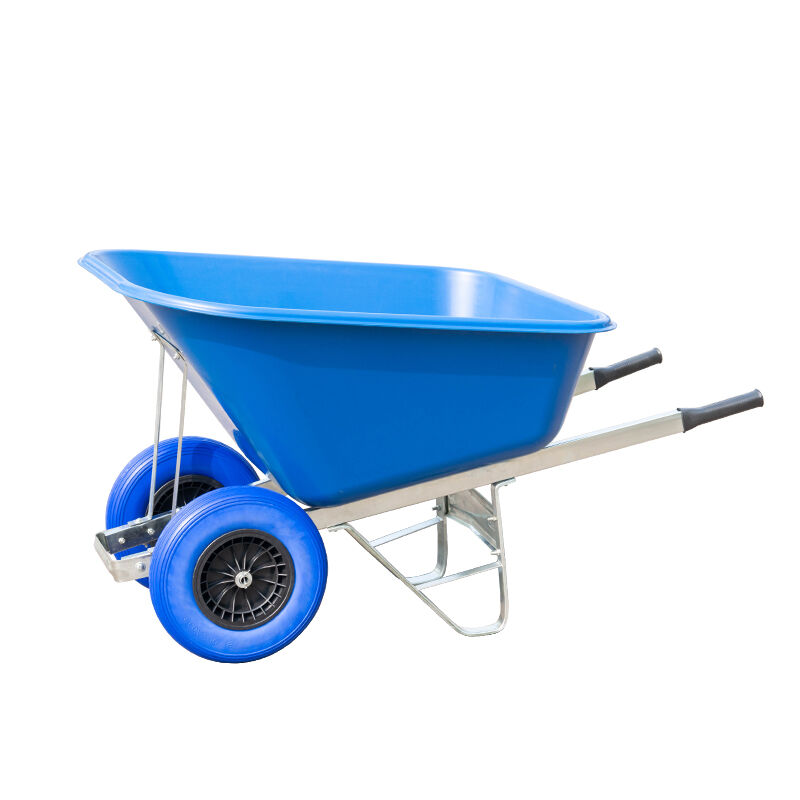
The reason this matters so much is simple: construction productivity depends less on isolated peak effort and more on uninterrupted cycles of transport, placement, and cleanup. A heavy-duty wheelbarrow supports those cycles in rough terrain, tight passages, and shifting site conditions where larger machinery cannot always operate. When site managers treat the wheelbarrow as core infrastructure rather than a basic accessory, they protect schedules, improve crew output, and reduce preventable incidents. That is why the heavy-duty wheelbarrow remains essential across foundation, masonry, landscaping, renovation, and civil works projects.
Direct impact on daily productivity
Continuous material flow between work zones
On active jobsites, bottlenecks usually appear between stockpile areas and installation points. A heavy-duty wheelbarrow closes that gap by allowing frequent, controlled trips without waiting for powered equipment. Each trip may seem minor, but the aggregate effect is major because a wheelbarrow keeps masons, concrete crews, and finish teams supplied at the pace they need. This consistency helps crews maintain task rhythm and reduces stop-and-start inefficiency.
A standard wheelbarrow used beyond its limits often leads to slower cycles, spillage, and rework, while a heavy-duty wheelbarrow keeps payloads stable and predictable. Better balance and stronger frames let workers carry heavier loads with fewer interruptions. Over a full shift, the wheelbarrow becomes a time-saving system, not just a container. Site supervisors notice this as smoother handoffs between stages of work.
Labor efficiency without overdependence on machinery
Not every transport task justifies machine deployment. Bringing in powered carriers for short hauls can create congestion, extra coordination, and downtime, especially in dense urban or partially enclosed projects. A heavy-duty wheelbarrow gives teams immediate mobility in corridors, ramps, and uneven surfaces where agility matters more than speed bursts. The wheelbarrow fills the operational space between manual carrying and machine transport.
This flexibility also improves labor allocation. Instead of assigning two or three workers to hand-carry materials, one worker with a wheelbarrow can handle equivalent movement with less fatigue. That allows other team members to remain on value-adding tasks like placement, alignment, or finishing. In budget terms, the wheelbarrow helps convert labor hours into measurable output rather than internal logistics overhead.
Safety and physical risk reduction on site
Lower strain and fewer manual handling injuries
Manual lifting is still one of the most common risk factors on construction projects. A heavy-duty wheelbarrow reduces repeated lifting, twisting, and awkward carrying by transferring load weight to the wheel and chassis. Workers still apply force, but in a more controlled posture with clearer movement paths. This is a direct reason the wheelbarrow is vital from a safety management standpoint.
When crews use an undersized or unstable wheelbarrow, compensation behaviors appear: over-gripping, shoulder loading, sudden jerks, and short uneven steps. A heavy-duty wheelbarrow with durable handles, solid wheel support, and balanced geometry reduces those behaviors. Over weeks and months, this lowers accumulated strain and helps supervisors maintain workforce reliability. Fewer fatigue-related errors also improve quality consistency in downstream tasks.
Better control in rough and changing terrain
Construction ground conditions change daily due to weather, excavation, waste accumulation, and temporary routing. A heavy-duty wheelbarrow provides traction and control where basic carts lose stability. Better load retention means less scattered debris and fewer slip hazards around active crews. The wheelbarrow therefore contributes to both transport safety and housekeeping standards.
Control also matters on slopes, transitions, and narrow passes. A stable wheelbarrow helps operators brake naturally through body positioning rather than abrupt force, reducing the chance of tipping. This supports safer movement near scaffolding, trenches, and partially completed structural elements. In many site audits, proper wheelbarrow selection and condition are tied directly to safer material handling performance.
Durability, lifecycle value, and cost control
Longer service life under heavy construction use
Construction environments expose equipment to abrasion, impact, moisture, and chemical residue. A heavy-duty wheelbarrow is built for this reality with stronger trays, reinforced frames, and components that tolerate repeated high-load cycles. The wheelbarrow may carry wet concrete one hour and sharp rubble the next, so structural resilience is not optional. This durability is exactly why the heavy-duty wheelbarrow is vital rather than interchangeable with light-duty alternatives.
Frequent failure of a low-grade wheelbarrow creates hidden downtime: repairs, substitutions, and interrupted task sequencing. In contrast, a reliable wheelbarrow stays in circulation longer and sustains predictable performance. That reliability is valuable during schedule-sensitive phases when transport interruptions can delay multiple trades. Lifecycle thinking makes the wheelbarrow a cost-control tool, not just a purchase line item.
Reduced replacement and maintenance disruption
Procurement cost alone can be misleading when evaluating site tools. A cheaper wheelbarrow that needs frequent replacement can exceed the total cost of a heavy-duty wheelbarrow over a single project cycle. Replacements also consume supervisor time, introduce equipment inconsistency, and force workers to adapt repeatedly. Stable tooling standards around the wheelbarrow improve operational continuity.
Maintenance burden matters too. When a wheelbarrow is designed for higher loads, wheel assemblies, joints, and tray edges generally resist wear better under routine abuse. That means fewer emergency fixes during peak activity windows. Many project managers treat the wheelbarrow category as essential support equipment because dependable transport protects both schedule confidence and cost predictability.
Operational fit across construction phases
From groundwork to finishing tasks
A heavy-duty wheelbarrow remains relevant through nearly every phase of a project. During groundwork, the wheelbarrow moves soil, aggregate, and drainage materials where machinery access is limited. In structural phases, the wheelbarrow supports concrete transfer, block staging, and cleanup logistics. During finishing, it carries tile mortar, plaster waste, packaging debris, and tools between floors or rooms.
This phase-to-phase utility is a core reason the wheelbarrow is vital. Teams do not need separate transport systems for every micro-task, because one durable wheelbarrow handles varied payloads effectively. That reduces equipment complexity and accelerates handoffs between trades. The wheelbarrow becomes a common platform that supports site-wide coordination.
Usefulness in constrained and mixed-access environments
Many projects include areas where forklifts, mini-loaders, or cranes cannot safely or economically operate. Tight interior routes, elevated decks, temporary pathways, and restoration zones often require low-impact manual transport. A heavy-duty wheelbarrow performs well in these conditions while preserving maneuverability. This operational reach makes the wheelbarrow indispensable even on highly mechanized jobsites.
Mixed-access environments also demand quick adaptation. Crews may move from open yard transport to narrow interior corridors within the same shift, and a reliable wheelbarrow handles both with minimal setup. Because the wheelbarrow is always available, decision latency drops and work resumes faster after route or task changes. That responsiveness strengthens schedule resilience when conditions shift unexpectedly.
FAQ
Why is a heavy-duty wheelbarrow better than a standard wheelbarrow for construction?
A heavy-duty wheelbarrow is designed for higher load cycles, rougher terrain, and harsher jobsite conditions. It typically provides stronger structural stability, better control, and lower failure risk under repetitive use. That translates into safer handling, fewer delays, and better long-term value. On construction sites, those factors make the heavy-duty wheelbarrow operationally critical.
How does a wheelbarrow influence project timelines?
A wheelbarrow influences timelines by sustaining fast, repeatable transport between material storage and active work points. When crews can move supplies without waiting for machine availability, task continuity improves. A dependable wheelbarrow reduces micro-delays that compound across the day. Over the project duration, this helps preserve milestones and reduces schedule drift.
Can one wheelbarrow type support multiple trades on the same site?
Yes, a heavy-duty wheelbarrow can support multiple trades because it handles mixed materials and varied routes. Masonry teams, concrete crews, landscaping teams, and finishing crews can all use the same wheelbarrow class for different payloads. This shared utility simplifies equipment planning and improves tool availability. It also reduces the need for multiple specialized transport units for short-distance hauling.
What should teams prioritize when selecting a construction wheelbarrow?
Teams should prioritize load stability, frame strength, wheel durability, and handling control in real site conditions. The right wheelbarrow must perform consistently on uneven ground and during continuous daily cycles. It should reduce operator strain while supporting predictable movement and cleanup routines. Choosing a heavy-duty wheelbarrow with these priorities in mind protects productivity, safety, and cost control together.

