 EN
EN

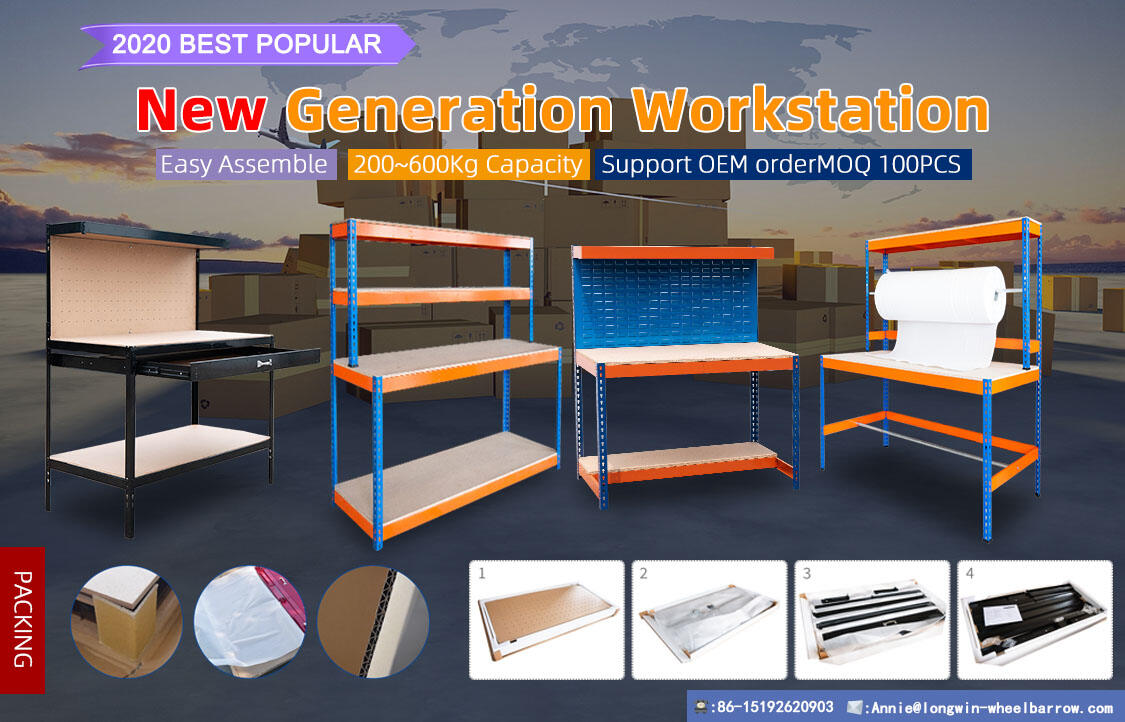
Medium-duty warehouse operations face a unique challenge: storing goods that are too heavy for light shelving but don't require the extreme load capacity of pallet racking. This middle ground demands a storage solution that balances structural strength with accessibility, cost efficiency with flexibility, and durability with space optimization. In this context, the long span racking system has emerged as the preferred choice for countless warehouse managers seeking to maximize storage efficiency while maintaining practical access to inventory. Understanding why this particular storage configuration dominates the medium-duty segment requires examining the specific operational requirements, economic considerations, and structural advantages that make it uniquely suited to this application.
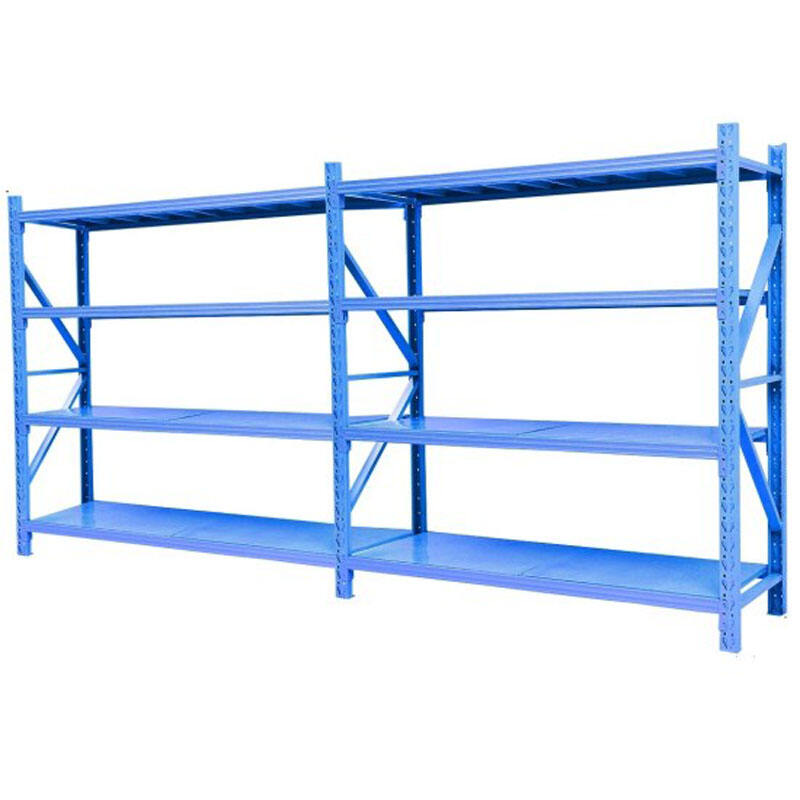
The selection of storage systems in warehousing is never arbitrary but driven by careful analysis of load characteristics, handling methods, space constraints, and operational workflows. Medium-duty storage typically involves items weighing between 200 and 800 kilograms per shelf level, positioned between the light-duty retail shelving and heavy-duty industrial pallet systems. This weight range encompasses a vast array of products including automotive parts, electronics, small machinery components, boxed goods, archive materials, and manufacturing supplies. The long span racking system addresses this specific weight category with engineered precision, offering structural integrity without the excessive cost and space consumption of heavier alternatives.
The Structural Engineering Advantage for Medium-Duty Applications
Load Distribution Optimized for Intermediate Weight Requirements
The fundamental reason warehouses choose a long span racking system for medium-duty storage lies in its engineered load distribution characteristics. Unlike lighter wire shelving that flexes under moderate weight or pallet racking designed for concentrated forklift loads, the long span racking system distributes weight across wider beam spans typically ranging from 1.5 to 3 meters. This span length perfectly matches the dimensional requirements of medium-duty goods stored in boxes, bins, or on trays. The system employs heavy-gauge steel beams with reinforced profiles that prevent sagging under sustained loads while maintaining accessibility from multiple angles. This structural design eliminates the need for center supports that would obstruct access, providing clear span storage that facilitates both manual picking and mechanical handling.
The beam construction in a long span racking system utilizes rolled steel sections with strategically positioned reinforcement ribs that enhance vertical load resistance without adding unnecessary material weight. This efficient use of steel reduces both initial investment and ongoing structural load on warehouse floors compared to overbuilt alternatives. The upright frames connect these beams with bolted or clipped connections that allow field adjustment without welding or specialized tools. This modularity means warehouse managers can reconfigure storage layouts as inventory profiles evolve, protecting their capital investment against obsolescence. The load capacity per shelf level typically ranges from 300 to 600 kilograms, which precisely matches the weight profile of most medium-duty warehouse inventory.
Vertical Space Utilization Without Compromising Accessibility
Medium-duty warehouses frequently operate with ceiling heights between 4 and 8 meters, creating an imperative to utilize vertical space efficiently. The long span racking system addresses this requirement through multi-tier configurations that maintain safe working access throughout the vertical profile. Unlike high-bay pallet racking that requires forklift operation for all levels, long span systems integrate with mezzanine platforms, rolling ladders, and pick modules to enable manual access to elevated storage. The beam spacing can be adjusted in increments as small as 50 millimeters, allowing precise customization to product dimensions and minimizing wasted vertical space between shelf levels.
This vertical flexibility becomes particularly valuable when storing products with varied heights within the same storage aisle. A long span racking system permits dense packing of shorter items on closely spaced shelves in one bay while accommodating taller products on wider-spaced beams in adjacent bays, all within the same structural framework. This adaptability eliminates the compromise between standardized shelf spacing and space efficiency that plagues fixed-configuration systems. Warehouse operators report space utilization improvements of 30 to 50 percent compared to floor stacking or fixed industrial shelving when implementing properly configured long span systems for medium-duty applications.
Economic Drivers Behind System Selection
Capital Investment Efficiency for Medium-Capacity Requirements
The financial justification for selecting a long span racking system centers on achieving optimal cost per storage position for the medium-duty weight category. Pallet racking systems, while robust, include structural elements engineered for loads exceeding 1000 kilograms per beam level, representing overinvestment when maximum loads remain below 600 kilograms. Conversely, light-duty shelving lacks the load capacity and durability required for sustained warehouse operation with medium-weight goods. The long span racking system occupies the economic sweet spot, providing adequate structural capacity without excess material cost. Comparative analysis reveals that per-position installation costs for long span systems typically fall 25 to 40 percent below equivalent-capacity pallet racking while maintaining 70 to 80 percent of the load handling capability.
This cost advantage extends beyond initial purchase to include installation labor, as long span racking systems generally require less specialized assembly expertise than heavier alternatives. The modular bolt-together construction permits warehouse staff or general contractors to complete installation without certified welders or specialized lifting equipment. Additionally, the lighter component weight reduces shipping costs per storage position, particularly relevant for multi-site operations standardizing storage systems across facilities. The total cost of ownership calculation must also consider maintenance requirements, where the long span racking system demonstrates advantages through simplified inspection procedures and readily available replacement components that don't require custom fabrication.
Operational Cost Reduction Through Handling Efficiency
Beyond capital considerations, warehouses select long span racking systems for medium-duty storage based on operational cost implications related to handling efficiency. The open-front design typical of these systems enables rapid visual inventory identification and direct manual access without navigating around structural obstructions. This accessibility reduces pick times per unit compared to deeper storage systems requiring reaching or moving other items to access target products. Labor productivity studies in distribution environments show pick rate improvements of 15 to 25 percent when transitioning from floor stacking or bin systems to properly organized long span racking configurations.
The long span racking system also reduces handling equipment costs by accommodating mixed manual and mechanical handling within the same storage structure. Ground-level shelves support direct hand picking, while elevated levels can be serviced by order picker lifts, rolling ladders, or mezzanine access platforms depending on operation scale and throughput requirements. This flexibility eliminates the need to maintain separate storage zones with dedicated equipment for different access methods, reducing both equipment capital investment and operator training complexity. Furthermore, the system's compatibility with standard warehouse material handling equipment means operations avoid locked-in relationships with specialized equipment vendors, maintaining competitive procurement leverage over the facility lifecycle.
Operational Flexibility Advantages
Adaptation to Evolving Inventory Profiles
Warehouse operations rarely maintain static inventory profiles over multi-year planning horizons. Product dimensions change, SKU proliferation occurs, and seasonal demand patterns shift storage requirements. The long span racking system provides adjustment flexibility that protects warehouse investment against these inevitable changes. The beam levels can be repositioned vertically without structural modifications, allowing rapid reconfiguration to accommodate new product lines or revised storage strategies. This adjustability proves particularly valuable in third-party logistics operations serving multiple clients with diverse storage requirements, where a single long span infrastructure can be partitioned and customized to meet varied client specifications.
The modular nature of long span racking systems extends to horizontal expansion and reconfiguration. Additional bays integrate seamlessly with existing installations, sharing upright frames to minimize material requirements for capacity expansion. Warehouse managers can incrementally increase storage density as throughput grows rather than committing to oversized initial installations that tie up capital in underutilized capacity. This scalability reduces financial risk in growth scenarios while maintaining operational continuity during expansion phases. The standardized components across long span racking system product lines mean that expansions completed years after initial installation can utilize compatible components without requiring complete system replacement.
Integration With Warehouse Management Systems
Modern warehouse operations increasingly depend on digital inventory management systems that track location, quantity, and movement of stored goods. The long span racking system facilitates this integration through clearly defined storage locations with consistent dimensional characteristics. Each shelf position provides a discrete storage location that can be uniquely identified in warehouse management software, enabling location-directed picking and precise inventory tracking. The open accessibility of the system supports barcode scanning and RFID reading without the interference issues common in enclosed or deep storage configurations.
The consistent shelf spacing and load capacity throughout a long span racking installation simplifies the location assignment algorithms used in warehouse management systems. Unlike mixed storage environments where system logic must account for varied capacity and accessibility characteristics across different storage types, the uniformity of long span systems enables straightforward slotting optimization based primarily on product velocity and dimensional fit. This consistency reduces implementation complexity for warehouse management technology and improves ongoing system performance by eliminating special-case handling rules for different storage zone types.
Safety and Compliance Considerations
Structural Stability Under Dynamic Loading Conditions
Warehouse safety regulations mandate that storage systems maintain structural integrity under both static loads and dynamic conditions including seismic activity, impact forces, and uneven loading. The long span racking system addresses these requirements through engineered frame designs that incorporate diagonal bracing, base plate anchoring, and beam-to-upright connections rated for specified load capacities. The wider beam spans distribute loads across multiple upright frames, creating inherent redundancy that prevents catastrophic failure if individual components are damaged. This structural approach meets or exceeds regulatory requirements in most jurisdictions while maintaining the accessibility characteristics essential for medium-duty warehouse operations.
The safety advantages of long span racking systems include reduced tip-over risk compared to narrower, taller alternatives due to the wider base-to-height ratio typical of these installations. The lower center of gravity resulting from medium-duty loads rather than concentrated heavy loads further enhances stability. Additionally, the open configuration facilitates safety inspections, as structural components remain visible rather than hidden behind cladding or within enclosed storage modules. Warehouse safety personnel can quickly identify damaged uprights, bent beams, or loose connections during routine inspections, enabling proactive maintenance that prevents accidents before they occur.
Ergonomic Benefits for Warehouse Personnel
Beyond structural safety, the long span racking system selection for medium-duty applications reflects consideration of worker ergonomics and injury prevention. The shelf height positioning flexibility allows warehouses to concentrate frequently accessed items within the optimal ergonomic reach zone between knee and shoulder height, reducing repetitive bending and overhead reaching that contribute to musculoskeletal injuries. The open front access eliminates the forward reaching required with deeper shelving systems, maintaining neutral spine position during picking operations. These ergonomic advantages translate directly to reduced workplace injury rates and associated workers' compensation costs.
The load capacity characteristics of long span racking systems also support ergonomic handling by accommodating loads small enough for team lifting or mechanical assist devices rather than requiring forklift operation for every transaction. This handling flexibility enables warehouses to match material handling methods to actual product weight and dimensions rather than forcing all inventory through a single handling mode determined by storage system constraints. The resulting reduction in unnecessary forklift traffic within picking aisles decreases pedestrian-vehicle interaction risks, addressing one of the leading causes of serious warehouse accidents.
Industry-Specific Application Drivers
Manufacturing Support and Component Storage
Manufacturing facilities represent a primary application domain where long span racking systems dominate medium-duty storage requirements. Component parts, work-in-process inventory, and finished goods awaiting shipment typically fall within the 200 to 600 kilogram per shelf weight range that defines medium-duty storage. The long span racking system supports lean manufacturing initiatives by providing organized, accessible storage adjacent to production lines, reducing travel time and enabling just-in-time component delivery to work cells. The visual accessibility inherent in these systems supports visual management practices central to lean operations, where inventory levels and material flow status must be immediately apparent to production personnel.
The configurability of long span racking systems accommodates the diverse dimensional characteristics of manufacturing components, from small fastener bins to large assembly subcomponents, within a unified storage infrastructure. This standardization simplifies material handling equipment selection and operator training while supporting systematic inventory organization according to product flow logic rather than storage system constraints. Manufacturing operations report inventory accuracy improvements and reduced component search time when transitioning from floor stacking or improvised storage to organized long span racking configurations, directly impacting production efficiency and reducing costly line stoppages caused by missing components.
Distribution Centers and Order Fulfillment Operations
E-commerce growth and retail supply chain evolution have expanded distribution center operations handling medium-sized products that don't fit traditional pallet handling models. The long span racking system serves these operations by providing high-density storage for case-level inventory that requires individual unit access rather than full-pallet movement. The system's compatibility with manual picking, pick-to-light technology, and goods-to-person automation makes it adaptable to varied fulfillment operation scales from regional distribution centers to last-mile urban fulfillment nodes. The shelf-level picking eliminates the height limitations of pallet flow racks while maintaining higher density than individual bin systems.
Distribution operations particularly value the long span racking system's ability to support forward picking locations with high-density reserve storage in the same structural framework. Fast-moving SKUs occupy accessible lower shelf positions with smaller pick faces, while slower-moving inventory stores in bulk quantities on higher shelves, all within integrated aisles that minimize replenishment travel distance. This vertical slotting optimization, unique to adjustable shelf systems, enables distribution centers to maximize picks per travel unit while maintaining inventory depth to support fulfillment commitments without frequent replenishment cycles that disrupt picking productivity.
FAQ
What weight capacity range qualifies as medium-duty for warehouse storage applications?
Medium-duty warehouse storage typically accommodates loads between 200 and 800 kilograms per shelf level, positioned between light-duty retail shelving and heavy-duty pallet racking. This capacity range suits boxed goods, component parts, small equipment, and archived materials common in manufacturing, distribution, and service operations. The long span racking system is specifically engineered for this weight category, providing structural capacity that matches these requirements without the excess cost of heavier systems designed for concentrated forklift loads.
How does a long span racking system differ from standard pallet racking for warehouse applications?
The primary distinction lies in load distribution and accessibility characteristics. Pallet racking concentrates loads on discrete beam positions designed for forklift pallet placement, typically supporting 1000 to 3000 kilograms per beam pair. Long span racking systems distribute loads across continuous shelf surfaces spanning 1.5 to 3 meters, supporting 300 to 600 kilograms per level with direct manual access rather than requiring mechanical handling. The structural components are lighter gauge, reducing system cost while maintaining adequate capacity for medium-duty applications, and the open shelf design facilitates individual item picking rather than full-pallet movement.
Can long span racking systems be reconfigured after initial installation to accommodate changing storage needs?
Yes, reconfiguration flexibility represents a key advantage of long span racking systems for medium-duty storage. The beam levels attach to upright frames through bolted or clipped connections that allow vertical repositioning in small increments, typically 50 to 75 millimeters, without welding or permanent modifications. Additional bays can be added horizontally by sharing existing upright frames, and entire sections can be relocated within facilities as operational layouts evolve. This adaptability protects capital investment against obsolescence caused by changing inventory profiles, making the system particularly suitable for dynamic warehouse environments and third-party logistics operations serving multiple clients with varied requirements.
What safety standards apply to long span racking system installations in warehouse environments?
Long span racking system installations must comply with local building codes and occupational safety regulations, which typically reference standards such as RMI MH16.1 in North America or EN 15512 in Europe. These standards specify structural design requirements including load capacity calculations, seismic resistance, impact protection, and connection strength. Installations require proper floor anchoring, adequate aisle widths for material handling equipment, load capacity signage at each bay, and regular inspection protocols to identify damage or overloading. Compliance ensures structural stability under normal operating conditions and during exceptional events such as earthquakes or accidental impacts, protecting both personnel safety and inventory security throughout the system's operational life.
Table of Contents
- The Structural Engineering Advantage for Medium-Duty Applications
- Economic Drivers Behind System Selection
- Operational Flexibility Advantages
- Safety and Compliance Considerations
- Industry-Specific Application Drivers
-
FAQ
- What weight capacity range qualifies as medium-duty for warehouse storage applications?
- How does a long span racking system differ from standard pallet racking for warehouse applications?
- Can long span racking systems be reconfigured after initial installation to accommodate changing storage needs?
- What safety standards apply to long span racking system installations in warehouse environments?

