 EN
EN

Modern warehouses face an ongoing challenge: moving heavy loads efficiently while minimizing labor strain and operational costs. In fast-paced distribution centers and storage facilities, the ability to transport bulky items quickly and safely directly impacts productivity, worker safety, and overall profitability. Among the many material handling tools available, the platform hand truck has emerged as an indispensable solution for heavy moves. This versatile equipment combines simplicity with robust load capacity, enabling warehouse teams to handle everything from stacked boxes to oversized machinery components without requiring powered equipment or complex training. Understanding why warehouses consistently choose the platform hand truck over alternatives reveals critical insights into practical logistics management and operational efficiency.
The reliance on platform hand trucks stems from a convergence of economic, safety, and operational factors that align perfectly with warehouse requirements. Unlike forklifts that demand certification, maintenance schedules, and dedicated charging infrastructure, or pallet jacks that work only with palletized loads, the platform hand truck offers immediate usability across diverse material types and floor conditions. Its flat loading surface accommodates irregular shapes, bundled materials, and items that cannot be safely stacked on pallets. This adaptability makes it essential in environments where load characteristics vary throughout the day. Additionally, the compact footprint allows navigation through narrow aisles and congested staging areas where larger equipment cannot operate effectively. As warehouses increasingly prioritize lean operations and flexible workflows, the platform hand truck delivers reliable performance without the overhead costs associated with powered alternatives.
Core Operational Advantages That Drive Warehouse Adoption
Load Capacity Meets Diverse Material Handling Needs
Warehouses handle an extraordinary range of materials daily, from lightweight consumer goods to industrial components weighing hundreds of kilograms. The platform hand truck excels in this environment because of its substantial weight capacity, typically ranging from 300 to 600 kilograms depending on construction quality. This capacity range covers the majority of non-palletized loads encountered in typical warehouse operations. When receiving shipments of boxed inventory, staff can stack multiple cartons on the platform hand truck and transport them to designated storage locations in a single trip, reducing the number of journeys required and accelerating throughput. The flat platform design prevents load shifting during transport, which is particularly important when moving stacked boxes that might otherwise topple on wheeled carts with raised edges.
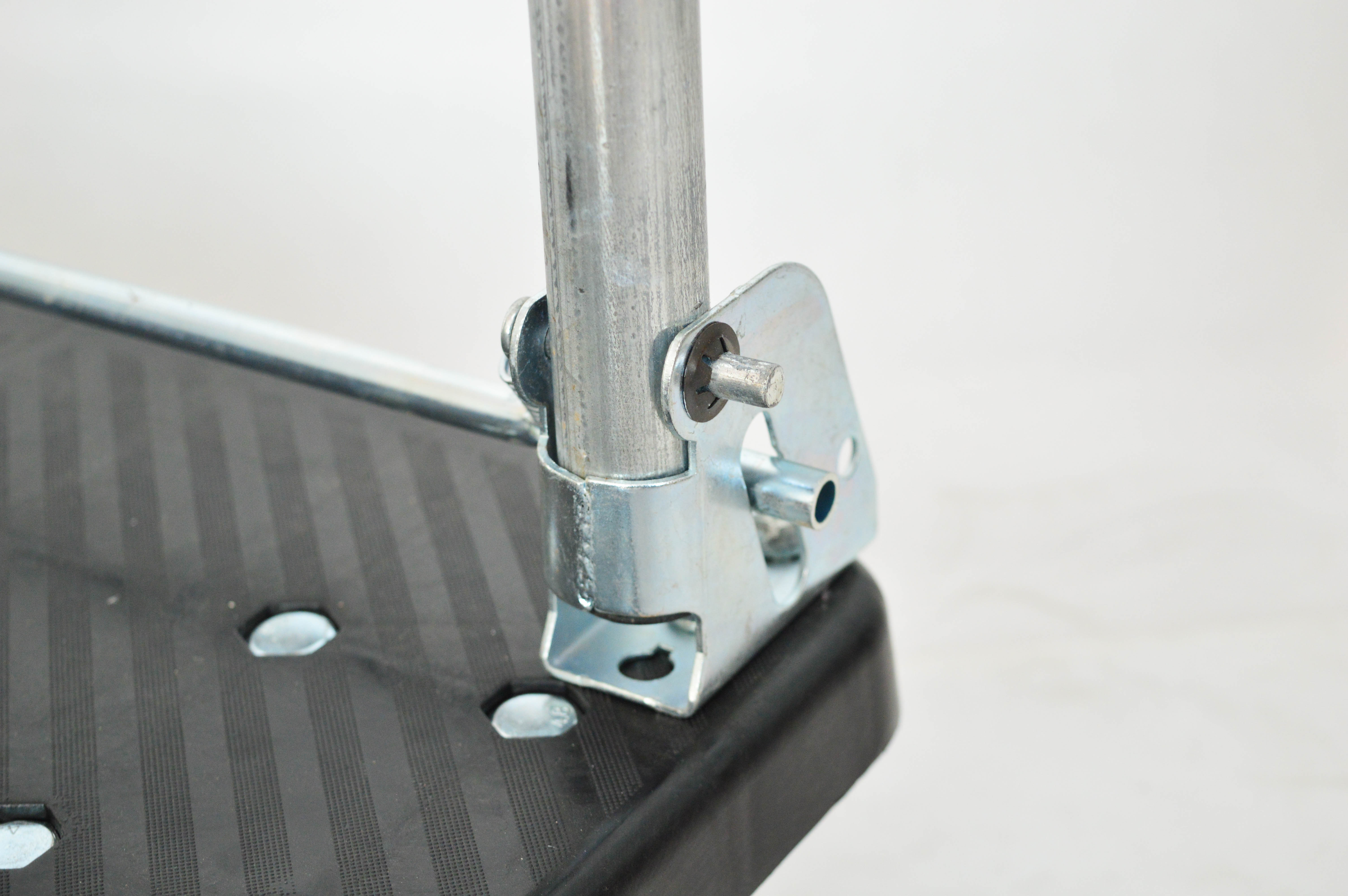
The structural design of a quality platform hand truck distributes weight evenly across its frame, preventing stress concentration that could lead to equipment failure during heavy moves. Industrial-grade models feature reinforced steel construction with welded joints rather than bolted connections, ensuring durability under repeated heavy loading. This robust construction translates directly to operational reliability, as equipment breakdowns during critical shipping windows can cascade into costly delays. Warehouse managers recognize that investing in durable material handling tools like the platform hand truck reduces replacement frequency and maintenance interventions, ultimately lowering total cost of ownership compared to cheaper alternatives that require frequent replacement.
Maneuverability in Confined Warehouse Spaces
Space optimization remains a constant priority in warehouse design, with operators striving to maximize storage density while maintaining efficient access pathways. This focus on spatial efficiency often results in narrow aisles and compact staging areas where large material handling equipment cannot operate effectively. The platform hand truck addresses this constraint through its compact dimensions and superior maneuverability. With typical widths ranging from 45 to 60 centimeters, these trucks navigate standard warehouse aisles comfortably while still providing adequate platform surface for substantial loads. The four-wheel configuration, usually featuring swiveling front casters, enables tight turning radiuses that allow operators to change direction in confined spaces without requiring extensive maneuvering room.
This maneuverability advantage becomes particularly evident during high-volume operations when multiple workers simultaneously move materials through the same facility. Unlike pallet jacks that require straight-line approaches and considerable turning space, workers using a platform hand truck can weave through active work zones, navigate around temporary obstacles, and access storage locations from multiple angles. This flexibility reduces congestion in busy warehouse areas and minimizes the coordination required between team members working in proximity. Warehouse supervisors frequently cite improved traffic flow as a direct benefit of platform hand truck deployment, noting that workers experience fewer delays waiting for pathways to clear compared to operations relying primarily on larger equipment.
Immediate Deployment Without Special Training Requirements
Regulatory requirements surrounding powered industrial vehicles create significant administrative and training burdens for warehouse operators. Forklift certification programs, safety assessments, and ongoing operator evaluations consume both time and financial resources while limiting which team members can legally operate specific equipment. The platform hand truck eliminates these barriers entirely, requiring no special certifications or formal training programs for basic operation. New warehouse employees can safely and effectively use a platform hand truck within minutes of their first shift, dramatically reducing onboarding time and allowing immediate contribution to operational tasks. This accessibility proves especially valuable in warehouses experiencing seasonal volume fluctuations that require rapid workforce scaling.
The intuitive operation of a platform hand truck stems from its simple mechanical design, which relies on basic pushing and pulling motions familiar to anyone who has moved wheeled objects. Workers instinctively understand how to load materials onto the platform, position themselves for optimal pushing leverage, and control speed through applied force. This natural learning curve contrasts sharply with powered equipment that requires understanding of control systems, safety protocols, and operational limitations. Warehouse managers appreciate that this simplicity translates to fewer operator errors, reduced accident risk, and minimal supervision requirements once basic safety guidelines are communicated. The result is a more agile workforce capable of flexibly responding to changing material handling demands throughout their shifts.
Economic Factors Driving Platform Hand Truck Preference
Capital Cost Comparison Against Powered Alternatives
Budget constraints influence every warehouse equipment decision, particularly for operations managing tight profit margins or expanding facilities. The platform hand truck delivers exceptional value through its remarkably low acquisition cost relative to performance capability. While industrial forklifts can cost tens of thousands of dollars and even basic pallet jacks with powered lift mechanisms command premium prices, quality platform hand trucks are available at a fraction of these costs. This affordability enables warehouses to deploy multiple units strategically throughout their facilities, ensuring that material handling capacity exists wherever loads need moving rather than creating bottlenecks around limited high-cost equipment. Distribution centers commonly maintain platform hand truck inventories equivalent to one unit per two or three workers, ensuring tools remain available even during peak operational periods.
The low capital requirement also facilitates rapid operational adjustments as business needs evolve. When warehouses expand into additional space or reorganize layouts to accommodate new product lines, purchasing additional platform hand trucks represents a minimal financial commitment that can be executed without lengthy budget approval processes. This flexibility allows warehouse managers to respond quickly to operational inefficiencies, deploying new equipment where analysis reveals material handling constraints. Furthermore, the modest per-unit cost reduces financial risk associated with equipment damage or theft, as replacing a platform hand truck does not create the budget disruption that losing or damaging powered equipment would generate. This risk profile makes warehouses more willing to position platform hand trucks in vulnerable locations or less secure areas where expensive equipment would require additional protective measures.
Operational Cost Advantages Over Time
Total cost of ownership extends far beyond initial purchase price, encompassing maintenance expenses, energy consumption, and operational downtime throughout equipment lifespan. The platform hand truck demonstrates remarkable cost efficiency across all these dimensions, contributing to its widespread warehouse adoption. Unlike powered equipment requiring regular battery charging, electrical infrastructure, and energy consumption tracking, the platform hand truck operates entirely on human power with zero energy costs. This elimination of power requirements removes an entire category of operational expense while also enhancing operational flexibility, as workers can use platform hand trucks anywhere in a facility without considering battery life or proximity to charging stations.
Maintenance requirements for platform hand trucks remain minimal compared to mechanical or powered alternatives. Quality units require only periodic wheel bearing lubrication and occasional tire replacement depending on floor conditions and usage intensity. These straightforward maintenance tasks can be performed by warehouse staff using basic tools rather than requiring specialized technicians or service contracts. The absence of hydraulic systems, electrical components, or complex mechanical linkages eliminates common failure points that plague more sophisticated equipment. Warehouse maintenance supervisors appreciate that platform hand trucks rarely appear on repair schedules, allowing limited maintenance resources to focus on more complex systems. This reliability translates directly to operational continuity, as material handling capacity remains consistent without unpredictable equipment failures disrupting workflows during critical periods.
Labor Efficiency Without Productivity Compromise
Warehouse operations constantly balance labor costs against productivity targets, seeking equipment solutions that maximize output per worker hour. The platform hand truck contributes meaningfully to this equation by enabling individual workers to transport significantly more material per trip than manual carrying would allow. A single worker using a platform hand truck can move loads equivalent to what might otherwise require multiple trips or multiple workers, directly improving labor productivity metrics. This efficiency gain compounds across shifts and workers, generating substantial cumulative time savings that allow warehouses to process higher volumes without proportional increases in staffing levels.
The physical effort required to move a loaded platform hand truck remains manageable for workers across diverse physical capabilities when proper technique is employed. The wheeled design eliminates the sustained lifting strain associated with carrying heavy items, instead requiring primarily pushing force that engages larger muscle groups more sustainably throughout extended shifts. This ergonomic advantage reduces worker fatigue compared to manual carrying methods, enabling sustained productivity levels throughout full work periods rather than experiencing declining performance as shifts progress. Warehouse operators recognize that equipment supporting worker endurance indirectly protects productivity by maintaining consistent performance levels and reducing the physiological stress that contributes to errors and accidents during later shift hours.
Safety Benefits That Justify Platform Hand Truck Implementation
Injury Risk Reduction Through Proper Load Handling
Workplace safety represents both a moral obligation and an economic imperative for warehouse operations, as injuries generate direct costs through workers compensation claims while also creating indirect expenses through productivity disruption and potential regulatory penalties. Manual material handling activities consistently rank among the highest injury risk factors in warehouse environments, with lifting, carrying, and awkward postures contributing to musculoskeletal disorders that account for substantial lost work time. The platform hand truck provides a practical intervention that significantly reduces these injury risks by eliminating the need to manually lift and carry heavy loads across warehouse distances. Workers load items onto the platform at convenient heights, then transport materials while maintaining upright postures that minimize spinal stress and reduce injury probability.
The stable platform surface of a quality platform hand truck prevents load shifting during transport, which eliminates a common injury scenario where workers attempt to compensate for unstable loads through reactive movements that strain muscles and joints. When materials remain securely positioned on the platform, workers can focus on navigation and speed control rather than constantly adjusting their grip or body position to maintain load stability. This predictability creates safer operating conditions, particularly when traversing uneven floor transitions or navigating around obstacles. Safety managers frequently cite reduced injury rates following increased platform hand truck deployment, noting particularly significant decreases in back strain incidents and repetitive motion injuries associated with repeated lifting cycles.
Operational Safety in Multi-Worker Environments
Warehouse facilities typically host multiple workers performing concurrent tasks in shared spaces, creating complex environments where equipment operation must consider collision risks and visibility constraints. Powered material handling equipment introduces significant safety concerns in these settings, as forklifts and powered pallet jacks operate at speeds that can cause serious injuries during collisions with pedestrians or other equipment. The platform hand truck operates at walking pace under direct human control, eliminating the momentum and speed factors that make powered equipment particularly dangerous in congested areas. This inherently safer operating speed allows workers to stop or change direction instantly in response to unexpected obstacles or other personnel movements, preventing accidents before they occur.
The compact profile and excellent visibility characteristics of a platform hand truck further enhance safety in busy warehouse environments. Unlike forklifts where operators sit behind substantial equipment frames that create blind spots, workers using a platform hand truck maintain unobstructed views in all directions, allowing them to constantly monitor their surroundings and respond to developing hazards. Other warehouse personnel can also easily see approaching platform hand trucks and anticipate their movement paths, facilitating natural coordination that prevents collisions without requiring formal traffic control measures. This mutual visibility reduces the cognitive load on all workers, allowing them to focus on their primary tasks rather than constantly scanning for hidden equipment approaching from blind angles.
Floor Safety and Facility Protection
Warehouse floor surfaces represent significant capital investments that require protection from damage caused by material handling equipment. Heavy forklifts and aggressive tire compounds can gradually degrade floor surfaces, creating cracks, gouges, and surface irregularities that eventually require costly repairs or resurfacing. The platform hand truck exerts substantially lower ground pressure due to its distributed weight across four wheels and relatively modest total weight even when fully loaded. This gentle floor interaction preserves surface integrity over time, extending the interval between major floor maintenance projects and avoiding the operational disruptions associated with sectional floor repairs. Facility managers particularly appreciate this benefit in areas with specialized flooring such as epoxy coatings or polished concrete that are vulnerable to damage from heavy equipment traffic.
The rubber or polyurethane wheels commonly fitted to platform hand trucks also protect facility infrastructure beyond floor surfaces. Unlike steel wheels that can damage door frames, wall corners, and racking systems during accidental contact, the softer wheel materials absorb impacts and minimize structural damage when workers misjudge clearances or experience momentary control lapses. This forgiving characteristic reduces maintenance requirements throughout warehouses while also protecting inventory from damage that might occur if equipment collisions dislodge stored materials. The cumulative protective effect of platform hand truck deployment manifests in lower facility maintenance costs and extended infrastructure lifespans compared to operations relying primarily on harder equipment that gradually degrades built environment elements through repeated minor impacts.
Practical Application Scenarios in Warehouse Operations
Receiving and Unloading Operations
The receiving dock represents a critical bottleneck in warehouse operations where incoming shipments must be efficiently processed to maintain throughput and prevent trailer detention charges. Platform hand trucks prove essential during unloading operations, particularly when receiving mixed shipments containing items of varying sizes and packaging configurations. Dock workers use platform hand trucks to quickly transport materials from trailer interiors to designated staging areas, accommodating everything from uniform cartons to irregularly shaped items that resist neat palletization. The ability to immediately move materials away from the unloading zone prevents congestion that would otherwise slow the unloading process and delay trailer release.
Many shipments arrive containing materials that are not pre-palletized or that have been loaded in configurations optimizing trailer cube utilization rather than downstream handling efficiency. In these scenarios, the platform hand truck becomes the primary tool enabling workers to handle materials as they are presented without requiring repackaging or reconfiguration before initial movement. This flexibility accelerates receiving processes by eliminating unnecessary material handling steps, allowing warehouses to quickly process diverse shipment types without maintaining extensive inventories of specialized handling equipment for each potential load configuration. Receiving supervisors consistently identify platform hand trucks as among their most frequently utilized tools, often positioning multiple units at each active dock door to ensure handling capacity matches incoming volume during peak receiving periods.
Order Picking and Fulfillment Support
Order fulfillment operations require workers to efficiently gather items from storage locations and transport them to packing stations where shipments are prepared. The platform hand truck serves as a mobile collection point during picking activities, allowing workers to accumulate multiple order items on a single platform as they progress through picking routes. This batching capability reduces the number of trips between storage areas and packing stations, directly improving picker productivity by minimizing non-value-added travel time. Workers can strategically plan picking sequences that fill the platform hand truck capacity, optimizing each transport cycle and reducing overall order fulfillment time.
The versatility of a platform hand truck becomes particularly valuable when fulfilling orders containing items of substantially different sizes or weights. Unlike picking carts with compartments or totes that constrain item dimensions, the open platform surface accommodates everything from small component boxes to large appliances or furniture items within the same transport load. This adaptability eliminates the need for pickers to switch between different equipment types based on order characteristics, simplifying workflows and reducing the equipment variety that warehouses must maintain. Fulfillment managers note that platform hand trucks enable consistent picking processes across diverse product catalogs, allowing workers to develop reliable routines rather than constantly adjusting methods based on order-specific requirements that vary unpredictably throughout their shifts.
Internal Redistribution and Replenishment Tasks
Warehouse operations involve constant internal material movement beyond just receiving and shipping activities. Inventory must be redistributed to optimize storage density as space becomes available, picking locations require replenishment from bulk storage as forward stock depletes, and returned materials need routing to designated processing areas. The platform hand truck handles these varied internal transport tasks efficiently, providing the flexibility to move materials between any locations within the facility without requiring specific infrastructure or load preparation. Workers performing replenishment activities use platform hand trucks to transport cases from reserve storage to forward picking locations, often making multiple stops along a route to service several picking positions during a single transport cycle.
Seasonal inventory fluctuations and promotional activities frequently require substantial internal reorganization as product mix and velocity patterns shift throughout the year. During these transition periods, warehouses must move significant inventory quantities to reoptimize storage allocations and adjust picking location assignments. The platform hand truck fleet provides the material handling capacity needed to execute these reorganizations efficiently without requiring rental equipment or disrupting normal operations. Teams can deploy multiple workers with platform hand trucks to systematically relocate inventory sections, completing reorganization projects during shift gaps or slower operational periods. This capability to internally reconfigure inventory positioning enhances overall warehouse adaptability, allowing operations to continuously optimize layouts rather than accepting suboptimal configurations due to the complexity or cost of making adjustments.
FAQ
What weight capacity should warehouses look for in a platform hand truck?
Warehouses should select platform hand trucks with capacity ratings that exceed their typical heavy load requirements by a comfortable margin. Most industrial operations find that units rated between 400 and 600 kilograms provide adequate capacity for the majority of non-palletized materials encountered in daily operations. Heavier capacity models up to 800 kilograms are available for specialized applications involving particularly dense materials or consolidated loads. It is important to consider not just the maximum weight but also how loads will be distributed on the platform, as uneven weight distribution can affect stability and handling characteristics. Warehouse managers should assess their heaviest common loads and select capacity ratings that allow workers to transport these materials comfortably within equipment specifications rather than operating at maximum capacity limits where control and safety margins become constrained.
How does platform size affect warehouse utility?
Platform dimensions represent a critical specification that directly impacts both load capacity and maneuverability in warehouse environments. Larger platforms measuring approximately 90 by 60 centimeters can accommodate bigger items and allow more efficient stacking of multiple boxes, maximizing the amount of material transported per trip. However, these larger platforms create wider turning radiuses and may struggle to navigate particularly narrow aisles or congested areas. Smaller platforms around 70 by 45 centimeters offer superior maneuverability in tight spaces but limit the size and quantity of items that can be transported simultaneously. Most warehouses benefit from maintaining a mixed fleet that includes both sizes, deploying larger platforms for open areas and receiving operations while positioning compact models in dense storage zones with restricted aisle widths. This strategic sizing approach optimizes overall material handling efficiency across diverse facility areas with varying spatial constraints.
What maintenance extends platform hand truck service life?
Proper maintenance significantly extends platform hand truck operational lifespan while maintaining performance characteristics throughout years of heavy use. The primary maintenance requirement involves regular wheel bearing inspection and lubrication, typically performed quarterly or more frequently in high-use environments. Workers should check that wheels spin freely without resistance or wobbling, addressing any issues immediately to prevent accelerated wear. Tire condition requires periodic assessment, with worn or damaged tires replaced promptly to maintain smooth rolling characteristics and protect floor surfaces. The platform surface and frame should be kept clean and free from debris accumulation that might interfere with load stability or create corrosion points. Structural inspections should identify any cracks, bent components, or loose fasteners that could compromise load capacity or safety, with damaged units removed from service until properly repaired. Implementing a simple preventive maintenance schedule dramatically reduces unexpected equipment failures and ensures that platform hand trucks remain reliably available when warehouse operations demand their use.
Can platform hand trucks effectively replace powered equipment in warehouses?
Platform hand trucks serve as highly effective complements to powered equipment rather than complete replacements in most warehouse operations. They excel in applications involving moderate distances, manageable loads within their capacity range, and situations requiring frequent stops or navigation through congested areas where powered equipment would be inefficient or unsafe. For very heavy palletized loads exceeding 600 kilograms, long transport distances across expansive facilities, or operations requiring frequent lifting to elevated storage positions, forklifts and powered pallet jacks remain necessary. The optimal approach involves strategic equipment deployment that assigns each tool to applications matching its strengths. Warehouses typically find that approximately 60 to 70 percent of their internal material movements can be effectively handled by platform hand trucks, with powered equipment reserved for the remaining tasks that genuinely require their capabilities. This balanced approach maximizes operational efficiency while minimizing the costs and complexity associated with maintaining large powered equipment fleets for tasks that simpler manual tools can accomplish equally well.

