 EN
EN


Understanding the right timing for bulk sourcing decisions represents a critical strategic capability for any metal kitchen shelves supplier operating in today's competitive marketplace. The question of when to commit to large-scale purchasing involves analyzing multiple business factors including market demand cycles, production capacity constraints, cash flow considerations, and evolving customer requirements. Suppliers who master the timing of bulk procurement gain significant competitive advantages through cost optimization, inventory stability, and enhanced customer service capabilities that smaller-scale ordering cannot match.
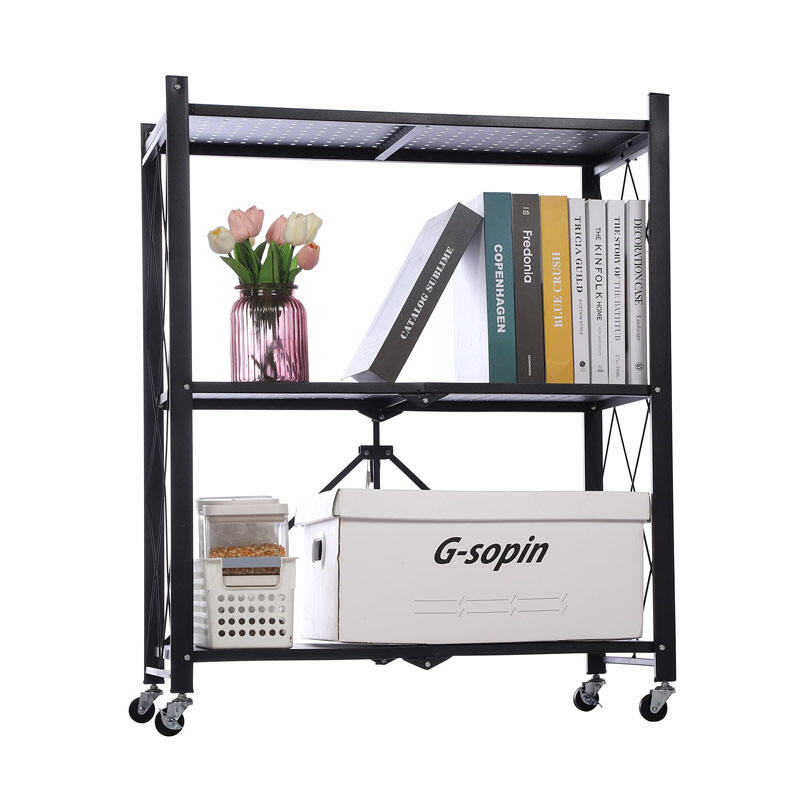
For suppliers specializing in kitchen storage solutions, the decision to engage in bulk sourcing rather than smaller, more frequent orders hinges on recognizing specific business conditions and market signals. These timing indicators range from seasonal demand patterns and raw material price fluctuations to production capacity utilization and customer commitment levels. A well-timed bulk sourcing strategy enables suppliers to secure favorable pricing from manufacturers, maintain consistent product availability during peak seasons, and build stronger relationships with both upstream producers and downstream customers who depend on reliable inventory levels.
Market Demand Patterns That Signal Bulk Sourcing Readiness
Seasonal Demand Cycles in Kitchen Products
The kitchen products industry experiences predictable seasonal fluctuations that create optimal windows for bulk sourcing decisions. For a metal kitchen shelves supplier, demand typically surges during specific periods including spring home renovation seasons, back-to-school organizational periods in late summer, and pre-holiday preparation phases in autumn. Recognizing these cyclical patterns allows suppliers to time bulk purchases approximately two to three months before anticipated demand peaks, ensuring adequate inventory levels without excessive carrying costs during slower periods.
Historical sales data provides the foundation for identifying these demand cycles with precision. Suppliers should analyze at least two to three years of transaction records to distinguish genuine seasonal patterns from anomalous market events. When data consistently shows demand increases of thirty percent or more during specific quarters, this represents a clear signal that bulk sourcing before these periods becomes strategically essential. The predictability of these patterns reduces the risk inherent in large-scale purchasing commitments.
Beyond routine seasonal patterns, suppliers must also monitor emerging market trends that indicate sustained demand growth. When consumer preference shifts toward specific product categories such as modular kitchen storage or space-saving shelving solutions, the resulting demand increase may justify bulk sourcing even outside traditional peak seasons. The key distinction lies in differentiating temporary trends from structural market changes that warrant inventory strategy adjustments.
Customer Order Volume Indicators
Direct signals from customer behavior provide perhaps the most reliable timing indicators for bulk sourcing decisions. When a metal kitchen shelves supplier observes increasing average order sizes, more frequent reorder cycles, or growing numbers of standing orders from established customers, these patterns suggest underlying demand strength that justifies bulk inventory positions. Customer inquiries about product availability and lead times also serve as early warning indicators of approaching supply-demand imbalances.
Formal customer commitments through framework agreements or annual contracts represent the strongest foundation for bulk sourcing decisions. When customers provide purchase commitments covering specific volumes over defined periods, suppliers gain the demand visibility necessary to confidently execute large-scale procurement. These agreements transform bulk sourcing from speculative inventory building into calculated fulfillment of confirmed obligations, dramatically reducing financial risk while securing customer relationships through reliable supply assurance.
The emergence of new customer relationships also influences bulk sourcing timing. When a supplier successfully establishes partnerships with major retailers, distribution networks, or commercial kitchen operators, the resulting baseline demand often justifies immediate bulk sourcing to demonstrate supply capability and secure competitive pricing advantages. The timing consideration here involves balancing the opportunity cost of delayed bulk procurement against the relationship risk of inventory shortfalls during critical early partnership phases.
Financial and Operational Conditions Favoring Bulk Sourcing
Cash Flow Position and Working Capital Availability
The financial readiness of a business fundamentally determines whether bulk sourcing represents prudent strategy or excessive risk exposure. For any metal kitchen shelves supplier, bulk purchasing requires substantial upfront capital deployment that temporarily reduces liquidity and increases working capital requirements. Suppliers should consider bulk sourcing only when cash reserves exceed operational needs by sufficient margins to absorb potential demand fluctuations or payment delays without threatening business continuity.
Optimal timing for bulk sourcing often coincides with periods of strong cash generation within the business cycle. After completing major customer payments or during seasons of high sales conversion, suppliers possess enhanced financial capacity to fund large inventory positions. Conversely, periods of tight cash flow such as tax payment seasons or major equipment investment phases represent poor timing for bulk sourcing regardless of apparent market opportunities. Financial discipline requires aligning inventory strategies with capital availability rather than forcing procurement decisions that strain liquidity.
Access to trade credit or inventory financing can expand the viable window for bulk sourcing decisions. When manufacturers offer extended payment terms or when banking relationships provide inventory-based lending facilities, suppliers gain flexibility to execute bulk purchases during favorable market conditions even when immediate cash reserves might otherwise constrain such decisions. However, the cost of financing must be factored into total procurement economics to ensure bulk sourcing maintains genuine financial advantages over smaller-scale alternatives.
Warehouse Capacity and Storage Infrastructure
Physical storage capability represents a practical constraint that determines bulk sourcing feasibility regardless of market or financial conditions. A metal kitchen shelves supplier must assess whether existing warehouse infrastructure can accommodate significantly increased inventory volumes without compromising product quality, operational efficiency, or safety standards. Bulk sourcing becomes viable when warehouse utilization rates fall below seventy percent capacity, allowing sufficient space for large shipments while maintaining organized inventory management.
The timing of facility expansions or lease renewals creates natural opportunity points for bulk sourcing strategy implementation. When suppliers secure additional warehouse space or reorganize existing facilities for improved storage density, these operational milestones provide ideal timing to increase inventory positions through bulk purchasing. The incremental carrying cost of utilizing newly available space remains minimal compared to the procurement savings achievable through volume purchasing, creating favorable economics for bulk sourcing during facility transition periods.
Storage infrastructure considerations extend beyond simple cubic capacity to include handling equipment, climate control requirements, and inventory management systems. Metal kitchen shelving products typically require minimal environmental controls but demand adequate material handling capabilities to prevent damage during storage and retrieval. Suppliers should time bulk sourcing to coincide with operational readiness across all infrastructure dimensions rather than creating bottlenecks that undermine the efficiency gains bulk procurement should deliver.
Raw Material Price Dynamics and Supply Chain Conditions
Steel Price Volatility and Cost Forecasting
Raw material cost trends create powerful timing signals for bulk sourcing decisions in the kitchen shelving industry. Steel prices, which represent the primary cost component for metal kitchen shelves supplier businesses, demonstrate significant volatility driven by global commodity markets, trade policies, and industrial demand cycles. When steel prices trend downward or stabilize at historically low levels, suppliers face optimal conditions for bulk sourcing that locks in favorable input costs before potential price increases.
Forward-looking indicators including steel futures markets, manufacturing purchasing manager indices, and infrastructure investment announcements provide early signals of potential price movements. Suppliers who monitor these indicators can anticipate price trends and time bulk purchases strategically. For example, announced infrastructure stimulus programs typically precede steel price increases as construction demand rises, creating a window between policy announcement and price impact during which bulk sourcing delivers maximum value protection.
The relationship between material costs and finished product pricing also influences bulk sourcing timing. When suppliers can secure extended price agreements with customers while simultaneously locking in favorable material costs through bulk purchasing, this creates margin protection that justifies the working capital commitment of large inventory positions. The timing alignment between customer pricing negotiations and supplier procurement decisions represents a sophisticated capability that separates strategic operators from reactive market participants.
Manufacturing Lead Time Extensions
Changes in production lead times throughout the supply chain signal shifting supply-demand balances that affect bulk sourcing timing decisions. When manufacturers of kitchen shelving products begin quoting extended lead times for standard products, this indicates increasing capacity utilization that often precedes price increases and potential supply constraints. For metal kitchen shelves supplier businesses, such lead time extensions represent clear signals to advance bulk sourcing timelines before market conditions tighten further.
The distinction between temporary production delays and structural capacity constraints determines whether lead time changes justify bulk sourcing responses. Temporary disruptions such as equipment maintenance periods or seasonal workforce adjustments typically resolve within weeks and rarely warrant major inventory strategy shifts. However, when lead time extensions persist across multiple quarters or affect numerous manufacturers simultaneously, these patterns indicate fundamental supply-demand imbalances that make bulk sourcing both necessary for supply security and financially advantageous through avoiding future allocation scenarios.
Supplier relationship strength also influences how lead time dynamics affect bulk sourcing timing. Established metal kitchen shelves supplier businesses with strong manufacturer relationships often receive preferential treatment during capacity-constrained periods, potentially reducing the urgency of bulk sourcing for supply security purposes. However, even preferred customers benefit from bulk commitments during tight supply conditions by securing production slots and demonstrating demand commitment that manufacturers reward with consistent capacity allocation.
Competitive Positioning and Market Entry Timing
Market Share Expansion Initiatives
Strategic business development objectives frequently determine optimal bulk sourcing timing independent of immediate demand signals. When a metal kitchen shelves supplier pursues market share expansion through aggressive pricing, enhanced service levels, or geographic expansion, bulk sourcing becomes essential infrastructure for supporting growth strategies. The timing of bulk procurement should precede market expansion initiatives by sufficient margins to establish inventory positions that enable competitive promises around product availability and delivery speed.
Competitive displacement strategies particularly depend on bulk sourcing capabilities. When suppliers target customers currently served by competitors, the ability to guarantee product availability and rapid fulfillment often determines success in winning business transitions. Bulk sourcing timed to coincide with major customer prospecting campaigns or contract renewal seasons provides the operational foundation for making credible commitments that differentiate offerings from competitors operating with leaner inventory models.
Market expansion timing also aligns with broader economic cycles and industry conditions. When construction activity increases, commercial kitchen development accelerates, or residential renovation spending rises, these macro trends create favorable conditions for market share growth that justify bulk sourcing investments. Suppliers who time bulk procurement to support expansion during favorable market conditions achieve dual benefits of growth acceleration and cost optimization through volume purchasing economics.
New Product Launch Preparation
Product portfolio expansion represents another strategic timing consideration for bulk sourcing decisions. When a metal kitchen shelves supplier introduces new product lines or variants, initial market reception remains uncertain, creating tension between the desire to capture opportunities and the risk of excess inventory. Bulk sourcing becomes appropriate for new product launches when pre-launch market testing, customer pre-orders, or initial sales data demonstrate sufficient demand to justify volume purchasing.
The timing relationship between product launch cycles and procurement decisions requires careful calibration. Ordering too early risks obsolescence if product specifications change during development phases, while ordering too late results in stock-outs during critical launch periods when market impression formation occurs. Optimal timing typically involves committing to bulk orders once product designs reach final approval and initial customer commitments provide demand validation, yet sufficiently in advance of launch dates to accommodate manufacturing and logistics lead times.
New product launches also create opportunities to negotiate favorable bulk purchasing terms with manufacturers. Producers often offer volume incentives for new products to secure production runs that justify tooling investments or production line allocation. Suppliers who time bulk commitments during these negotiation windows can secure cost advantages that improve new product margin profiles while ensuring supply adequacy for market introduction phases.
Risk Management and Timing Optimization Strategies
Portfolio Diversification Across Product Categories
Sophisticated bulk sourcing strategies involve timing procurement decisions differently across product categories based on demand predictability and inventory turnover characteristics. For a metal kitchen shelves supplier offering diverse product ranges from basic utility shelving to premium decorative units, optimal bulk sourcing timing varies by segment. High-volume commodity products with predictable demand justify earlier and larger bulk commitments, while specialty products warrant more conservative timing aligned closely with confirmed customer orders.
This differentiated approach to bulk sourcing timing reduces overall portfolio risk while maximizing financial efficiency. Suppliers can deploy available capital preferentially toward product categories demonstrating strongest demand signals and most favorable procurement economics, rather than applying uniform bulk sourcing strategies across dissimilar product lines. The resulting portfolio approach balances inventory investment against market responsiveness, optimizing the trade-offs inherent in any bulk purchasing decision.
Timing coordination across product categories also enables operational efficiencies in shipping and warehousing. When suppliers consolidate bulk orders across multiple product lines to align with container shipping schedules or warehouse receiving capabilities, the resulting logistics optimization can offset some working capital costs of early procurement. This integrated view of bulk sourcing timing across the entire product portfolio represents advanced capability that delivers competitive advantages beyond simple unit cost reduction.
Contingency Planning and Flexibility Maintenance
Even optimal bulk sourcing timing involves inherent uncertainty requiring contingency preparation. Successful metal kitchen shelves supplier operations maintain flexibility mechanisms that mitigate risks when market conditions evolve differently than anticipated after bulk purchasing commitments. These mechanisms include negotiating return privileges for excess inventory, establishing secondary market channels for surplus product disposition, and maintaining relationships with multiple manufacturers to source additional inventory if bulk purchases prove insufficient.
The timing of bulk sourcing should incorporate adequate safety margins that account for demand variability and supply chain uncertainties. Rather than calculating minimum required inventory and timing procurement to barely meet projected needs, prudent strategies incorporate buffer stocks that absorb forecasting errors without creating stockout situations. The appropriate buffer size depends on demand volatility, lead time variability, and the business impact of stockouts, typically ranging from ten to thirty percent above baseline requirements.
Continuous monitoring of market conditions after executing bulk sourcing decisions enables adaptive responses to changing circumstances. Suppliers should establish review processes that reassess inventory positions and demand trajectories at regular intervals, triggering supplemental orders if consumption exceeds expectations or promotional efforts if inventory accumulates beyond projected levels. This dynamic approach to bulk sourcing timing treats initial procurement decisions as starting points rather than fixed commitments, maintaining responsiveness throughout inventory lifecycle management.
FAQ
What minimum order volumes typically qualify as bulk sourcing for metal kitchen shelves?
Bulk sourcing thresholds vary by manufacturer and product complexity, but typically begin at container-load quantities representing several hundred to several thousand units depending on product dimensions and packaging density. For standard kitchen shelving products, bulk volumes generally start at shipments filling twenty-foot containers, which might contain eight hundred to fifteen hundred units of typical four-tier shelving systems. The defining characteristic of bulk sourcing involves order volumes that trigger preferential pricing tiers from manufacturers, typically representing at least three to six months of projected sales volume for the supplier.
How do bulk sourcing decisions affect relationships with manufacturing partners?
Bulk sourcing commitments strengthen manufacturer relationships by demonstrating serious business intent and providing production volume certainty that manufacturers value for capacity planning purposes. Suppliers who consistently execute bulk orders receive priority treatment during capacity-constrained periods, access to new product introductions, and greater willingness from manufacturers to accommodate customization requests or specification modifications. However, bulk commitments also create mutual dependencies requiring reliable execution, as manufacturers allocate production capacity based on order commitments that suppliers must honor to maintain relationship integrity and future preferential treatment.
What financial metrics should guide bulk sourcing timing decisions?
Key financial metrics for evaluating bulk sourcing timing include inventory turnover ratios showing how quickly stock converts to sales, gross margin return on investment calculating profitability relative to inventory capital deployed, and days sales in inventory measuring how long capital remains tied up in stock. Suppliers should also calculate the break-even point where volume discounts from bulk purchasing offset increased carrying costs including warehousing, insurance, and opportunity costs of capital. Optimal bulk sourcing timing occurs when projected carrying costs remain below procurement savings and when cash flow projections confirm adequate liquidity throughout the inventory holding period.
Can smaller suppliers benefit from bulk sourcing or does it only work for large operations?
Smaller metal kitchen shelves supplier businesses can absolutely benefit from bulk sourcing strategies through several approaches adapted to their scale. Collaborative purchasing arrangements with complementary suppliers enable shared container shipments that achieve bulk pricing while distributing volume across multiple parties. Extended payment terms or inventory financing convert the working capital barrier into manageable periodic costs rather than prohibitive upfront investments. Additionally, smaller suppliers can focus bulk sourcing on their highest-volume product lines while maintaining flexible ordering for specialty items, creating a hybrid strategy that captures bulk economics where most impactful while preserving responsiveness elsewhere in their product portfolio.
Table of Contents
- Market Demand Patterns That Signal Bulk Sourcing Readiness
- Financial and Operational Conditions Favoring Bulk Sourcing
- Raw Material Price Dynamics and Supply Chain Conditions
- Competitive Positioning and Market Entry Timing
- Risk Management and Timing Optimization Strategies
-
FAQ
- What minimum order volumes typically qualify as bulk sourcing for metal kitchen shelves?
- How do bulk sourcing decisions affect relationships with manufacturing partners?
- What financial metrics should guide bulk sourcing timing decisions?
- Can smaller suppliers benefit from bulk sourcing or does it only work for large operations?

