 EN
EN


Deciding when to invest in bulk quantities of industrial furniture requires careful evaluation of operational needs, budget constraints, and long-term facility planning. For procurement managers and operations directors evaluating workspace solutions, understanding the financial and operational thresholds that make bulk purchasing of metal work table for sale orders genuinely cost-effective separates strategic investment from unnecessary capital commitment. This decision becomes particularly critical when outfitting new facilities, expanding production capacity, or standardizing workspace configurations across multiple locations where the economics of scale intersect with practical implementation requirements.
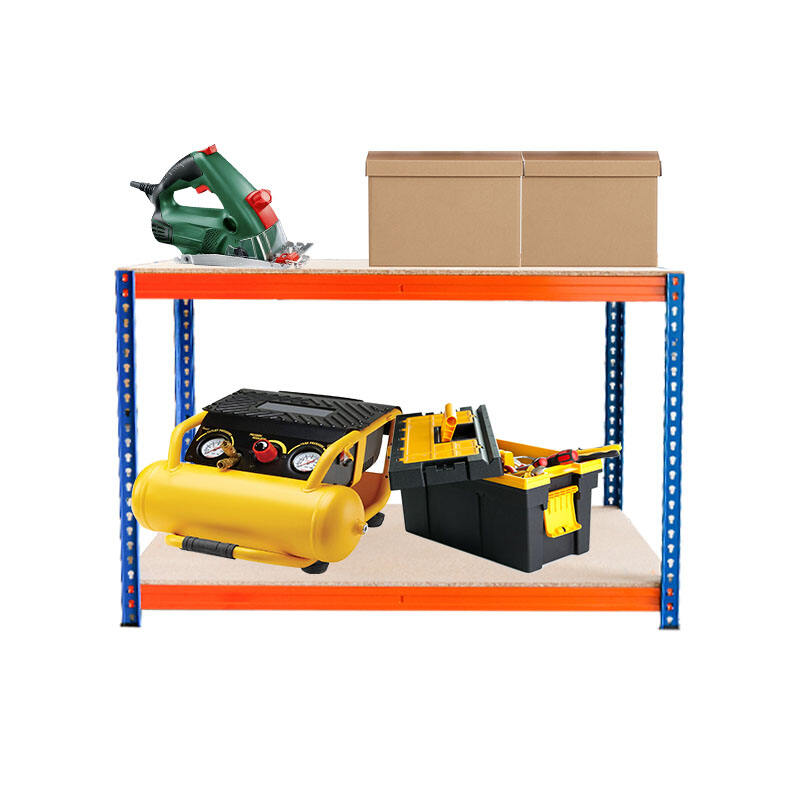
The timing and conditions that justify bulk acquisition of metal work table for sale inventory extend beyond simple per-unit price reduction. Effective bulk purchasing strategies align with facility expansion timelines, standardization initiatives, budget cycle optimization, and supplier relationship leverage points that collectively transform what appears as immediate capital outlay into measurable long-term value creation. Recognizing these convergence points enables organizations to capture volume pricing advantages while avoiding excess inventory costs, storage burdens, and capital immobilization that plague poorly timed bulk acquisitions.
Facility Expansion and Multi-Site Deployment Scenarios
New Facility Commissioning Requirements
Organizations commissioning new manufacturing facilities, distribution centers, or technical service locations face concentrated workspace outfitting demands that create natural bulk purchasing opportunities for metal work table for sale specifications. When facility designs call for standardized workstation configurations across multiple departments or production zones, consolidating these requirements into single procurement orders typically unlocks manufacturer volume pricing tiers that remain inaccessible through incremental purchasing approaches. The cost-effectiveness threshold becomes particularly favorable when new facility workstation counts exceed twenty-five to thirty units requiring similar specifications, as this volume typically triggers the first significant manufacturer discount tier while justifying dedicated shipping arrangements that reduce per-unit logistics costs.
The commissioning timeline itself influences bulk purchase timing optimization, as coordinating metal work table for sale delivery with construction completion milestones eliminates double-handling costs and temporary storage expenses. Facilities scheduled for equipment installation phases spanning three to six months benefit from staggered bulk deliveries aligned with zone activation sequences, allowing organizations to capture volume pricing while managing cash flow through phased payment structures that many suppliers accommodate for substantial orders. This approach proves especially cost-effective when construction schedules provide sufficient lead time for manufacturers to optimize production runs, potentially accessing even deeper discounts for orders placed ninety to one hundred twenty days prior to required delivery dates.
Multi-Location Standardization Programs
Organizations operating multiple facilities pursuing workspace standardization initiatives discover that bulk purchasing metal work table for sale inventory for coordinated deployment across locations fundamentally alters the cost-effectiveness equation compared to site-by-site acquisition strategies. Standardization programs typically justify bulk orders when aggregate requirements across all participating locations exceed fifty units, as this threshold enables negotiation of enterprise pricing agreements that extend beyond simple volume discounts to include preferential warranty terms, priority technical support, and specification customization options that enhance long-term value. The financial advantage compounds when standardization includes not just identical models but also coordinated procurement timing that allows manufacturers to consolidate production and shipping logistics.
Multi-site deployment scenarios gain additional cost-effectiveness when bulk orders enable direct-to-location shipping arrangements that eliminate central warehousing and redistribution expenses. Organizations coordinating metal work table for sale delivery to five or more locations simultaneously often negotiate freight optimization where manufacturers arrange consolidated regional shipments with local distribution, reducing per-unit transportation costs by fifteen to thirty percent compared to individual site orders. This logistical efficiency becomes particularly valuable for geographically dispersed operations where regional facility clusters allow partial truckload optimization, transforming what might appear as premium freight costs into competitive advantages through strategic volume consolidation.
Phased Expansion Timeline Alignment
Organizations implementing phased facility expansions spanning twelve to twenty-four months face unique bulk purchasing considerations where cost-effectiveness depends on balancing immediate volume discounts against extended storage requirements and capital allocation timing. The optimal approach often involves framework agreements for metal work table for sale specifications where organizations commit to total volume requirements across the expansion timeline while scheduling deliveries in quarterly or semi-annual batches aligned with construction phase completions. This strategy captures approximately seventy to eighty-five percent of full bulk discount potential while avoiding the carrying costs and space constraints associated with receiving entire orders months before installation readiness.
The cost-effectiveness calculation for phased bulk purchasing must account for potential specification evolution as expansion projects progress and operational requirements crystallize. Organizations establishing master agreements with provision for minor specification adjustments within agreed volume commitments maintain flexibility while preserving bulk pricing advantages. This approach proves particularly valuable when initial expansion phases serve as pilots informing subsequent deployment specifications, allowing practical experience to refine metal work table for sale selections without sacrificing the financial benefits of committed volume purchasing that suppliers value for production planning certainty.
Budget Cycle Optimization and Capital Allocation Timing
Fiscal Year-End Capital Deployment
Organizations approaching fiscal year-end with uncommitted capital budget allocations face use-it-or-lose-it dynamics that can make bulk purchasing metal work table for sale inventory strategically cost-effective even when immediate deployment needs don't fully justify the volume. This scenario becomes financially advantageous when current-year capital budget surplus exceeds the bulk purchase investment by sufficient margin to avoid impacting other priority expenditures, while next fiscal year forecasts indicate reduced capital availability or competing priority projects that would delay workspace improvement initiatives. The timing arbitrage proves valuable when bulk orders placed in the final quarter secure both volume pricing and current-year budget utilization while supporting workspace needs extending into subsequent fiscal periods.
The cost-effectiveness analysis for year-end bulk purchasing requires comparing the captured volume discount against alternative uses of uncommitted capital, including potential investment returns or debt reduction opportunities. For metal work table for sale purchases where bulk discounts reach fifteen to twenty-five percent, the immediate savings often exceed one-year returns from conservative investment alternatives, particularly when factoring in the operational value of earlier workspace capability deployment. Organizations with storage capacity to accommodate three to six months of inventory find this timing particularly advantageous, as the financial benefit of budget preservation outweighs modest carrying costs while positioning the organization to respond quickly to operational expansion triggers without waiting for new budget cycle approvals.
Multi-Year Budget Planning Integration
Organizations with visibility into multi-year capital expenditure plans can optimize bulk purchasing timing by consolidating requirements that span multiple budget cycles into strategic single acquisitions that maximize volume leverage. This approach proves cost-effective when planned metal work table for sale requirements over a two to three-year horizon aggregate to volumes substantially larger than single-year needs, enabling negotiation of enterprise agreements that lock in favorable pricing while structuring payments across fiscal periods to match budget allocation timing. The financial advantage becomes particularly compelling when forward pricing trends indicate cost inflation, allowing organizations to hedge against future price increases while capturing immediate volume discounts that compound the total savings.
Multi-year bulk purchasing strategies require careful inventory management planning to ensure stored units maintain condition and relevance throughout the extended deployment timeline. Organizations establishing climate-controlled storage for metal work table for sale inventory find the cost-effectiveness threshold typically requires minimum fifteen percent bulk discount to offset storage expenses and capital opportunity costs over eighteen to thirty-six month holding periods. This calculation favors durable steel-frame configurations with powder-coated finishes that resist environmental degradation during storage, minimizing refurbishment costs before deployment while preserving the functional value that justified the initial bulk investment.
Strategic Supplier Negotiation Windows
Manufacturers and distributors of metal work table for sale products experience cyclical capacity utilization patterns that create periodic negotiation windows where bulk orders command premium discounts beyond standard volume pricing. These windows typically emerge during traditional slow seasons, following major trade show cycles, or when manufacturers seek to fill production capacity gaps between large contract commitments. Organizations monitoring these patterns and maintaining flexible procurement timing can achieve cost-effectiveness thresholds fifteen to thirty percent better than standard bulk pricing by timing large orders to coincide with supplier incentive periods where immediate commitment value exceeds the typical discount structure.
The strategic timing approach requires maintaining ongoing supplier relationships that provide visibility into capacity planning and incentive cycles rather than purely transactional procurement interactions. Organizations cultivating these relationships gain access to preferential notification of special bulk purchasing opportunities where suppliers offer enhanced terms for orders that help optimize production scheduling or inventory turnover objectives. This intelligence advantage transforms bulk purchasing from reactive response to operational need into proactive value capture that aligns organizational requirements with supplier business cycles for mutual benefit, consistently achieving cost-effectiveness levels that justify maintaining inventory buffers beyond immediate deployment requirements.
Standardization Benefits and Total Cost of Ownership Considerations
Maintenance and Parts Inventory Rationalization
Bulk purchasing identical or closely related metal work table for sale specifications delivers maintenance cost advantages that extend far beyond initial acquisition price differences, fundamentally altering total cost of ownership calculations in favor of standardized volume procurement. Organizations deploying standardized workstation configurations reduce required maintenance parts inventory to common components shared across all units, eliminating the cost and complexity of maintaining diverse part stocks for heterogeneous equipment populations. This rationalization typically reduces maintenance inventory carrying costs by forty to sixty percent compared to facilities supporting multiple workstation specifications, while simultaneously improving maintenance response times through parts availability certainty and technician familiarity with standardized configurations.
The maintenance advantage compounds over typical seven to twelve year metal work table for sale service lifecycles as standardized bulk deployments enable predictive parts ordering based on aggregate failure patterns rather than individual unit uncertainty. Organizations tracking component wear across standardized populations develop replacement forecasting accuracy that minimizes emergency procurement premiums while optimizing parts inventory turns. This operational efficiency proves particularly cost-effective for high-utilization environments where workstation populations exceed one hundred units, as statistical reliability models enable precision parts management that captures both inventory reduction and uptime improvement benefits worth five to ten percent of initial acquisition costs over the ownership lifecycle.
Training and Operational Efficiency Gains
Standardized workstation environments resulting from bulk metal work table for sale procurement generate measurable training efficiency and operational productivity benefits that contribute substantially to overall cost-effectiveness beyond direct purchase price considerations. Organizations deploying identical workstation configurations eliminate the learning curve inefficiencies associated with varied workspace layouts, enabling workers transitioning between departments or facilities to maintain productivity immediately without accommodation periods for different equipment interfaces. This standardization advantage typically improves new employee onboarding efficiency by reducing workstation familiarization time from hours to minutes, while supporting workforce flexibility initiatives where cross-training and dynamic resource allocation depend on consistent workspace configurations across operational areas.
The productivity benefit extends to operational documentation and process standardization, as uniform metal work table for sale deployments enable development of universal work instructions and ergonomic guidelines applicable across entire facilities or organizational networks. This documentation efficiency reduces training material development and maintenance costs while improving process compliance through elimination of configuration-specific procedure variations that introduce quality risk. Organizations quantifying these soft benefits typically calculate productivity value equivalent to three to seven percent of workstation acquisition costs annually, making bulk standardization purchases cost-effective even when volume discounts alone might not clearly justify immediate large-scale procurement.
Asset Management and Depreciation Optimization
Bulk procurement of metal work table for sale inventory simplifies asset management through consolidated acquisition records, uniform depreciation schedules, and streamlined disposal processes that reduce administrative overhead throughout the ownership lifecycle. Organizations purchasing standardized workstation populations in single transactions eliminate the tracking complexity associated with incremental acquisitions spanning multiple purchase orders, vendors, and specification variations that complicate asset register maintenance and depreciation calculation. This administrative simplification typically reduces asset management labor requirements by twenty to thirty-five percent compared to heterogeneous equipment populations acquired through numerous small transactions, delivering ongoing cost savings that accumulate over multi-year ownership periods.
The depreciation optimization advantage becomes particularly relevant for organizations seeking to align asset retirement and replacement cycles across facility sections or entire locations. Bulk purchases establishing cohort populations with synchronized acquisition dates enable coordinated replacement planning that captures volume pricing benefits for successor equipment while optimizing disposal timing to maximize residual value recovery. This lifecycle management approach proves cost-effective when replacement cycles for metal work table for sale equipment align with facility renovation or reorganization initiatives, allowing organizations to treat workspace refreshment as integrated projects rather than ongoing piecemeal activities that never achieve optimal efficiency or cost performance.
Volume Threshold Analysis and Supplier Relationship Leverage
Discount Tier Activation Volumes
Understanding manufacturer and distributor discount tier structures for metal work table for sale products enables organizations to identify precise volume thresholds where bulk purchasing transitions from marginally beneficial to substantially cost-effective. Most industrial furniture suppliers implement tiered discount structures with meaningful price breaks occurring at specific quantity intervals, typically establishing first significant discounts at twenty-five to fifty unit volumes, intermediate tiers at seventy-five to one hundred units, and premium pricing at volumes exceeding one hundred fifty units. The cost-effectiveness calculation requires comparing the incremental discount percentage against the operational justification for volume, recognizing that capturing a fifteen percent discount by increasing order quantity from thirty to fifty units only proves valuable when the additional twenty units serve genuine near-term requirements rather than creating excess inventory burdens.
Sophisticated bulk purchasing analysis examines not just percentage discounts but absolute dollar savings relative to storage costs, capital opportunity costs, and deployment timeline realities. For metal work table for sale specifications with unit costs ranging from three hundred to eight hundred dollars, achieving the next discount tier might require additional investment of several thousand dollars, justified only when the percentage savings multiplied by total order volume exceeds the carrying costs for any units held before deployment. Organizations with clear twelve to eighteen month workspace expansion visibility can confidently pursue higher discount tiers, while those with uncertain deployment timelines should optimize around lower volume tiers that balance savings against flexibility, accepting slightly higher per-unit costs to avoid inventory risk.
Preferred Customer Status Development
Bulk purchasing metal work table for sale inventory establishes supplier relationships that transcend individual transactions, positioning organizations as preferred customers eligible for benefits including priority production scheduling, specification customization options, extended payment terms, and access to new product introductions before general market availability. This relationship value often exceeds the immediate transaction discount, particularly for organizations with ongoing workspace requirements where preferred status delivers compounding advantages across multiple procurement cycles. Suppliers typically designate preferred customer status for accounts demonstrating consistent volume commitment, with thresholds varying by manufacturer but generally requiring annual purchase volumes exceeding seventy-five thousand to one hundred fifty thousand dollars across all product categories.
The cost-effectiveness of pursuing preferred status through strategic bulk purchasing depends on organizational growth trajectory and ongoing facility development plans. Companies expanding operations or managing large facility networks find that initial bulk orders establishing preferred relationships deliver disproportionate long-term value compared to the immediate savings calculation, as subsequent purchases benefit from relationship pricing and priority service that wouldn't be available through purely transactional procurement approaches. This strategic consideration suggests that organizations with sustained workspace investment horizons should optimize bulk purchasing decisions partially around relationship development objectives, accepting that some initial volume commitments serve strategic positioning value beyond the immediate project ROI calculation.
Custom Specification Negotiation Opportunities
Volume commitments inherent in bulk purchasing create negotiation leverage for custom specifications that address unique operational requirements without incurring typical engineering and tooling premiums. Manufacturers of metal work table for sale products generally resist specification modifications for small orders due to setup costs and production disruption, but willingly accommodate customization requests accompanying substantial volume commitments that justify dedicated production runs. Organizations requiring specific dimensional configurations, specialized surface treatments, integrated power distribution, or custom accessory mounting options find bulk orders exceeding fifty to seventy-five units typically eliminate customization premiums while maintaining volume discount pricing, effectively delivering bespoke solutions at standard product costs.
The cost-effectiveness of pursuing customization through bulk orders depends on whether the modifications deliver operational value exceeding the commitment risk of larger volume purchases. Specifications addressing genuine ergonomic requirements, safety enhancements, or process integration needs justify customization commitments, while purely aesthetic modifications rarely deliver sufficient value to warrant the reduced flexibility of custom bulk orders. Organizations pursuing this approach should structure specifications to maintain maximum component commonality with standard products, focusing customization on truly differentiating elements while preserving parts interchangeability and resale value that protect against deployment plan changes or future facility reconfiguration needs that might otherwise strand custom inventory.
Risk Mitigation and Flexibility Preservation Strategies
Modular Specification Approach
Organizations can optimize bulk purchasing cost-effectiveness while preserving operational flexibility by structuring metal work table for sale orders around modular base specifications that support diverse application requirements through accessory variation rather than fundamental platform differences. This approach involves bulk ordering standardized workstation frames, work surfaces, and structural components while maintaining smaller inventories of application-specific accessories that configure base units for particular tasks. The strategy captures volume pricing on high-value structural components representing seventy to eighty percent of total workstation costs while avoiding the risk of over-committing to fully configured units that might not align with evolving operational requirements as deployment progresses.
The modular bulk purchasing approach proves particularly cost-effective for organizations with general workspace expansion certainty but application-specific requirement ambiguity, common during facility planning phases where headcount projections are firm but departmental allocation and task assignments remain fluid. By committing to base platform volumes that secure manufacturer discounts while deferring accessory selection until deployment proximity provides requirement clarity, organizations balance financial optimization with operational flexibility. This strategy requires supplier coordination to ensure accessory availability aligns with base unit deployment timing, but most metal work table for sale manufacturers accommodate this approach for volume customers, recognizing that it reduces their inventory risk while securing committed base unit orders that drive production efficiency.
Progressive Delivery Scheduling
Structuring bulk purchases with progressive delivery schedules mitigates the capital commitment and storage burden challenges that often undermine bulk procurement cost-effectiveness, particularly for organizations with extended deployment timelines or phased facility activation plans. This approach involves negotiating total volume commitments that capture bulk pricing while establishing delivery tranches aligned with workspace activation schedules, typically spanning six to eighteen months in quarterly or biannual shipments. The progressive delivery structure preserves approximately eighty to ninety percent of full bulk discount value while eliminating the storage costs and capital immobilization associated with receiving entire orders months before installation capacity exists, fundamentally improving the risk-adjusted return calculation that should govern bulk purchasing decisions.
Implementing progressive delivery for metal work table for sale bulk orders requires clear contractual terms addressing pricing protection, specification consistency, and delivery schedule flexibility to accommodate reasonable deployment timeline variations without penalty. Organizations should negotiate fixed pricing across all delivery tranches to protect against market fluctuations while establishing modification windows allowing fifteen to twenty percent volume adjustment between tranches to accommodate requirement refinements as projects progress. This contractual framework transforms bulk purchasing from rigid commitment into flexible strategic partnership that captures volume economics while preserving the operational adaptability essential for complex facility projects where perfect requirement visibility at order placement rarely exists.
Contingency Planning for Specification Evolution
Prudent bulk purchasing strategies incorporate contingency mechanisms addressing potential specification evolution driven by operational requirement changes, technology advancement, or regulatory updates that might render committed inventory suboptimal before full deployment completion. Organizations should structure metal work table for sale bulk orders with contractual provisions allowing specification substitution within defined parameters, typically permitting exchange of up to twenty percent of committed volume for alternative models of equivalent or greater value without financial penalty. This flexibility protection proves cost-effective by reducing the risk that bulk commitments create stranded inventory, particularly for orders spanning twelve to twenty-four months where operational environment evolution might necessitate workspace capability adjustments.
The specification evolution risk management approach should include supplier agreements addressing inventory buyback or exchange options for scenarios where organizational strategy shifts substantially invalidate deployment plans underlying bulk purchase commitments. While these protective clauses rarely activate, their existence fundamentally alters bulk purchasing risk profiles, enabling organizations to pursue more aggressive volume commitments confident that catastrophic loss scenarios have contractual mitigation. Most metal work table for sale suppliers accommodate these provisions for substantial volume customers, recognizing that the commitment certainty and relationship value offset the modest contingent liability they assume by offering deployment flexibility that removes procurement barriers for strategic accounts with complex planning environments.
FAQ
What minimum order quantity typically qualifies as bulk purchasing for industrial workstations?
Bulk purchasing thresholds vary by manufacturer and product category, but for metal work table for sale specifications, meaningful volume discounts typically begin at twenty-five to thirty units, with more substantial pricing advantages emerging at fifty to seventy-five unit volumes. Organizations should request detailed tiered pricing from suppliers to identify specific thresholds where incremental volume generates proportional savings, as these breakpoints vary significantly based on manufacturer production capacity, market positioning, and current demand conditions. The cost-effectiveness determination depends not just on reaching discount tiers but on whether the required volume aligns with genuine deployment needs within reasonable timeframes that avoid excessive carrying costs negating the purchase price advantage.
How do storage and handling costs impact bulk purchasing cost-effectiveness calculations?
Storage and handling costs can consume twenty to forty percent of bulk purchase discounts when deployment timelines extend beyond six months, fundamentally altering cost-effectiveness calculations for organizations lacking adequate warehousing capacity. The comprehensive analysis must account for warehouse space costs, climate control requirements for preserving finish quality, material handling equipment and labor for receiving and internal distribution, inventory management systems and labor, and insurance coverage for stored assets. Organizations with existing underutilized warehouse capacity find bulk purchasing significantly more cost-effective than those requiring external storage arrangements, while progressive delivery scheduling offers middle-ground solutions that capture most volume discount benefits while minimizing storage duration and associated costs that otherwise undermine bulk procurement financial advantages.
Can smaller organizations achieve bulk purchasing benefits through cooperative procurement?
Smaller organizations can access bulk pricing advantages through cooperative purchasing arrangements where multiple companies or facilities coordinate metal work table for sale requirements into consolidated orders that achieve volume thresholds individually unattainable. This approach requires coordination among organizations with compatible specification requirements and reasonably aligned procurement timing, often facilitated through industry associations, purchasing cooperatives, or informal peer networks. While cooperative procurement introduces coordination complexity and potential specification compromise compared to independent purchasing, organizations whose individual requirements fall below manufacturer discount thresholds find the approach cost-effective, typically achieving volume pricing within five to ten percent of what large single buyers obtain while maintaining substantially better pricing than small independent orders would command in the open market.
What contract terms should organizations negotiate to protect bulk purchase investments?
Comprehensive bulk purchase agreements for metal work table for sale inventory should include fixed pricing protection across all delivery tranches, specification consistency guarantees with defined substitution rights if discontinued, delivery schedule flexibility accommodating reasonable timeline adjustments, quality assurance provisions with rejection rights and replacement obligations, warranty terms covering storage period before deployment, and contingency provisions addressing order modification or cancellation scenarios with defined financial implications. Organizations should also negotiate payment terms aligned with delivery schedules rather than order placement, preserving working capital while providing suppliers sufficient commitment certainty to justify volume pricing. These contractual protections transform bulk purchasing from high-risk capital commitment into manageable strategic investment where downside scenarios have defined mitigation while upside benefits fully materialize through combination of immediate pricing advantage and operational deployment flexibility.
Table of Contents
- Facility Expansion and Multi-Site Deployment Scenarios
- Budget Cycle Optimization and Capital Allocation Timing
- Standardization Benefits and Total Cost of Ownership Considerations
- Volume Threshold Analysis and Supplier Relationship Leverage
- Risk Mitigation and Flexibility Preservation Strategies
-
FAQ
- What minimum order quantity typically qualifies as bulk purchasing for industrial workstations?
- How do storage and handling costs impact bulk purchasing cost-effectiveness calculations?
- Can smaller organizations achieve bulk purchasing benefits through cooperative procurement?
- What contract terms should organizations negotiate to protect bulk purchase investments?

