 EN
EN

Selecting a wire garage shelving supplier involves more than comparing price lists and lead times. Supplier capacity—the ability to fulfill orders at scale, maintain consistent quality, and adapt to demand fluctuations—directly impacts your project timelines, inventory availability, and overall operational efficiency. Understanding when supplier capacity becomes a critical decision factor helps procurement professionals, contractors, and retail buyers avoid costly delays and quality compromises that can derail installation schedules or damage customer relationships.
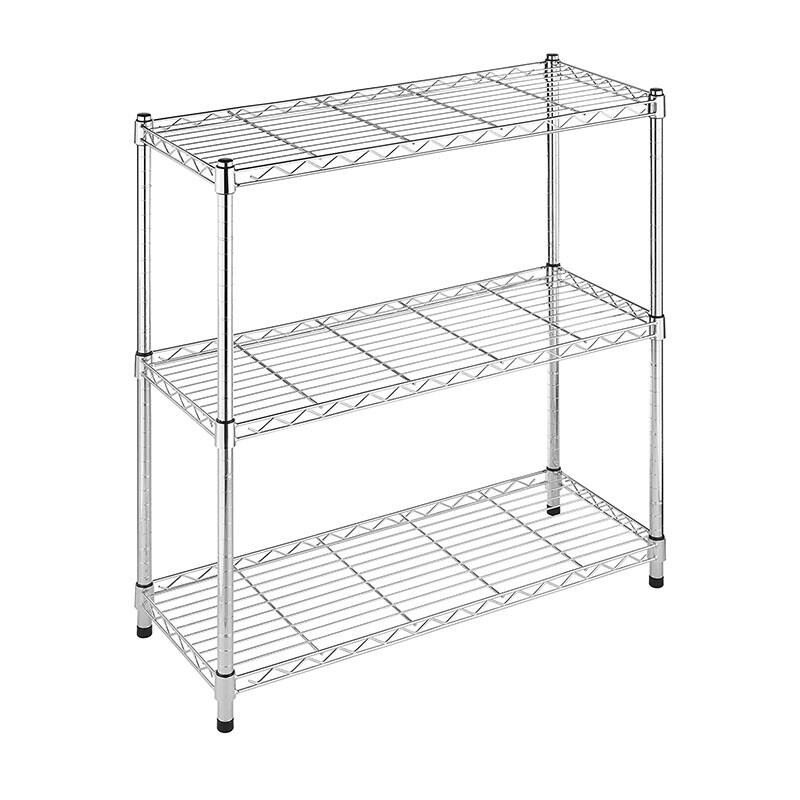
Supplier capacity matters most in specific purchasing scenarios where volume, timing, and reliability intersect with business risk. Bulk orders for residential developments, seasonal retail inventory buildups, commercial construction projects with fixed completion dates, and emergency replacement orders all create situations where a wire garage shelving supplier's production throughput, inventory depth, and logistical flexibility determine whether your project succeeds or stalls. This article examines the precise conditions under which capacity evaluation should become a primary supplier selection criterion rather than an afterthought.
Understanding Supplier Capacity in Wire Shelving Manufacturing
Production Throughput and Order Fulfillment Speed
A wire garage shelving supplier's production capacity refers to the maximum volume of finished units they can manufacture within a given timeframe while maintaining quality standards. This capacity depends on factors including manufacturing equipment capabilities, workforce size, shift patterns, and raw material availability. Suppliers operating modern wire forming machinery with automated welding stations typically process higher volumes than facilities relying on manual assembly methods. When evaluating a potential wire garage shelving supplier, request specific data on their daily or weekly production output for comparable product lines to gauge whether they can absorb your order without extending lead times.
Production throughput directly affects your order fulfillment timeline, particularly when placing large-volume purchases. A supplier producing 5,000 shelving units weekly can accommodate a 2,000-unit order without disrupting existing commitments, whereas the same order might push a smaller operation beyond capacity, forcing them to delay shipments or compromise quality through rushed production. Understanding these production realities helps buyers set realistic delivery expectations and avoid suppliers who overcommit and underdeliver during peak demand periods.
Inventory Depth and Stock Availability
Beyond production capacity, inventory depth indicates whether a wire garage shelving supplier maintains sufficient finished goods or component stock to fulfill immediate orders. Suppliers with robust inventory systems can ship standard configurations within days, while build-to-order operations may require weeks even for simple designs. Inventory capacity becomes particularly relevant when you need rapid deployment for retail merchandising changes, emergency facility reorganizations, or competitive construction bidding scenarios where quick turnaround provides strategic advantage.
Effective inventory management also signals supplier maturity and financial stability. A wire garage shelving supplier maintaining diverse size options, finish variations, and accessory components demonstrates operational sophistication and capital investment in customer service. However, excessive inventory can indicate poor demand forecasting or product obsolescence risk, so evaluate whether stock levels align with market demand patterns rather than simply seeking the highest inventory numbers.
Raw Material Sourcing and Supply Chain Resilience
Supplier capacity extends beyond factory walls to encompass raw material procurement reliability. Wire shelving production depends on consistent access to steel wire, chrome plating chemicals, powder coating materials, and hardware components. A wire garage shelving supplier with diversified material sources and established relationships with multiple steel mills maintains production continuity even when individual suppliers face disruptions. Conversely, single-source material dependencies create vulnerability to price shocks, quality variations, and supply interruptions that ultimately affect your order fulfillment.
During periods of steel market volatility or global logistics disruption, raw material capacity constraints can propagate throughout the supply chain. Suppliers who secured long-term material contracts or maintain strategic material inventories continue production while competitors struggle to source inputs at viable costs. When evaluating a potential wire garage shelving supplier, inquire about their material sourcing strategy, backup supplier relationships, and typical material inventory levels to assess supply chain resilience.
Critical Scenarios Where Capacity Becomes a Primary Selection Factor
High-Volume Project Orders with Fixed Deadlines
Capacity assessment becomes essential when placing bulk orders for time-sensitive projects such as multi-unit residential developments, commercial building fit-outs, or retail chain expansions. Projects requiring 500 or more shelving units within a compressed timeline leave little margin for supplier capacity miscalculations. A wire garage shelving supplier lacking adequate production throughput may accept your order but fail to deliver on schedule, creating cascading delays affecting construction timelines, occupancy dates, and revenue projections.
Construction and development projects operate within contractual frameworks that impose financial penalties for late completion. When wire shelving installation represents a critical path activity, supplier capacity directly impacts your ability to meet contractual obligations. Evaluate whether prospective suppliers have successfully fulfilled comparable orders previously, request customer references for similar projects, and verify their current order backlog to ensure your timeline aligns with realistic production schedules rather than optimistic promises.
Seasonal Demand Peaks and Promotional Campaigns
Retailers and e-commerce businesses experience pronounced seasonal demand patterns, particularly during back-to-school periods, New Year organization campaigns, and spring cleaning seasons when garage and storage product sales spike dramatically. A wire garage shelving supplier with insufficient capacity during these peak periods may prioritize larger customers, extend lead times, or implement allocation systems that limit order quantities. Establishing supplier relationships before seasonal peaks and confirming capacity reservations helps secure inventory availability when customer demand surges.
Promotional campaigns and marketing initiatives create artificial demand spikes that test supplier capacity limits. When launching aggressive pricing promotions or featuring wire shelving in major advertising campaigns, forecast demand conservatively and communicate volume projections to your wire garage shelving supplier well in advance. Suppliers appreciate advance notice that allows production planning adjustments, while last-minute large orders during capacity-constrained periods often result in partial shipments, delayed deliveries, or rushed production that compromises quality standards.
Geographic Expansion and Multi-Location Rollouts
Businesses expanding into new markets or opening multiple locations simultaneously face unique capacity challenges. A 20-store retail expansion requiring standardized wire shelving across all locations demands supplier capacity to produce consistent specifications at scale while coordinating logistics to diverse destinations. A wire garage shelving supplier lacking multisite fulfillment capabilities may struggle with order accuracy, destination-specific labeling, or synchronized delivery scheduling that aligns with staggered opening dates.
Multi-location projects also require suppliers with geographic distribution infrastructure or established logistics partnerships. Regional suppliers may offer competitive pricing and personalized service but lack capacity to efficiently serve locations outside their core territory. National or international suppliers with distributed warehousing can coordinate complex rollouts more effectively, though they may sacrifice local responsiveness. Assess whether your expansion timeline and geographic scope match the wire garage shelving supplier's logistical capacity and distribution network coverage.
Evaluating Supplier Capacity During Vendor Selection
Requesting Production and Capacity Documentation
Thorough capacity evaluation begins with requesting specific documentation during the request for quotation process. Ask potential suppliers to provide production capacity statements detailing maximum weekly output, current capacity utilization rates, and available capacity for new orders. A wire garage shelving supplier operating at 85 percent capacity has limited flexibility to absorb unexpected order increases, while one at 60 percent utilization offers greater buffer for demand volatility. These metrics help you assess whether your anticipated order volume fits comfortably within their operational capabilities or pushes them toward capacity constraints that risk delivery performance.
Beyond raw capacity numbers, request information about production flexibility including ability to add shifts, activate dormant equipment, or redirect resources from other product lines during demand peaks. Suppliers with flexible production systems can scale output more effectively than those operating rigid single-shift schedules with fully committed equipment. Understanding these operational details provides insight into how a wire garage shelving supplier might respond when your actual orders exceed initial forecasts or when unexpected market opportunities require rapid capacity expansion.
Assessing Quality Control Systems Under Capacity Pressure
Capacity constraints often reveal weaknesses in quality control systems as suppliers accelerate production to meet deadlines. A wire garage shelving supplier maintaining rigorous quality standards regardless of volume pressures demonstrates operational maturity and commitment to customer satisfaction. During capacity evaluation, inquire about quality control processes, defect rates under peak production conditions, and whether quality inspection protocols remain consistent when operating at maximum capacity. Suppliers who maintain stable defect rates across varying production volumes have developed systems that prevent quality degradation during rushed production.
Request quality performance data specifically from high-volume production periods rather than overall averages that may mask capacity-related quality issues. A supplier showing consistent quality metrics during their busiest production months proves they have successfully balanced throughput demands with quality maintenance. Conversely, suppliers reluctant to share capacity-specific quality data or showing elevated defect rates during peak periods may compromise standards when production pressure intensifies, creating risk that your large order receives substandard products rushed through inadequate inspection processes.
Evaluating Financial Stability and Growth Investment
Supplier capacity ultimately depends on financial resources to maintain equipment, invest in automation, expand facilities, and weather market downturns without cutting corners. A wire garage shelving supplier demonstrating consistent facility improvements, equipment modernization, and workforce development investments shows commitment to long-term capacity maintenance and enhancement. Financial instability manifests through deferred maintenance, aging equipment, workforce reductions, and facility deterioration that gradually erode production capacity and quality consistency.
While detailed financial statements may not be readily available, observable indicators signal financial health and capacity investment priorities. Recent facility expansions, new equipment installations, quality certifications, and workforce training programs indicate suppliers directing resources toward capacity enhancement. Conversely, deteriorating facilities, outdated equipment, and high employee turnover suggest financial constraints limiting capacity investment. When selecting a wire garage shelving supplier for long-term partnerships or recurring large orders, prioritize financially stable organizations demonstrating ongoing capacity development rather than those operating on minimal investment and declining infrastructure.
Managing Capacity Risk in Ongoing Supplier Relationships
Establishing Capacity Reservations and Framework Agreements
Once you identify a wire garage shelving supplier with adequate capacity, formalize the relationship through capacity reservation agreements or framework contracts that guarantee production allocation for your anticipated volumes. These agreements protect against situations where suppliers prioritize other customers during capacity constraints or allocate limited production to higher-margin orders. Capacity reservations typically require volume commitments or financial considerations but provide security that your orders receive priority treatment during peak demand periods when ad hoc customers face extended lead times or order rejections.
Framework agreements also facilitate better supplier planning by providing demand visibility that enables production scheduling optimization, material procurement planning, and resource allocation decisions. A wire garage shelving supplier with clear visibility into your expected order patterns can maintain appropriate inventory levels, schedule production runs efficiently, and allocate capacity without overcommitting to conflicting customer demands. These collaborative planning relationships reduce lead times, improve delivery reliability, and often result in preferential pricing as suppliers reward customers providing demand predictability that enhances their operational efficiency.
Monitoring Capacity Utilization and Early Warning Signals
Ongoing capacity monitoring helps identify emerging constraints before they impact your orders. Establish regular communication channels with your wire garage shelving supplier to discuss their capacity utilization, order backlog trends, and anticipated busy periods. Suppliers approaching capacity limits often display warning signals including gradually extending lead times, increasing minimum order quantities, implementing allocation systems, or communicating production delays for other customers. Recognizing these indicators early allows you to adjust ordering patterns, increase safety stock, or develop backup supplier relationships before capacity constraints directly affect your operations.
Proactive capacity management includes scenario planning for situations where your primary supplier faces temporary or permanent capacity limitations. Develop contingency plans identifying alternative wire garage shelving suppliers who could fulfill emergency orders, understanding that backup suppliers typically charge premium pricing and require longer lead times for initial orders. Maintaining relationships with secondary suppliers through occasional small orders preserves access to alternative capacity sources while demonstrating that your primary supplier faces competitive pressure to maintain service levels and capacity availability.
Collaborating on Capacity Planning and Demand Forecasting
Sophisticated buyer-supplier relationships include collaborative capacity planning where both parties share demand forecasts, market intelligence, and capacity constraints to optimize overall supply chain performance. Providing your wire garage shelving supplier with advance notice of anticipated order increases, seasonal patterns, or promotional campaigns enables production planning adjustments that prevent capacity-related service disruptions. Similarly, suppliers sharing capacity limitation information allows you to adjust ordering timing, modify specifications to utilize available capacity, or temporarily source from alternative suppliers during peak periods.
These collaborative relationships benefit both parties by reducing uncertainty, minimizing expedited shipping costs, and preventing the quality compromises that occur when rushed orders overwhelm production capacity. A wire garage shelving supplier receiving 90-day demand forecasts can schedule production efficiently, negotiate better material pricing through volume commitments, and allocate capacity rationally across their customer base. In return, you receive improved delivery reliability, potentially better pricing through efficiency gains, and priority treatment when unexpected capacity constraints affect the broader market.
Balancing Capacity Considerations with Other Supplier Selection Criteria
Capacity Versus Cost Trade-offs
Supplier capacity rarely exists in isolation from pricing considerations, as suppliers with superior capacity often command premium pricing reflecting their infrastructure investments, inventory carrying costs, and operational sophistication. A wire garage shelving supplier offering the lowest unit price may lack capacity to fulfill large orders reliably, while premium-priced suppliers typically maintain excess capacity buffers that enable consistent performance regardless of order volume or timing. Evaluate total cost of ownership including not just unit pricing but also delivery reliability impacts, quality consistency, and risk mitigation value when comparing suppliers across different capacity and price profiles.
Capacity-related cost trade-offs become particularly evident during supplier capacity constraints when premium suppliers maintain service levels while budget suppliers implement delays, allocations, or price increases. The apparent savings from selecting a lower-cost wire garage shelving supplier evaporate when capacity limitations force expensive air freight expediting, project delays triggering contractual penalties, or quality issues requiring product returns and replacements. Conduct total cost analysis incorporating capacity-related risk scenarios rather than focusing exclusively on quoted unit prices that fail to account for capacity-driven performance variability.
Capacity Alignment with Order Pattern Characteristics
Optimal supplier capacity depends on your specific order pattern characteristics including volume consistency, order frequency, specification standardization, and demand predictability. Buyers placing regular moderate-volume orders with consistent specifications may not require the extensive capacity of suppliers serving large project-based customers. Conversely, organizations with volatile demand patterns, frequent large orders, or short-notice requirements need wire garage shelving suppliers maintaining substantial excess capacity to absorb unpredictable demand spikes without service degradation.
Matching supplier capacity characteristics to your order patterns creates mutually beneficial relationships where suppliers efficiently utilize their infrastructure while meeting your service requirements. Small specialized suppliers may provide superior service for consistent moderate-volume buyers who represent predictable base load for their production systems. Large high-capacity suppliers excel at serving volatile high-volume customers whose order patterns align with the flexibility and scale these operations provide. Misalignment creates frustration when small suppliers struggle with occasional large orders or when high-capacity suppliers impose minimum order requirements exceeding your typical needs.
Long-term Capacity Development and Supplier Partnership
Strategic supplier relationships extend beyond current capacity evaluation to consider long-term capacity development aligned with your business growth trajectory. A wire garage shelving supplier investing in capacity expansion, automation upgrades, or geographic footprint extension may offer limited current capacity but represents a growth-oriented partner capable of scaling alongside your business. Conversely, mature suppliers with substantial current capacity but limited growth investment may adequately serve current needs while creating future constraints as your volumes increase or requirements evolve.
Long-term partnerships often justify collaborative capacity development investments where buyers commit to volume guarantees supporting supplier capacity expansion projects. These arrangements reduce supplier financial risk while securing guaranteed capacity access for buyers anticipating significant growth. A wire garage shelving supplier adding production lines, expanding facilities, or entering new markets with buyer volume commitments creates dedicated capacity reducing future competition for production slots. While these partnerships require longer-term commitments and volume obligations, they provide capacity security unavailable through transactional supplier relationships competing for available capacity alongside other customers.
FAQ
How do I determine if a wire garage shelving supplier has sufficient capacity for my project?
Request specific production capacity data including maximum weekly output, current capacity utilization rates, and recent orders of comparable size. A wire garage shelving supplier operating below 70 percent capacity generally has room to absorb new orders, while those above 85 percent utilization may struggle with additional volume. Ask for customer references from similar-sized projects and verify their delivery performance during peak production periods to assess real-world capacity reliability beyond stated capabilities.
What capacity risks exist when ordering wire shelving during peak seasons?
Peak season capacity constraints create multiple risks including extended lead times, partial shipments, quality compromises from rushed production, and potential order rejections when suppliers prioritize existing customers. A wire garage shelving supplier may accept your order but deliver late or in multiple shipments that complicate installation scheduling. Mitigate these risks by placing orders well before peak periods, establishing capacity reservations through framework agreements, and maintaining relationships with backup suppliers who can fulfill emergency requirements during capacity-constrained periods.
Should I choose a large supplier with excess capacity or a smaller specialized supplier?
The optimal choice depends on your order characteristics and risk tolerance. Large suppliers with excess capacity provide better security for high-volume or time-sensitive orders but may impose higher minimums or provide less personalized service. Smaller specialized suppliers often deliver superior customer service and flexibility for moderate volumes but face greater risk of capacity constraints during demand peaks. Many buyers maintain relationships with both a primary high-capacity wire garage shelving supplier for major orders and a smaller supplier for specialized requirements or backup capacity during peak periods.
How far in advance should I communicate large order requirements to my supplier?
Communicate significant order increases at least 60 to 90 days before required delivery dates to allow proper production planning and material procurement. A wire garage shelving supplier receiving advance notice can schedule production efficiently, secure raw materials at optimal pricing, and allocate capacity without disrupting existing commitments. Last-minute large orders often incur expediting fees, face longer lead times, or receive lower priority treatment compared to orders placed with adequate planning lead time. Establish regular forecasting communication providing rolling 90-day demand visibility to optimize supplier capacity planning and improve your service levels.
Table of Contents
- Understanding Supplier Capacity in Wire Shelving Manufacturing
- Critical Scenarios Where Capacity Becomes a Primary Selection Factor
- Evaluating Supplier Capacity During Vendor Selection
- Managing Capacity Risk in Ongoing Supplier Relationships
- Balancing Capacity Considerations with Other Supplier Selection Criteria
-
FAQ
- How do I determine if a wire garage shelving supplier has sufficient capacity for my project?
- What capacity risks exist when ordering wire shelving during peak seasons?
- Should I choose a large supplier with excess capacity or a smaller specialized supplier?
- How far in advance should I communicate large order requirements to my supplier?

