 EN
EN

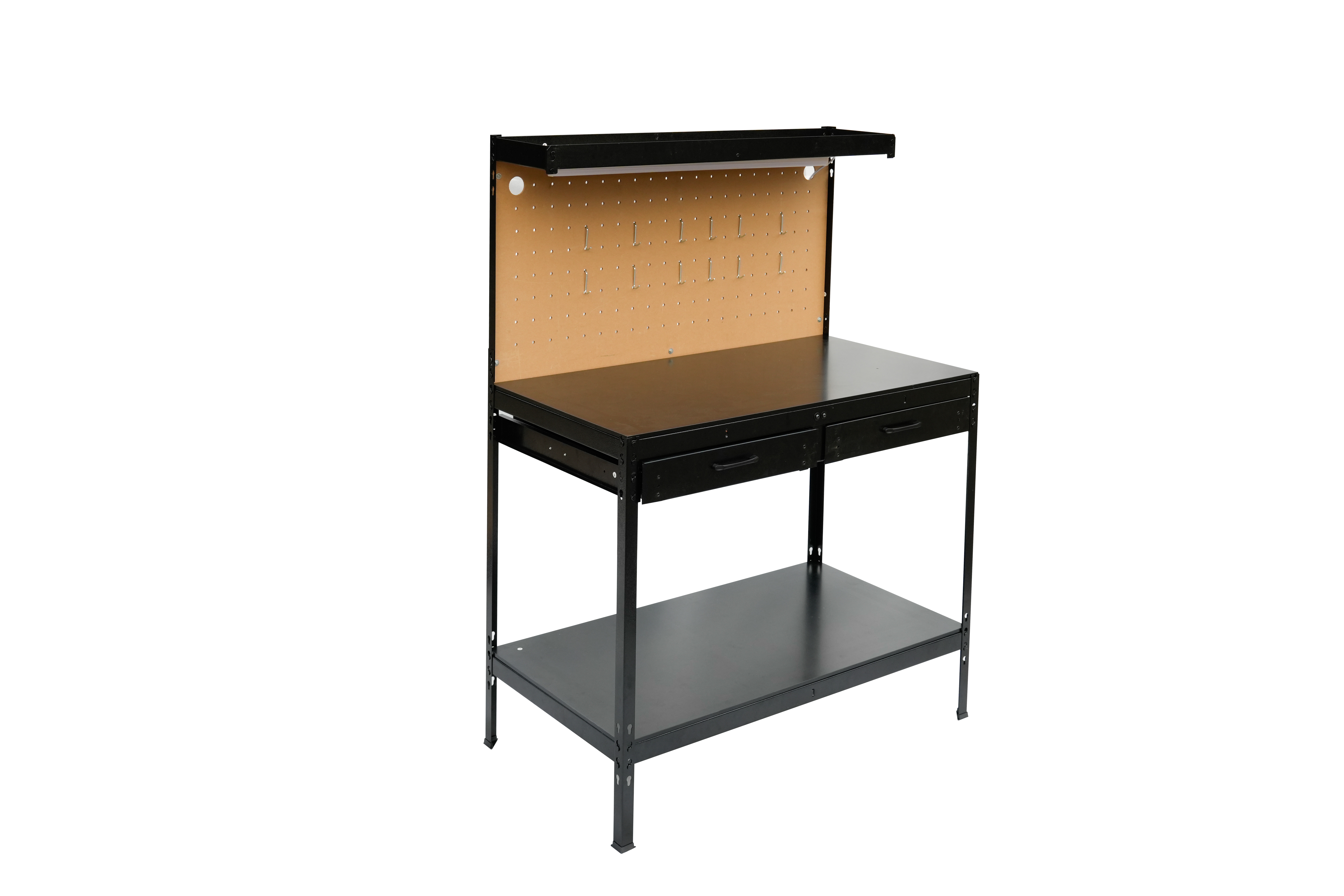
The right capacity for a heavy-duty metal workbench is not a single number. It depends on the heaviest real load your team places on the surface, how that load is distributed, and how often high-load tasks happen during a normal shift. In most industrial settings, a metal workbench should be specified with enough margin to handle dynamic use, fixture weight, and future process changes, not just today's static part weight. Choosing capacity this way reduces safety risk, improves quality stability, and prevents early frame fatigue.
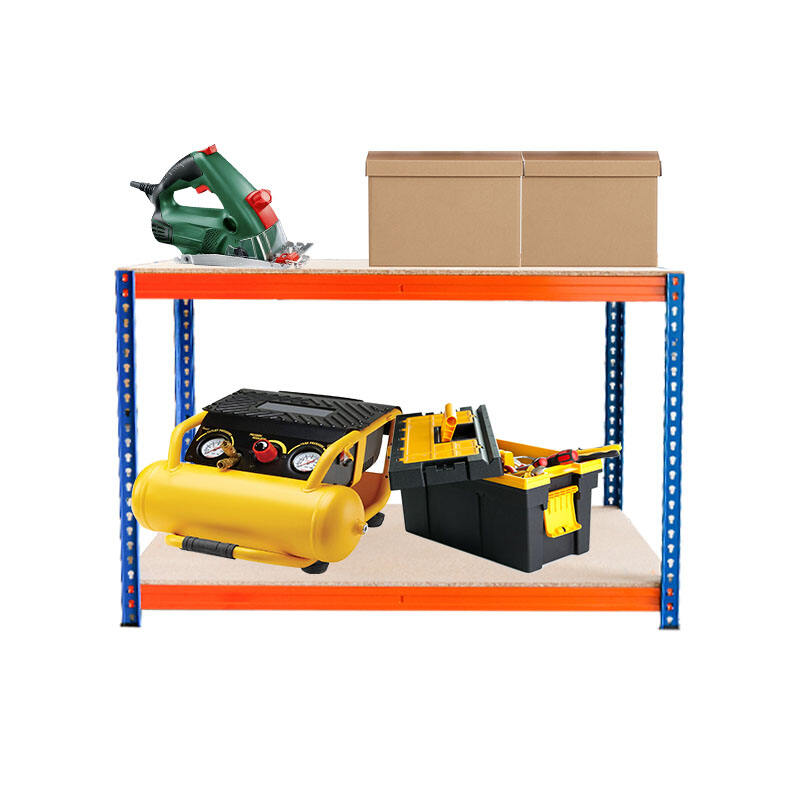
For procurement and operations teams, the key question is not only how much a metal workbench can hold in a brochure test. The practical question is how much a metal workbench can hold safely and repeatedly under your workflow conditions. A proper decision combines load math, structural understanding, and operational context so the selected metal workbench supports productivity without being oversized or underbuilt.
Define the real load your operation places on a workbench
Separate static load, dynamic load, and incidental load
Start with static load, which includes parts, tools, jigs, and materials that sit on the surface for extended periods. Many teams underestimate this by counting only product weight, while ignoring mounted vises, test instruments, and bins. A heavy-duty metal workbench often carries all of these at once, so the total baseline load can be much higher than expected.
Dynamic load is created when items are dropped, slid, clamped, or impacted during assembly and maintenance tasks. Even if average weight is moderate, dynamic events can stress a metal workbench far beyond static conditions for short moments. Capacity planning should account for these peaks because repeated shock loading is a common cause of frame loosening and top deformation.
Incidental load includes technician body weight during reach-in tasks, temporary staging of cartons, and tool carts leaned against the edge. These non-ideal behaviors happen in real production environments and should be considered normal design inputs. A metal workbench selected only for ideal use can become a bottleneck when actual work habits are applied.
Map the maximum credible load case, not the average case
Use the heaviest realistic task scenario as your baseline, not daily averages. If one weekly maintenance operation places a motor assembly and fixture totaling 420 kg, that event should influence specification more than a 120 kg daily average. A metal workbench must stay stable in peak tasks because incidents happen at the edge of operating conditions.
A practical method is to document the top three heavy workflows, then choose the highest combined load with expected handling impact. This makes capacity decisions auditable for EHS, production engineering, and purchasing. When teams align on this method, the selected metal workbench is easier to justify across departments.
Translate workload into a usable weight capacity target
Apply a safety margin that reflects process variability
After defining maximum credible load, add a safety factor to account for uncertainty and long-term wear. In many industrial environments, a 1.5x to 2.0x margin is a practical range depending on impact severity and duty cycle. If peak operational load is 500 kg, a metal workbench rated around 750 kg to 1000 kg is often more resilient in continuous use.
The margin should be higher when multiple shifts use the same station, when operators frequently reposition heavy parts, or when floor conditions are imperfect. Capacity ratings are usually derived from controlled testing, while production floors introduce variability. This is why a heavy-duty metal workbench should be chosen for repeatable real-world endurance, not only theoretical minimum compliance.
Consider load distribution across the surface and frame
Rated capacity assumes a defined distribution pattern, often even spread across the full top. Concentrated point loads from presses, vises, or compact tooling can exceed local limits even when total weight is within rating. A metal workbench used with concentrated loads needs reinforced tops, proper leg geometry, and sometimes under-top bracing near the load point.
Edge loading is another frequent risk. When operators stage heavy parts near one corner for convenience, torsional stress rises and stability margin falls. Capacity planning for a metal workbench should include common staging behavior so the frame and feet remain reliable under asymmetric loading.
If your team is evaluating options, reviewing a specification example such as metal workbench configurations helps clarify how frame section, shelf design, and top thickness influence usable capacity in real installations.
Understand what construction details actually determine capacity
Frame design and joint integrity drive long-term performance
The frame is the primary load path in any metal workbench, so section size, steel gauge, and joint method matter more than appearance. Cross members that shorten unsupported spans significantly improve stiffness under heavy loads. A metal workbench with well-positioned reinforcement usually maintains flatness and alignment longer under cyclic work.
Joint quality is equally important because micro-movement at joints accelerates fatigue over time. Whether bolted or welded, the connection strategy should resist vibration and repeated torque events from tooling. A heavy-duty metal workbench with weak joints may pass initial load tests but lose rigidity after months of production use.
Top material, thickness, and support spacing change usable load
Capacity is not just about legs. The work surface must transfer load efficiently into the frame without excessive deflection that affects precision tasks. A metal workbench with a thin top over wide support spacing may sag under concentrated components even when total weight is below rating.
Top thickness should be selected based on task type, especially where clamping forces and impact are common. For inspection or light assembly, moderate stiffness may be sufficient, but machining-adjacent work demands higher rigidity. Matching top structure to application ensures the metal workbench supports both weight and process accuracy.
Do not ignore base contact and leveling. Uneven foot contact shifts load to fewer legs, effectively lowering safe capacity. A metal workbench installed with proper leveling and floor interface performs closer to its rated potential across the full service life.
Align capacity with workflow, compliance, and future change
Match capacity class to operational duty cycle
A bench in occasional maintenance can tolerate different design assumptions than a station used continuously in multi-shift production. Duty cycle affects fatigue accumulation, which directly affects how conservative your capacity target should be. For high-throughput cells, a metal workbench should be specified with stronger reserve margin than the same load in intermittent use.
Also consider associated equipment mounted to the station over time. Lighting, monitor arms, shelves, and power modules add weight and introduce eccentric loading. Capacity planning for a metal workbench should include these secondary loads from the beginning to avoid retrofits and structural upgrades later.
Plan for process growth and layout flexibility
Production requirements rarely stay fixed. Part variants increase, fixtures get heavier, and material staging patterns evolve with takt changes. Choosing a metal workbench only for current conditions often causes early replacement when processes scale.
A more strategic approach is to select a capacity tier that supports planned growth over the next equipment cycle. This reduces disruption, protects capital budgets, and keeps workstation ergonomics consistent across expansions. In B2B operations, the right metal workbench is an infrastructure choice, not a short-term accessory.
Documentation is important for auditability. Keep a simple load basis file showing assumptions, peak cases, safety factor, and approved rating. When a metal workbench is selected through documented engineering logic, procurement decisions are faster and easier to defend during safety and quality reviews.
A practical capacity decision model for purchasing teams
Use a repeatable formula before requesting quotations
A practical model is to calculate total peak task load, then add mounted accessory load, then apply a process-specific safety factor. This produces a minimum required rating that can be used consistently across departments. Teams that standardize this method procure each metal workbench on measurable criteria rather than opinion.
For example, if peak components and fixtures equal 380 kg, accessories add 70 kg, and your environment has moderate dynamic handling, the working load basis is 450 kg. With a 1.7 safety factor, target rated capacity becomes about 765 kg. In that scenario, selecting a metal workbench class near 800 kg or above is typically appropriate.
Avoid the cost traps of under-specification and over-specification
Under-specifying capacity leads to deflection, instability, and shortened asset life, which creates hidden costs through rework and downtime. It can also introduce safety exposure when operators adapt behavior around a weak station. A metal workbench that is too light for the process usually becomes expensive over its lifecycle.
Over-specifying without reason can inflate spend and reduce layout agility, especially when many stations are deployed. The goal is not maximum possible rating, but fit-for-purpose rating with realistic margin. The best heavy-duty metal workbench decision balances structural confidence, budget efficiency, and future readiness.
When your selection process is tied to documented load cases and duty cycle, you avoid both extremes. That approach ensures each metal workbench supports production reliability while keeping procurement disciplined and scalable.
FAQ
What is a common starting capacity range for a heavy-duty metal workbench?
A common starting point is to assess stations in the 500 kg to 1000 kg class, then refine based on your true peak load case and safety factor. Many industrial teams find this range practical because it covers mixed assembly and maintenance use. The final metal workbench rating should always be tied to your documented workflow, not a generic default.
Can total bench rating be used if one tool creates a concentrated point load?
Not by itself. Total rating does not always guarantee local surface performance under concentrated loading. If your metal workbench supports a vise, press, or dense fixture, verify top reinforcement and support spacing around that location so localized stress stays within safe limits.
How much safety margin should be added to expected load?
In many industrial scenarios, a 1.5x to 2.0x margin is a sound planning range, with higher values for severe impact or continuous multi-shift use. The exact margin should reflect variability, handling behavior, and maintenance discipline. A metal workbench selected with a clear margin usually delivers better stability and longer service life.
Should future process changes influence the capacity decision now?
Yes, especially when expansion, heavier fixtures, or added accessories are likely within the next planning cycle. Choosing a metal workbench with moderate future headroom prevents early replacement and keeps workstation standards consistent. This approach improves lifecycle value and reduces operational disruption.

