 EN
EN

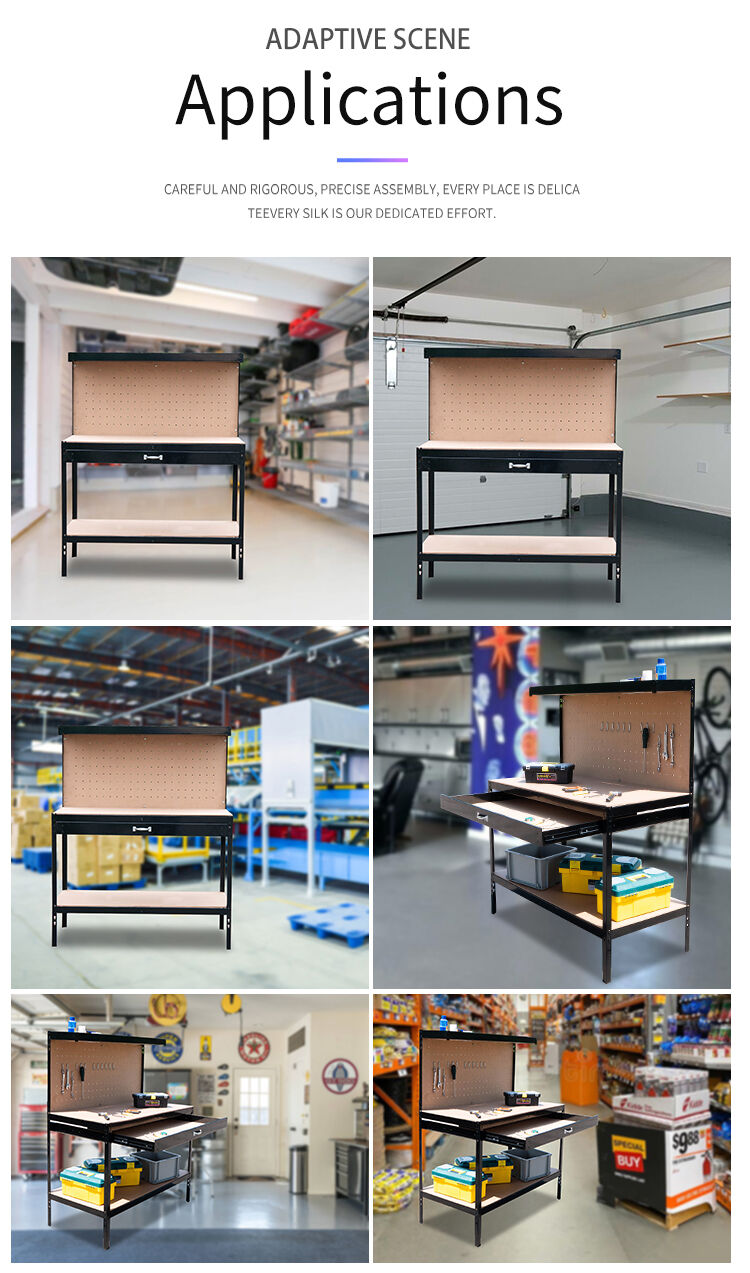
A mobile garage workbench can be the ultimate tool for many workshops, but only when the work environment depends on flexibility, shared space, and frequent task changes. In fixed-layout operations, a stationary bench may still win on pure rigidity. For most modern B2B workshop settings, however, a well-built garage workbench with mobility features often delivers higher daily productivity because teams can move the work zone to the task instead of moving every tool and component back to a fixed location.
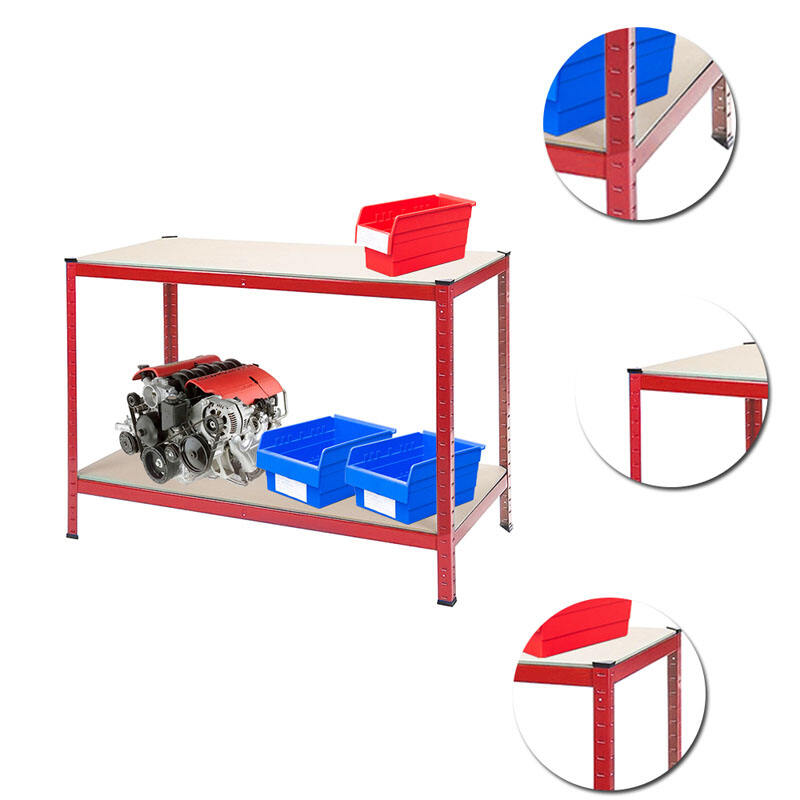
The real question is not whether any garage workbench is automatically superior, but whether a mobile garage workbench fits the workflow, floor plan, safety practices, and output targets of your workshop. When mobility aligns with process design, a garage workbench becomes a central operational asset rather than just a piece of furniture. This article gives a clear judgment, then breaks down the conditions, limits, and business implications that determine whether mobility is truly the ultimate choice.
Clear Judgment and the Conditions Behind It
Why the answer is often yes in modern workshops
In many industrial and service workshops, the answer is yes: a mobile garage workbench is often the most practical all-around tool platform. Work today is less linear than before, and technicians switch between assembly, repair, inspection, and packaging in the same shift. A mobile garage workbench supports that reality by reducing transition time between tasks and bringing tools to the exact point of use.
A fixed station forces workers to adapt to the bench location, while a mobile garage workbench allows the bench to adapt to the operation. That shift matters in busy facilities where interruptions, urgent jobs, and layout conflicts are common. Over time, the gains from faster setup and fewer unnecessary movement cycles can outweigh the cost difference between basic and mobile models.
Where the claim has practical limits
Calling a mobile garage workbench the ultimate tool only holds when wheel quality, frame strength, and load handling are engineered for industrial use. If casters are weak or locking mechanisms are unreliable, the garage workbench becomes unstable under torque-heavy tasks. In that case, mobility introduces risk instead of control.
There are also process types where a stationary garage workbench remains better, such as high-force machining support, permanent fixture alignment, or calibration zones requiring fixed positioning. Mobility is strongest in dynamic, multi-task operations, not in every technical scenario. The right conclusion is conditional: mobile design is often ultimate for workflow agility, but not universal for all load and precision environments.
Operational Advantages That Drive Business Value
Faster workflow and reduced handling waste
A mobile garage workbench reduces non-productive movement in daily operations. Instead of carrying parts back and forth across the workshop, teams can reposition the garage workbench near incoming materials, equipment under service, or quality checkpoints. This shortens cycle time and helps maintain focus during complex tasks.
In B2B settings, efficiency is tied directly to throughput and labor cost control. A garage workbench that moves with the job can support rapid reconfiguration during peak demand, temporary project zones, or maintenance windows. That flexibility is especially useful where floor space is shared by multiple teams and priorities change by the hour.
Space optimization in mixed-use workshop floors
Floor utilization is a constant challenge, and a mobile garage workbench helps solve it without expensive reconstruction. When inactive, the garage workbench can be relocated to open access paths, receiving areas, or equipment lanes. During active tasks, it can create temporary production cells exactly where needed.
This is valuable in operations that combine repair, assembly, and storage in one footprint. A fixed garage workbench may block layout changes, while a mobile unit supports adaptive zoning. The result is better use of existing square meters and less pressure to expand facilities for avoidable space bottlenecks.
Technical Factors That Decide Performance
Structural stability, load rating, and surface durability
Not every mobile garage workbench delivers the same result. Frame construction, weld quality, and material thickness define how well the bench handles vibration and repeated loading. For industrial reliability, a garage workbench must maintain alignment and surface integrity under real working conditions, not just under light demonstration use.
Surface selection is equally important. A garage workbench used for metal components, tooling, and maintenance should resist impact, abrasion, and fluid exposure. If the top degrades quickly, technicians lose confidence in measurement consistency and task quality. Durability turns mobility from convenience into long-term utility.
Caster systems, locking control, and safety behavior
The mobility system is the defining element of a mobile garage workbench. High-quality casters should roll smoothly under load, rotate predictably, and lock firmly to prevent creep. A garage workbench that shifts during fastening, cutting, or inspection creates safety concerns and rework risk.
Braking design also affects operator behavior. When locks are easy to engage and verify, teams use them consistently. When locks are awkward, users skip them under time pressure. The best garage workbench design supports safe habits by default, combining mobility with stable working posture and controlled movement in constrained floor traffic.
Implementation Strategy for Workshop Decision Makers
Matching mobile bench use to process categories
A mobile garage workbench performs best when assigned to workflows that benefit from relocation. Good candidates include diagnostic work, staged assembly, kitting support, and multi-bay maintenance where tasks move between assets. In these conditions, the garage workbench becomes a process tool rather than a static surface.
For fixed high-force operations, businesses can combine mobile and stationary stations instead of forcing one model into every role. This hybrid approach preserves the agility of a mobile garage workbench while keeping heavy-duty fixed capacity where needed. Decision quality improves when planners map bench type to job physics and task frequency.
Adoption, training, and long-term return logic
The value of a mobile garage workbench depends on disciplined implementation. Teams need simple movement rules, designated parking logic, and clear lock-before-work routines. Without operational standards, even a high-quality garage workbench can become a source of clutter and inconsistency.
From a return perspective, savings often come from lower handling time, smoother shift transitions, and fewer layout interruptions. A garage workbench that supports faster setup across repeated tasks can generate cumulative gains that are easy to miss in short evaluations. Over months, mobility frequently pays off through improved workflow continuity and better labor utilization.
FAQ
Is a mobile garage workbench always better than a fixed one?
No, not in every case. A mobile garage workbench is often better for dynamic workflows, shared spaces, and tasks that move across the floor. A fixed garage workbench can be better for high-force or permanently aligned operations. The right choice depends on task mobility, load demands, and required stability.
Can one garage workbench support both light assembly and repair work?
Yes, a properly specified garage workbench can handle both, especially when the frame, top surface, and caster locks are chosen for mixed-duty use. The key is to match load rating and surface durability to real work conditions. A mobile garage workbench with strong locking control can transition effectively between different daily functions.
What are the biggest mistakes when buying a garage workbench for B2B use?
The most common mistakes are underestimating load requirements, ignoring caster quality, and treating the garage workbench as a generic purchase rather than a workflow asset. Businesses also lose value when they skip usage standards and lock protocols. A garage workbench should be selected around process behavior, not only dimensions and price.
How can a workshop confirm that a mobile garage workbench is the right investment?
Start by tracking movement-heavy tasks, setup delays, and floor congestion points. Then test a mobile garage workbench in those zones and observe cycle time, operator effort, and station turnover. When the garage workbench consistently reduces handling waste and improves space use without safety compromises, the investment case is strong.

