 EN
EN

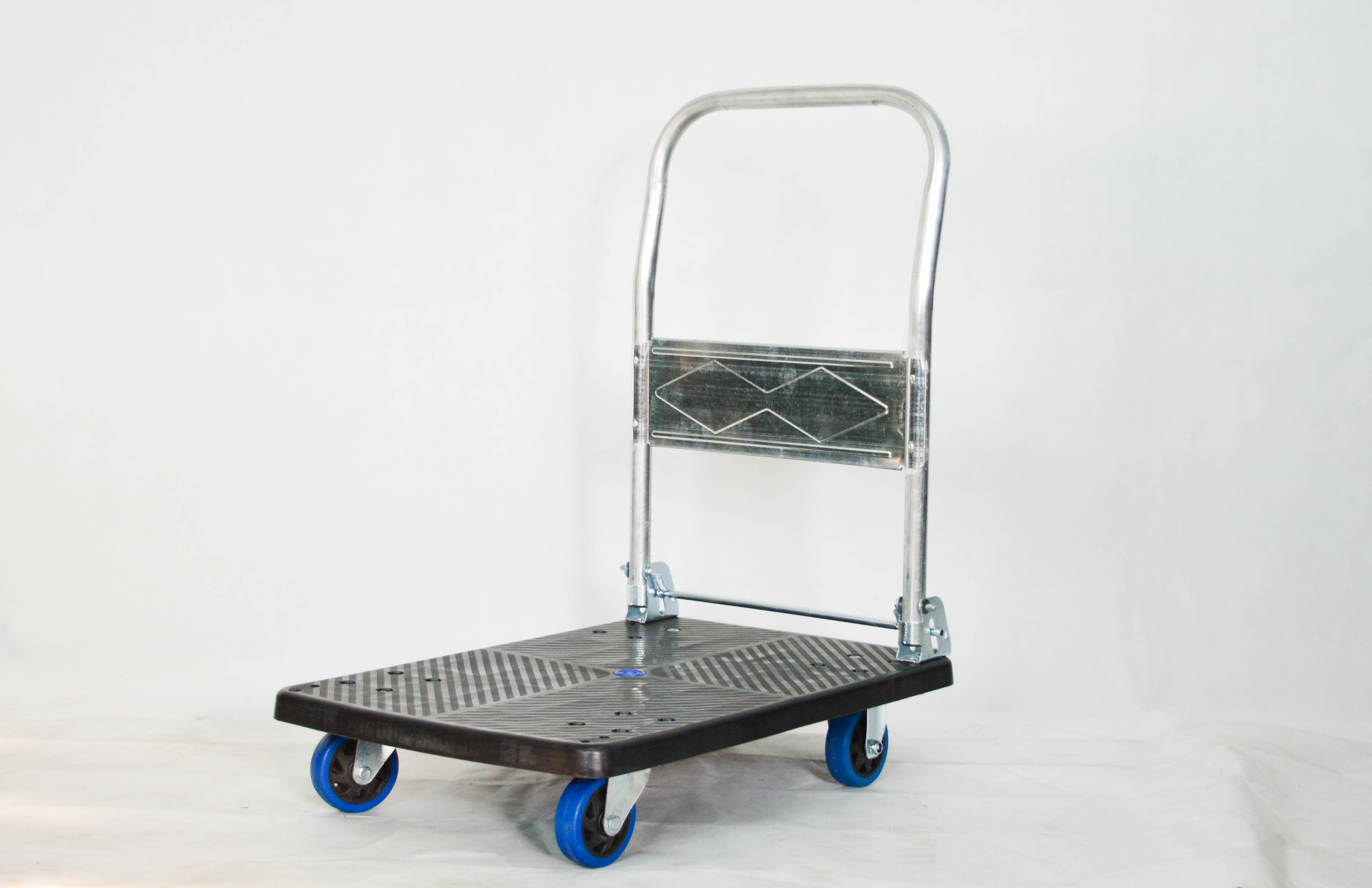
Procurement teams tasked with acquiring material handling equipment face a critical challenge: ensuring that every platform hand truck they purchase can withstand the rigors of daily industrial use without premature failure. Durability is not merely a desirable feature but a fundamental requirement that directly impacts operational efficiency, worker safety, and total cost of ownership. When evaluating platform hand truck durability, procurement professionals must look beyond surface-level specifications and marketing claims to assess the structural integrity, material quality, design engineering, and real-world performance potential of each candidate model. This evaluation process requires a systematic approach that combines technical knowledge, vendor assessment, and alignment with specific operational environments.
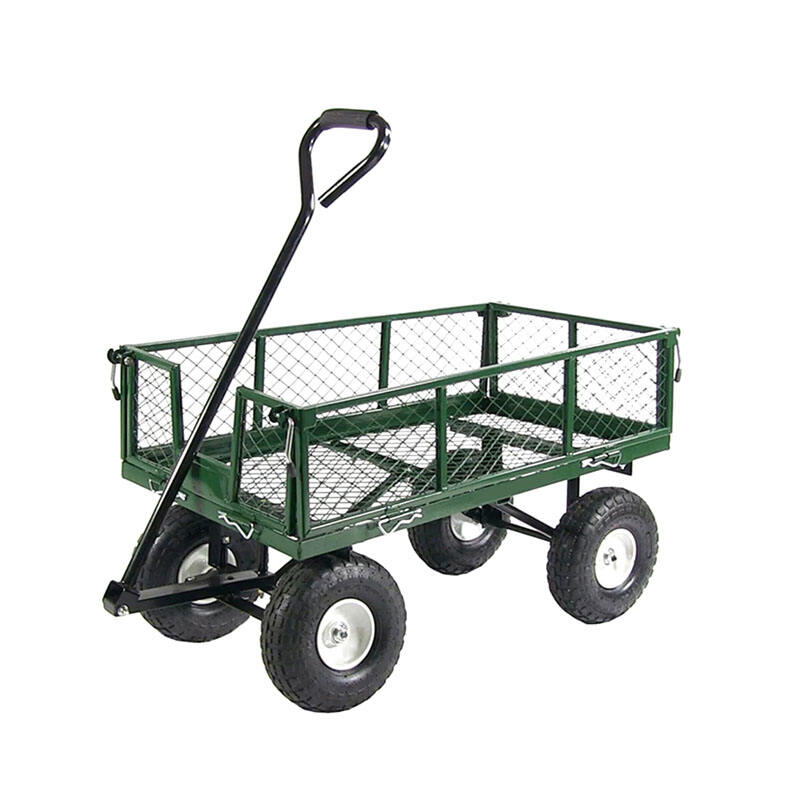
The methodology procurement teams employ to evaluate durability extends across multiple dimensions, from frame construction and weld quality to wheel bearing specifications and load distribution mechanics. Understanding how these teams assess durability helps manufacturers design better products and enables end users to make informed purchasing decisions that protect their investment over years of service. This comprehensive examination reveals the technical criteria, testing protocols, vendor qualification processes, and practical considerations that shape procurement decisions in warehouses, distribution centers, manufacturing facilities, and commercial operations worldwide.
Material Composition and Structural Engineering Analysis
Frame Material Selection and Performance Characteristics
Procurement teams begin their durability assessment by examining the base materials used in platform hand truck construction, as material choice fundamentally determines longevity under stress. Steel remains the predominant frame material for industrial applications due to its superior tensile strength, impact resistance, and ability to maintain structural integrity under repeated loading cycles. Teams evaluate the specific steel grade, with higher carbon content generally indicating greater hardness and wear resistance, though this must be balanced against weldability and brittleness concerns. Cold-rolled steel offers tighter dimensional tolerances and smoother surfaces compared to hot-rolled alternatives, making it preferable for precision-engineered components that require consistent performance.
Aluminum platform hand truck models appeal to procurement teams seeking lightweight solutions for environments where operators frequently lift or reposition equipment, but durability evaluation requires careful consideration of alloy composition. Aircraft-grade aluminum alloys provide excellent strength-to-weight ratios while resisting corrosion in humid or outdoor settings, yet they typically cost significantly more than steel equivalents. Procurement professionals analyze whether the weight savings justify the premium cost and whether the operational environment truly demands corrosion resistance beyond what powder-coated steel can provide. The evaluation also considers that aluminum frames may dent more easily than steel under impact, potentially affecting long-term appearance and resale value even when structural performance remains adequate.
Welding Quality and Joint Integrity Assessment
The durability of any platform hand truck depends critically on weld quality, as joints represent the primary stress concentration points where structural failures typically initiate. Procurement teams scrutinize welding techniques employed during manufacturing, distinguishing between continuous welds that distribute stress evenly along entire joint lines versus spot welds that create discrete attachment points with potential weakness between them. Continuous MIG or TIG welding processes generally produce superior durability compared to spot welding, particularly in high-stress applications involving frequent heavy loads or impact scenarios. Teams may request weld penetration specifications or cross-sectional samples to verify that welds achieve full material fusion rather than superficial surface bonding.
Visual inspection protocols help procurement teams identify potential weld defects that compromise platform hand truck longevity, including porosity, undercut, spatter accumulation, and inconsistent bead appearance. Professional buyers recognize that cosmetic weld appearance often correlates with structural integrity, as manufacturers maintaining rigorous quality control produce both aesthetically clean and mechanically sound joints. Some procurement organizations require third-party weld certification or adherence to specific welding standards such as AWS D1.1 for structural welding, particularly when purchasing equipment for heavy industrial environments where failure could result in injury or significant property damage. Post-weld heat treatment processes may also factor into evaluation, as these procedures reduce residual stresses that could lead to crack propagation over time.
Platform Deck Construction and Load Distribution
The platform deck itself represents a critical durability component that procurement teams evaluate through analysis of material thickness, surface treatment, and reinforcement design. Steel platforms typically range from 14-gauge to 10-gauge thickness, with heavier gauges providing greater rigidity and resistance to deformation under concentrated loads. Teams assess whether the deck includes structural ribs, cross-bracing, or corrugation patterns that enhance stiffness without adding excessive weight, as unsupported flat platforms may flex excessively and develop permanent deformation after extended use. The spacing and orientation of reinforcement elements directly influence how effectively the deck distributes point loads across the underlying frame structure.
Mesh platform designs offer advantages in specific applications by reducing weight while maintaining adequate strength, and procurement evaluation focuses on wire gauge, mesh opening size, and perimeter frame robustness. Expanded metal platforms provide excellent slip resistance and drainage characteristics for outdoor or wet environments, though teams must verify that the expansion process has not created stress risers that could initiate tearing under repeated loading. Wood platform decks appeal to some procurement teams for their cushioning properties and cost advantages, but durability assessment requires examination of wood species, moisture content, treatment processes, and fastening methods to ensure the deck will not split, warp, or separate from mounting hardware during normal service life.
Wheel and Caster System Durability Evaluation
Wheel Material Properties and Wear Resistance
Wheels constitute the primary wear components on any platform hand truck, and procurement teams invest significant evaluation effort in assessing wheel material composition and expected service life. Polyurethane wheels dominate industrial applications due to their combination of load-bearing capacity, floor protection characteristics, and resistance to chunking or flat-spotting. Teams compare durometer ratings across candidate models, recognizing that harder compounds resist wear better on smooth surfaces while softer formulations provide superior shock absorption and traction on rough terrain. The core material also matters, with polyurethane-on-polyurethane construction generally outlasting polyurethane treads bonded to nylon or plastic cores that may separate under stress.
Pneumatic wheels appeal to procurement teams equipping platform hand truck fleets for outdoor use or irregular surfaces, but durability evaluation must account for puncture vulnerability and maintenance requirements. Solid rubber wheels eliminate flat tire concerns while providing reasonable cushioning, though they typically wear faster than polyurethane alternatives and may mark certain floor surfaces. Teams increasingly consider non-marking wheel requirements for food processing, clean rooms, and retail environments where floor appearance matters, verifying that non-marking compounds maintain adequate durability rather than sacrificing longevity for aesthetic concerns. Procurement professionals often request wear test data or field performance histories that quantify expected wheel replacement intervals under defined load and distance parameters.
Bearing Systems and Rolling Efficiency
The bearing system within each wheel assembly dramatically affects both rolling resistance and long-term durability, making it a focus area for procurement evaluation of platform hand truck quality. Sealed ball bearings represent the gold standard for industrial applications, protecting bearing surfaces from contaminant intrusion while requiring no maintenance throughout their service life. Teams distinguish between single-row and double-row bearing configurations, with double-row designs providing greater radial load capacity and resistance to side loading that occurs during turning maneuvers. The bearing shield or seal type matters significantly, as metal shields allow slight lubricant weepage but permit easier cleaning, while rubber contact seals provide superior contamination exclusion at the cost of slightly higher rolling resistance.
Plain sleeve bearings or bushings represent a more economical alternative that some manufacturers incorporate into budget platform hand truck models, and procurement teams must assess whether this cost savings justifies the performance and durability trade-offs. Sleeve bearings generally require periodic lubrication, introduce higher rolling resistance that increases operator fatigue, and wear more rapidly under heavy loads compared to ball bearing alternatives. However, they tolerate shock loading and impact better than precision ball bearings and may prove more durable in extremely dusty or corrosive environments where contaminants would quickly degrade sealed bearing performance. Procurement evaluation includes analysis of lubrication access points, bearing material composition such as bronze versus plastic, and manufacturer recommendations for maintenance intervals.
Caster Mounting and Swivel Mechanism Integrity
For platform hand truck models incorporating swivel casters to enhance maneuverability, procurement teams closely examine the swivel mechanism durability as this component often determines overall equipment service life. The swivel raceway must accommodate both vertical loads transmitted through the wheel and horizontal forces generated during direction changes, requiring robust bearing surfaces and adequate lubrication. Teams evaluate whether the raceway uses ball bearings, tapered roller bearings, or plain thrust surfaces, with ball-bearing raceways generally providing smoother operation and longer service life despite higher initial cost. The number of bearing balls in the raceway matters, as more balls distribute loads across a larger contact area and reduce individual bearing stress.
The method of attaching casters to the platform hand truck frame significantly influences durability, and procurement evaluation distinguishes between welded, bolted, and riveted mounting approaches. Welded mounting provides the strongest and most permanent attachment but complicates caster replacement if wheel damage occurs. Bolted casters facilitate maintenance and component substitution while still providing adequate strength when properly sized fasteners penetrate sufficiently into the frame structure. Teams verify that mounting plates are thick enough to prevent stress concentration and that fastener locations position loads over structural frame members rather than unsupported platform areas. Some specifications require lock washers or thread-locking compounds to prevent fastener loosening from vibration during extended use.
Load Capacity Testing and Structural Performance Validation
Static Load Rating Verification Methods
Procurement teams recognize that published load capacity ratings for platform hand truck models represent manufacturer claims that require independent validation to ensure durability under actual working conditions. Static load testing involves placing progressively increasing weights on the platform while monitoring for structural deformation, weld cracking, wheel compression, or other failure indicators. Professional procurement organizations may conduct their own load testing or require third-party certification that verifies the platform hand truck can support its rated capacity with an appropriate safety factor, typically 150 to 200 percent of the nominal working load. Teams examine whether ratings account for uniform load distribution or whether they assume concentrated loads that better represent actual cargo configurations.
The difference between static and dynamic load ratings matters significantly for durability assessment, as equipment that performs adequately while stationary may fail when subjected to the shock loads and vibration inherent in material transport operations. Procurement evaluation includes analysis of how manufacturers derive their capacity ratings and whether testing protocols incorporate dynamic factors such as acceleration, deceleration, threshold crossing, and turning maneuvers. Some teams request to observe load testing or review test reports that document deflection measurements at various load increments, providing insight into structural stiffness margins before permanent deformation occurs. The load distribution pattern also requires consideration, as centrally loaded platforms experience different stress patterns than those with off-center or cantilevered loads.
Fatigue Testing and Cycle Life Analysis
Unlike single-event load testing, fatigue analysis evaluates how repeated loading and unloading cycles affect platform hand truck structural integrity over extended service periods. Procurement teams may request fatigue test data showing how many load cycles the equipment can endure before developing cracks, permanent deformation, or component failures. Industry-standard fatigue testing typically involves cycling loads between zero and the rated capacity thousands or tens of thousands of times while periodically inspecting for damage progression. This testing reveals whether welds, frame joints, or other stress concentration points will fail prematurely under normal operational duty cycles that may involve dozens of loading events per day over years of service.
Procurement professionals understand that fatigue life depends heavily on load magnitude relative to capacity, with equipment operated consistently near maximum rated capacity experiencing dramatically shorter service life than units typically loaded to 50 or 60 percent of capacity. This relationship informs purchasing decisions, as teams may intentionally specify platform hand truck models with capacity ratings substantially exceeding typical loads to extend durability through reduced stress levels. The evaluation also considers load application methods, as smoothly lowering cargo onto platforms creates less fatigue damage than dropping loads from height. Some procurement specifications include minimum cycle life requirements such as 10,000 cycles at full rated capacity without structural damage, providing quantifiable durability benchmarks for supplier comparison.
Impact Resistance and Abuse Tolerance
Real-world platform hand truck durability depends not only on design load capacity but also on the ability to withstand the accidental impacts, rough handling, and operational abuse that inevitably occur in busy material handling environments. Procurement teams evaluate impact resistance through drop testing, collision simulation, and analysis of frame geometry that influences damage susceptibility. Equipment with exposed frame corners or protruding components may suffer disproportionate damage from minor collisions, while designs incorporating rounded profiles or protective bumpers maintain functionality after impacts that would disable less robust alternatives. Teams consider the repair implications of impact damage, as equipment requiring specialized welding or component replacement after minor incidents imposes higher total cost of ownership than units tolerating abuse without intervention.
The handle assembly represents a particularly vulnerable area where impact damage frequently occurs, and procurement evaluation examines handle mounting strength, material ductility, and replacement accessibility. Handles welded directly to the platform frame may transmit impact forces that crack welds or deform the platform structure, while bolted handles with designed-in failure points protect the main frame by sacrificing replaceable components. Some platform hand truck designs incorporate cushioned handle grips or shock-absorbing elements that reduce peak impact forces transmitted to the operator and the frame structure. Procurement teams may review damage histories from current equipment fleets to identify common failure modes and prioritize designs that address these vulnerabilities through enhanced material thickness, alternative geometry, or protective features.
Surface Treatment and Corrosion Protection Assessment
Powder Coating Quality and Adhesion Testing
Surface finish quality directly influences platform hand truck longevity in environments where moisture, chemicals, or abrasive materials contact the frame, making coating evaluation a critical procurement responsibility. Powder coating has largely replaced liquid paint for industrial equipment due to its superior durability, impact resistance, and environmental advantages. Procurement teams assess powder coating quality through examination of film thickness, surface preparation processes, and cure temperature profiles that ensure proper cross-linking. Adequate film thickness, typically 2 to 4 mils for industrial applications, provides sufficient barrier protection without becoming brittle or prone to chipping, while insufficient coating allows moisture penetration that initiates corrosion at the substrate interface.
The surface preparation process before powder application fundamentally determines coating adhesion and long-term durability, and procurement evaluation includes verification of proper cleaning, degreasing, and phosphate conversion coating steps. Iron phosphate or zinc phosphate pretreatment creates a crystalline surface that mechanically and chemically bonds the powder coating to the base metal, dramatically improving adhesion compared to powder applied directly to bare or simply cleaned steel. Teams may request coating adhesion test results using standardized methods such as cross-hatch adhesion testing or pull-off testing that quantify the force required to separate the coating from the substrate. Premium platform hand truck manufacturers employ multi-stage wash systems and controlled pretreatment processes that justify higher equipment costs through extended service life in demanding environments.
Galvanization and Alternative Corrosion Protection
For platform hand truck applications in particularly corrosive environments such as food processing, chemical handling, or marine settings, procurement teams may specify hot-dip galvanization or other advanced corrosion protection systems. Galvanization applies a metallic zinc coating that provides both barrier protection and sacrificial corrosion protection, as the zinc preferentially oxidizes to protect the underlying steel even when the coating is scratched or damaged. The galvanization process requires careful control of steel composition and surface condition to achieve proper zinc adhesion and uniform coating thickness. Teams evaluate whether galvanization meets relevant standards such as ASTM A123 for structural steel components and verify minimum coating thickness through magnetic gauge measurements or weight-per-area calculations.
Stainless steel construction represents the ultimate corrosion protection solution that some procurement teams specify for the most demanding environments, though cost considerations typically limit stainless applications to specialized settings. Type 304 stainless steel provides excellent general corrosion resistance, while Type 316 grades incorporating molybdenum offer superior performance in chloride-rich environments such as coastal facilities or food processing operations using salt-based cleaning solutions. Procurement evaluation of stainless steel platform hand truck options includes verification of material certifications, examination of welding procedures that maintain corrosion resistance in heat-affected zones, and assessment of whether the operational environment truly justifies the substantial cost premium over coated carbon steel alternatives. Some hybrid designs incorporate stainless steel in high-exposure areas while using coated carbon steel for structural components that remain dry, optimizing cost-performance balance.
Paint System Specification for Specialized Environments
Despite powder coating's general superiority, certain applications require liquid paint systems that offer specific performance characteristics such as chemical resistance, temperature tolerance, or rapid touch-up capability. Procurement teams evaluating painted platform hand truck models examine the complete paint system including primer, intermediate coats, and topcoat rather than focusing solely on final appearance. Epoxy primers provide excellent adhesion and corrosion protection, polyurethane topcoats offer superior UV resistance and gloss retention, while specialized coatings may incorporate zinc-rich pigments for additional sacrificial protection. The number of coating layers and total dry film thickness directly influence durability, with industrial-grade systems typically specifying minimum total thickness of 4 to 6 mils across all layers.
Application method affects coating quality and durability, with spray application generally producing more uniform coverage than brush or roller methods, though spray processes require sophisticated equipment and environmental controls. Procurement evaluation may include examination of manufacturer coating facilities, operator training programs, and quality control procedures that ensure consistent application parameters. Bake schedules must provide adequate cure without causing substrate distortion, and teams verify that manufacturers follow coating supplier recommendations for temperature and duration. Some procurement specifications require salt spray testing per ASTM B117 to quantify corrosion resistance, with minimum exposure periods before red rust appearance serving as acceptance criteria. The ability to repair coating damage in the field without specialized equipment may also factor into procurement decisions for organizations lacking dedicated maintenance facilities.
Vendor Qualification and Manufacturing Quality Systems
Manufacturing Process Capabilities and Quality Control
Procurement teams recognize that platform hand truck durability depends not only on design specifications but also on manufacturing process capability and consistency. Vendor qualification processes examine production equipment, operator training, material handling procedures, and quality control systems that ensure every unit meets design requirements. Teams may conduct facility audits to observe actual manufacturing operations, identifying potential quality risks such as inadequate welding equipment, lack of dimensional inspection tools, or poor material storage that could introduce moisture or contaminants. The presence of statistical process control systems, documented work instructions, and operator certification programs indicates a manufacturer's commitment to consistent quality rather than reliance on final inspection to catch defects.
Quality management system certification such as ISO 9001 provides procurement teams with independent verification that a manufacturer maintains documented processes, conducts internal audits, and pursues continuous improvement. While certification alone does not guarantee superior platform hand truck durability, it establishes baseline expectations for process control and traceability that reduce quality variation risk. Teams examine whether manufacturers maintain material certifications for steel, aluminum, and other critical components, enabling traceability to specific material lots if field failures occur. Some procurement organizations require capability studies demonstrating that critical dimensions and performance parameters fall within specification limits with adequate process capability indices, typically Cpk values exceeding 1.33 for important characteristics.
Warranty Terms and After-Sales Support Structure
Warranty provisions reveal manufacturer confidence in platform hand truck durability and provide procurement teams with important risk mitigation tools. Comprehensive warranties covering both materials and workmanship for extended periods, such as three to five years, indicate that manufacturers expect their products to perform reliably throughout that timeframe. Teams carefully examine warranty exclusions and limitations, as overly restrictive terms that exclude normal wear items or require unrealistic maintenance procedures may render warranty protection meaningless. The warranty claim process also matters, with some manufacturers requiring extensive documentation or inspection while others honor claims based on customer photographs and descriptions, significantly affecting the practical value of warranty coverage.
After-sales parts availability and technical support capabilities influence long-term platform hand truck durability by determining whether organizations can economically repair equipment or must replace entire units when components fail. Procurement evaluation includes assessment of manufacturer parts inventory, lead times for common replacement components such as wheels and casters, and pricing that makes repair economically viable compared to new equipment purchase. Technical support resources including installation guidance, troubleshooting assistance, and application engineering help ensure that equipment operates within design parameters, maximizing service life. Some manufacturers offer training programs that help procurement teams educate end users on proper platform hand truck handling, loading practices, and basic maintenance that extends durability through reduced abuse and timely intervention when problems develop.
Field Performance Data and Reference Account Verification
Published specifications and laboratory test results provide valuable information, but procurement teams increasingly demand real-world performance data from similar applications to validate platform hand truck durability claims. Reference accounts operating in comparable environments with similar load profiles offer the most relevant durability insights, as they reflect actual abuse patterns, maintenance practices, and environmental factors that laboratory testing may not fully capture. Teams contact reference customers to discuss their experience with specific platform hand truck models, asking detailed questions about failure modes, replacement intervals, maintenance requirements, and overall satisfaction with equipment longevity. Patterns emerging across multiple reference accounts carry more weight than individual experiences that may reflect unusual circumstances or exceptional abuse.
Some procurement organizations conduct pilot programs before large-scale platform hand truck fleet purchases, placing small quantities into service and monitoring performance over several months or years. This approach requires patience and planning but provides organization-specific durability data that accounts for unique operational characteristics. Pilot programs enable teams to compare competing models under identical conditions, eliminating variables that complicate cross-manufacturer comparisons based on different reference accounts. Performance metrics tracked during pilots may include equipment downtime, repair costs, component replacement frequency, and user feedback regarding handling characteristics that might affect how carefully operators treat the equipment. Successful pilot performance builds confidence in large-volume purchases, while poor results enable teams to avoid costly fleet-wide mistakes.
FAQ
What is the most important factor procurement teams should evaluate when assessing platform hand truck durability?
Frame construction quality represents the single most critical durability factor, as the frame provides structural integrity that determines load-bearing capacity and service life. Procurement teams should focus on material grade, welding quality, and reinforcement design before considering secondary features. High-quality continuous welds, appropriate material thickness, and strategic reinforcement placement enable a platform hand truck to withstand years of heavy use, while deficiencies in these fundamental areas lead to premature structural failure regardless of other component quality. Teams should request detailed frame specifications, examine weld samples or production units, and verify that frame design includes adequate safety factors beyond nominal load ratings.
How can procurement teams verify that published load capacity ratings accurately reflect real-world platform hand truck durability?
Requesting third-party test certifications or conducting independent load testing provides the most reliable verification of capacity claims. Procurement teams should ask manufacturers for documentation showing how capacity ratings were determined, including test protocols, safety factors applied, and whether ratings account for static loads only or include dynamic use factors. Organizations with significant equipment purchases may justify investing in their own load testing, progressively loading candidate platform hand truck models while monitoring for deflection, permanent deformation, or structural damage. Examining reference account experiences in similar applications also helps validate whether equipment performs as specified under actual working conditions rather than idealized laboratory scenarios.
What wheel and caster specifications indicate superior long-term durability for industrial platform hand truck applications?
Sealed ball bearing wheels with polyurethane treads bonded to polyurethane cores provide optimal durability for most industrial platform hand truck applications. Procurement teams should verify bearing seal type, with double-sealed or shielded bearings offering superior contamination protection compared to open bearings that require frequent lubrication. Wheel diameter also affects durability, as larger wheels distribute loads over greater contact areas and roll more easily over obstacles, reducing shock loads that accelerate bearing wear. For swivel casters, ball-bearing raceways with adequate ball count and proper sealing dramatically outlast plain thrust bearing designs, though they command higher initial costs that prove economical through extended replacement intervals and reduced maintenance labor.
How do environmental factors influence platform hand truck durability evaluation criteria for procurement teams?
Operating environment fundamentally determines appropriate material selection, surface treatment requirements, and component specifications that ensure adequate platform hand truck service life. Procurement teams must assess exposure to moisture, chemicals, temperature extremes, and UV radiation when selecting corrosion protection systems, as standard powder coating adequate for indoor warehouses fails rapidly in corrosive environments requiring galvanization or stainless steel construction. Outdoor applications demand wheels with UV-resistant compounds and sealed bearings that exclude moisture, while food processing environments may require stainless steel frames and non-marking wheels regardless of cost premiums. Teams should clearly document environmental conditions and ensure specifications address these factors rather than defaulting to lowest-cost options that sacrifice durability for initial price savings.
Table of Contents
- Material Composition and Structural Engineering Analysis
- Wheel and Caster System Durability Evaluation
- Load Capacity Testing and Structural Performance Validation
- Surface Treatment and Corrosion Protection Assessment
- Vendor Qualification and Manufacturing Quality Systems
-
FAQ
- What is the most important factor procurement teams should evaluate when assessing platform hand truck durability?
- How can procurement teams verify that published load capacity ratings accurately reflect real-world platform hand truck durability?
- What wheel and caster specifications indicate superior long-term durability for industrial platform hand truck applications?
- How do environmental factors influence platform hand truck durability evaluation criteria for procurement teams?

