 EN
EN


Wholesale distribution operations face constant pressure to improve efficiency, reduce labor costs, and minimize product handling time. For warehouse managers and logistics coordinators, the question of whether a multi-function trolley can genuinely streamline distribution workflows is not merely theoretical but critically practical. The modern foldable platform hand truck trolley represents a significant evolution in material handling equipment, offering capabilities that extend far beyond traditional single-purpose carts. This equipment category addresses fundamental challenges in order fulfillment, inventory movement, and cross-docking operations that define competitive wholesale distribution centers.
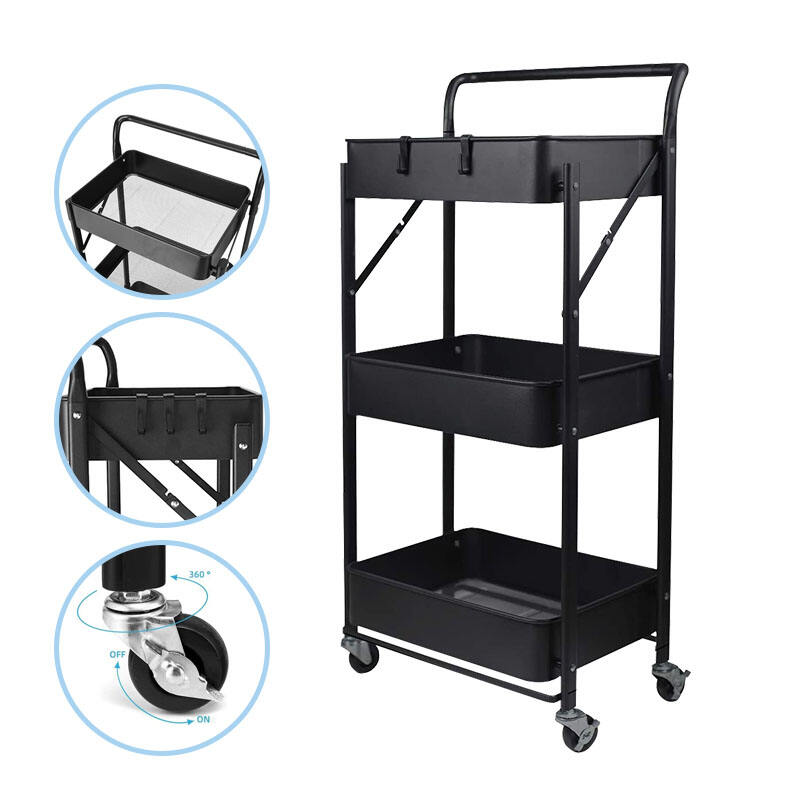
The capacity to streamline wholesale distribution through multi-function trolleys depends directly on how these tools integrate into existing warehouse processes, their adaptability across different product categories, and their impact on labor productivity metrics. A foldable platform hand truck trolley designed with versatility in mind can consolidate multiple handling steps, reduce equipment redundancy, and create measurable improvements in throughput rates. Understanding the specific mechanisms through which these trolleys influence distribution efficiency requires examining their functional design, operational flexibility, and practical deployment scenarios within wholesale environments where speed and accuracy determine profitability.
Operational Flexibility and Multi-Purpose Functionality
Convertible Design Configurations
The defining characteristic of an effective foldable platform hand truck trolley in wholesale distribution is its ability to transform between different operational modes without requiring additional equipment. This convertible design typically allows the same unit to function as a platform cart for bulk items, a two-wheel hand truck for vertical stacking, and a compact transport dolly for narrow aisle navigation. Distribution centers handling diverse product portfolios benefit substantially from this versatility, as warehouse staff can transition between handling configurations based on shipment characteristics rather than returning to storage areas to exchange equipment. The time savings accumulate across hundreds of daily movements, creating measurable improvements in order processing velocity.
This multi-configuration capability directly addresses one of the most persistent inefficiencies in wholesale distribution: equipment mismatch delays. When workers must locate specific cart types for particular products, non-value-added walking time increases while order fulfillment stalls. A properly designed foldable platform hand truck trolley eliminates these delays by providing the necessary handling mode on demand. The mechanical simplicity of conversion mechanisms ensures that staff can adapt the equipment in seconds rather than minutes, maintaining workflow continuity even as product mix varies throughout shift cycles. This operational agility becomes particularly valuable during peak distribution periods when equipment availability constraints typically create bottlenecks.
Load Capacity Adaptation
Beyond configuration versatility, the load capacity range of multi-function trolleys determines their practical utility in wholesale environments. Advanced foldable platform hand truck trolley designs incorporate reinforced frame structures and weight distribution systems that maintain stability across load ranges from lightweight cartons to heavy bulk goods. This capacity spectrum allows distribution operations to consolidate equipment inventories, reducing the total number of specialized carts required while ensuring appropriate handling capabilities remain available for all product categories. The financial implication extends beyond initial equipment costs to include reduced maintenance overhead and simplified training requirements.
The structural engineering behind load capacity adaptation involves careful balancing of material strength, wheel configuration, and platform dimensions. Quality foldable platform hand truck trolley units utilize high-grade steel or aluminum alloys that provide necessary strength without excessive weight, ensuring that the equipment remains maneuverable even when handling maximum loads. Wheel assemblies designed with appropriate diameter and bearing quality prevent premature failure under heavy use conditions typical of wholesale distribution. These design considerations directly influence whether the trolley genuinely streamlines operations or becomes another maintenance liability requiring frequent replacement and repair interventions that disrupt workflow efficiency.
Space Optimization and Storage Efficiency
Compact Folding Mechanisms
Warehouse space represents a significant fixed cost in wholesale distribution, making equipment storage efficiency a direct contributor to operational profitability. The folding capability of modern foldable platform hand truck trolley designs addresses this economic reality by reducing equipment footprint during non-use periods. Unlike rigid platform carts that consume valuable floor space even when idle, foldable units can be collapsed to a fraction of their operational dimensions and stored vertically along walls or in designated equipment zones. This space recovery becomes particularly valuable in urban distribution centers where real estate costs are premium and every square meter must generate maximum utility.
The practical impact of compact folding extends beyond static storage to include transportation efficiency. Distribution operations frequently require equipment transfer between facilities or deployment to temporary handling locations during special projects. A foldable platform hand truck trolley can be transported in standard vehicles without requiring dedicated trucks, enabling rapid deployment flexibility that supports dynamic distribution strategies. The ability to quickly scale equipment availability in response to demand fluctuations without maintaining excessive permanent inventory represents a strategic advantage in wholesale operations characterized by seasonal volume variations and unpredictable customer ordering patterns.
Fleet Management Simplification
Managing a diverse fleet of specialized material handling equipment creates administrative overhead that diverts resources from core distribution activities. The consolidation potential offered by multi-function foldable platform hand truck trolley units simplifies fleet management by reducing equipment type proliferation. Instead of maintaining separate inventories of platform carts, hand trucks, utility dollies, and specialty movers, distribution facilities can standardize around versatile multi-function units that serve multiple purposes. This standardization streamlines procurement processes, simplifies maintenance protocols, and reduces the training burden on warehouse staff who need only master one equipment type rather than multiple specialized tools.
The inventory management benefits extend to replacement part stocking and preventive maintenance scheduling. When the majority of material handling equipment shares common components and mechanical systems, maintenance departments can optimize spare parts inventory and develop efficient service routines. This operational consistency reduces equipment downtime, a critical factor in wholesale distribution where every hour of unavailable equipment translates directly to reduced throughput capacity. The cumulative effect of simplified fleet management creates measurable cost reductions while simultaneously improving equipment availability rates, directly supporting the streamlining objective that motivates the adoption of multi-function trolley systems.
Labor Productivity and Ergonomic Impact
Reduced Physical Strain
Wholesale distribution work involves repetitive material handling that creates significant cumulative physical stress on warehouse personnel. The ergonomic design of quality foldable platform hand truck trolley units directly influences worker comfort and injury prevention, factors that substantially affect long-term productivity and labor costs. Features such as adjustable handle heights, cushioned grips, and balanced weight distribution reduce the physical strain associated with moving heavy loads throughout shift durations. When workers experience less fatigue and physical discomfort, their movement speed and accuracy improve while absenteeism related to musculoskeletal injuries decreases, creating compounding benefits for distribution efficiency.
The economic impact of ergonomic equipment extends beyond direct labor productivity to encompass workers' compensation costs and employee retention rates. Distribution facilities that prioritize ergonomic material handling tools demonstrate measurably lower injury rates and associated insurance premiums. The foldable platform hand truck trolley designed with human factors engineering principles enables workers to maintain productivity throughout entire shifts rather than experiencing performance degradation as fatigue accumulates. This sustained productivity level directly contributes to throughput consistency, ensuring that distribution operations can reliably meet service level commitments without requiring overtime labor to compensate for fatigue-related slowdowns during standard working hours.
Task Consolidation Benefits
The multi-function capability of advanced foldable platform hand truck trolley designs enables individual workers to complete entire order fulfillment sequences without equipment exchanges or handoffs to specialized personnel. This task consolidation reduces the coordination overhead inherent in distribution processes that require multiple workers with different equipment types to collectively complete single orders. When one worker can pick, stage, and load shipments using a single versatile trolley, the communication requirements decrease while accountability for order accuracy increases. The resulting process simplification accelerates order cycle times while reducing the error rates that typically accompany complex multi-step workflows involving multiple personnel.
Beyond individual task efficiency, the ability to consolidate handling steps using versatile foldable platform hand truck trolley equipment supports lean distribution principles by eliminating non-value-added movements and transitions. Each time a worker must exchange equipment or transfer products between different handling devices, the risk of damage increases while processing time extends. Multi-function trolleys that accommodate entire workflows from receiving through shipping eliminate these transition points, creating smoother product flow through distribution facilities. This streamlined movement pattern reduces congestion in high-traffic aisles and staging areas, further enhancing overall facility throughput capacity without requiring physical expansion or layout reconfiguration.
Integration with Distribution Technology Systems
Workflow Compatibility
Modern wholesale distribution increasingly relies on warehouse management systems and order processing technologies that dictate specific workflow sequences and handling procedures. The effectiveness of any material handling equipment, including foldable platform hand truck trolley units, depends partially on how seamlessly it integrates with these technological systems. Trolleys designed with features such as barcode scanner mounting points, document holders, and mobile device compatibility enable workers to maintain technology interaction while moving products, preventing the productivity losses that occur when staff must repeatedly set down equipment to access digital systems or reference picking documentation.
The physical design of multi-function foldable platform hand truck trolley equipment should accommodate the digital tools that define contemporary distribution operations. Integrated tablet holders, for example, allow real-time inventory updates and order verification without requiring workers to carry devices separately or return to fixed workstations. This continuous connectivity ensures that warehouse management systems maintain accurate inventory positions and order status information, reducing the discrepancies that create customer service issues and require costly reconciliation efforts. The technological compatibility of material handling equipment thus becomes a key factor in determining whether trolleys genuinely streamline operations or create friction with digital workflow requirements.
Scalability for Growth
Distribution operations rarely remain static, with successful wholesale businesses experiencing volume growth and product line expansion that stress existing material handling capabilities. The scalability characteristics of foldable platform hand truck trolley investments influence long-term streamlining potential as facilities evolve. Equipment that remains functionally relevant across expanding product portfolios and increasing volume levels protects capital investments while supporting growth without requiring complete equipment replacement. The modular nature of quality multi-function trolleys, including replaceable wheels, adjustable components, and durable construction, ensures that these tools adapt to changing operational requirements rather than becoming obsolete as distribution demands intensify.
The financial dimension of scalability extends to incremental capacity additions during growth phases. Rather than requiring large upfront investments in specialized equipment to support projected future volumes, distribution facilities can incrementally add versatile foldable platform hand truck trolley units as actual demand materializes. This staged investment approach reduces capital risk while maintaining operational flexibility, allowing distribution strategies to evolve in response to market conditions without being constrained by premature equipment specialization. The result is a more agile distribution operation capable of responding to competitive pressures and customer requirement changes without significant equipment-related barriers to adaptation.
Cost-Benefit Analysis for Distribution Operations
Direct Cost Reductions
Quantifying the streamlining impact of multi-function foldable platform hand truck trolley adoption requires examining measurable cost reductions across multiple operational categories. Equipment consolidation directly reduces capital expenditures by eliminating the need for multiple specialized cart types, with typical distribution facilities realizing equipment cost reductions of twenty to thirty percent when transitioning from diverse fleets to standardized multi-function units. Maintenance costs similarly decline as parts inventory requirements decrease and service procedures standardize around common mechanical systems. These direct cost benefits create immediate financial returns that justify equipment investments even before considering productivity improvements and throughput gains.
Labor cost implications represent another significant dimension of direct cost impact. When foldable platform hand truck trolley equipment enables faster order processing and reduces the time required for material movement, distribution facilities can handle greater volumes with existing staffing levels or reduce labor requirements for stable volume operations. The time savings from eliminating equipment exchanges, reducing walking distances, and streamlining handling procedures accumulate to measurable labor hour reductions. In wholesale distribution where labor represents a substantial portion of operating costs, even modest percentage improvements in labor productivity translate to significant annual savings that compound over multi-year equipment lifecycles.
Indirect Value Creation
Beyond quantifiable cost reductions, multi-function foldable platform hand truck trolley systems create indirect value through improved service capabilities and enhanced operational resilience. The ability to process orders more quickly and accurately strengthens customer relationships and supports premium service positioning in competitive wholesale markets. Distribution facilities equipped with versatile, efficient material handling tools can offer shorter lead times and more reliable delivery commitments, differentiating their value proposition beyond price competition. This service advantage can justify premium pricing or secure preferred supplier status with key customers, creating revenue benefits that exceed the direct cost savings from improved operational efficiency.
Operational resilience represents another form of indirect value created by equipment versatility. Distribution facilities face unpredictable disruptions including equipment failures, demand surges, and workforce fluctuations that threaten service continuity. The multi-function capability of quality foldable platform hand truck trolley equipment provides operational flexibility that mitigates these risks. When equipment can adapt to different handling requirements and workers can perform varied tasks with standardized tools, distribution operations maintain functionality even when facing unexpected challenges. This resilience reduces the revenue losses associated with service failures and customer defections, protecting long-term business value in ways that traditional return-on-investment calculations may not fully capture but nonetheless contribute substantially to competitive positioning.
FAQ
What weight capacity should a foldable platform hand truck trolley have for wholesale distribution?
For typical wholesale distribution applications, a foldable platform hand truck trolley should support minimum weight capacities of 150 to 200 kilograms in platform configuration and 80 to 100 kilograms in upright hand truck mode. Operations handling particularly heavy products such as appliances or industrial components may require units rated to 300 kilograms or more. The key consideration is matching capacity to the heaviest products regularly handled while ensuring the equipment remains maneuverable at maximum load. Exceeding rated capacities accelerates wear and creates safety hazards, so conservative capacity selection based on actual product weights provides optimal long-term performance.
How does a multi-function trolley compare to dedicated equipment in terms of durability?
Quality multi-function foldable platform hand truck trolley units constructed from reinforced materials with properly engineered pivot points and locking mechanisms can match or exceed the durability of dedicated single-purpose equipment. The critical factor is construction quality rather than multi-function capability itself. Premium units using heavy-gauge steel, industrial-grade wheels, and robust folding mechanisms withstand intensive wholesale distribution use for years. However, budget-oriented multi-function trolleys with lightweight materials and simple hinge designs may exhibit shorter service lives than purpose-built alternatives. Selecting equipment from reputable manufacturers with proven track records in commercial material handling ensures that versatility does not compromise longevity.
Can foldable platform hand truck trolleys handle irregularly shaped products effectively?
The adaptability of multi-function foldable platform hand truck trolley designs makes them particularly well-suited for irregularly shaped products that challenge standardized handling equipment. Platform mode provides stable surfaces for awkward items that would be difficult to secure on traditional two-wheel hand trucks, while adjustable configurations allow workers to optimize equipment orientation based on product geometry. Many wholesale distributors handling diverse product portfolios find that versatile trolleys accommodate shape variations more effectively than specialized equipment designed for specific product categories. The ability to reposition loads and adjust handling approach based on individual product characteristics represents a key advantage in distribution environments with high product variety.
What maintenance practices maximize the service life of multi-function trolleys?
Maximizing foldable platform hand truck trolley longevity requires regular inspection of pivot points, wheel assemblies, and locking mechanisms to identify wear before functional failures occur. Weekly visual checks for loose fasteners, damaged wheels, and frame deformation combined with monthly lubrication of moving parts prevent most premature failures. Distribution facilities should establish formal maintenance schedules that include documented inspections and preventive component replacement based on usage intensity rather than waiting for complete failures. Proper storage practices that protect equipment from environmental exposure and impact damage also extend service life substantially, with designated equipment zones and vertical storage racks preventing the incidental damage common in facilities where trolleys are left in traffic areas.
Table of Contents
- Operational Flexibility and Multi-Purpose Functionality
- Space Optimization and Storage Efficiency
- Labor Productivity and Ergonomic Impact
- Integration with Distribution Technology Systems
- Cost-Benefit Analysis for Distribution Operations
-
FAQ
- What weight capacity should a foldable platform hand truck trolley have for wholesale distribution?
- How does a multi-function trolley compare to dedicated equipment in terms of durability?
- Can foldable platform hand truck trolleys handle irregularly shaped products effectively?
- What maintenance practices maximize the service life of multi-function trolleys?

