 EN
EN

Professional landscapers face a persistent challenge in their daily operations: balancing mobility, tool storage, and physical comfort during extended outdoor work sessions. The question of whether imported multi-function units can reliably serve these demanding needs has become increasingly relevant as global supply chains expand equipment options. For professionals who spend hours moving between job sites, carrying tools, soil amendments, and plants, the choice of work equipment directly impacts productivity and long-term physical health. The reliability of imported multi-function units such as a garden cart rolling work seat depends on construction quality, load capacity engineering, and real-world durability under professional use conditions rather than brand origin alone.
Understanding reliability in the context of professional landscaping requires examining how imported equipment performs against the specific stressors of commercial outdoor work. Professional landscapers typically transport heavy materials across uneven terrain, work in variable weather conditions, and require equipment that withstands repeated loading cycles throughout multi-year service life. A garden cart rolling work seat designed for professional applications must integrate structural integrity with ergonomic functionality, providing both material transport capacity and comfortable seating for tasks like weeding, planting, and low-level maintenance work. The reliability equation extends beyond initial purchase cost to encompass maintenance requirements, replacement part availability, and total cost of ownership across the equipment's working lifespan.
Construction Quality Standards in Imported Multi-Function Work Equipment
Material Selection and Frame Engineering
The foundation of any reliable garden cart rolling work seat begins with frame material selection and structural design. Professional-grade imported units typically employ powder-coated steel tubing or heavy-gauge aluminum alloy construction that balances weight considerations with load-bearing requirements. Steel frames offer superior strength for heavy-duty applications, with quality imports using minimum 1.2mm wall thickness in primary structural members. The welding quality at frame joints represents a critical reliability indicator, as professional use subjects these connection points to repeated stress cycles that can expose manufacturing deficiencies over time. Landscapers should examine weld penetration consistency and look for reinforcement gussets at high-stress junctions where the seat platform connects to the wheel axle assembly.
Corrosion resistance becomes particularly important for equipment exposed to soil moisture, fertilizer chemicals, and seasonal weather variations. Reliable imported units apply multi-stage coating processes including phosphate conversion treatment before powder coating application, creating barrier protection that extends service life beyond basic paint finishes. The mesh basket material in a garden cart rolling work seat requires similar attention, with quality imports using vinyl-coated steel wire or stainless steel construction rather than unprotected mild steel that oxidizes rapidly in outdoor environments. Professional landscapers operating in coastal regions or areas with extended wet seasons should prioritize units with documented salt spray testing results, as accelerated corrosion can compromise structural integrity within a single season when protective coatings fail.
Wheel and Bearing System Durability
Wheel assembly quality directly determines whether a garden cart rolling work seat maintains reliable mobility across diverse terrain types encountered in professional landscaping work. Imported units designed for commercial applications typically specify pneumatic tires with minimum 10-inch diameter and turf-friendly tread patterns that distribute weight to prevent lawn damage while providing traction on slopes. The tire construction should include puncture-resistant inner tubes or foam-filled alternatives that eliminate flat tire downtime, a critical consideration for professionals working on properties with thorns, construction debris, or sharp landscape edging materials. Hub bearing assemblies represent another reliability checkpoint, with sealed cartridge bearings offering superior protection against dirt and moisture intrusion compared to open bushing designs common in residential-grade equipment.
The axle mounting system requires sufficient rigidity to prevent wheel wobble under loaded conditions, which accelerates bearing wear and creates operator fatigue through vibration transmission to the seat platform. Quality imported units employ through-bolt axle attachment with lock nuts and anti-rotation features rather than press-fit connections that can loosen through repeated loading cycles. Professional landscapers should test loaded units on representative terrain before committing to bulk equipment purchases, evaluating wheel tracking stability, turning radius functionality, and whether the garden cart rolling work seat maintains directional control on side slopes common in residential and commercial landscape settings. Units that demonstrate wheel shimmy or require constant steering correction under moderate loads will magnify these deficiencies during daily professional use.
Seat Platform Comfort and Stability Features
The seating component of a multi-function garden cart rolling work seat must provide ergonomic support during extended task durations while maintaining stability during material transport operations. Imported units suitable for professional use incorporate contoured seat platforms with minimum 12-inch width and cushioning materials that resist compression set from repeated loading. Closed-cell foam padding with vinyl or weather-resistant fabric covering offers better longevity than open-cell foam alternatives that absorb moisture and promote mildew growth in outdoor storage conditions. The seat mounting system should include height adjustment capability or offer multiple fixed positions that accommodate different operator sizes and task requirements, from ground-level weeding to mid-height pruning work.
Stability during seated operation depends on the relationship between seat height, wheelbase width, and center of gravity positioning. Reliable imported garden cart rolling work seat designs maintain wheelbase width at minimum 20 inches to prevent tip-over risk when operators shift weight during reaching tasks or work on lateral slopes. Some quality imports incorporate outrigger feet or stabilizer bars that deploy during seated work, transforming the mobile cart into a stationary work platform with enhanced lateral stability. Professional landscapers working on properties with significant grade changes should prioritize units with documented stability testing results, as tip-over incidents create injury liability exposure that far exceeds equipment replacement costs. The seat swivel functionality found on some imported models adds convenience but introduces additional mechanical complexity that requires periodic maintenance to prevent binding or unexpected rotation during transport operations.
Load Capacity Reality Versus Rated Specifications
Static Versus Dynamic Load Considerations
Understanding the difference between static and dynamic load ratings proves essential when evaluating whether an imported garden cart rolling work seat can reliably serve professional landscaping applications. Manufacturers typically specify static load capacity measured under laboratory conditions with weight centered on a stationary platform, which differs substantially from dynamic loading encountered during actual field use. Professional landscapers regularly transport soil bags, potted trees, tool containers, and bulk materials that shift during movement across uneven terrain, creating impact loads and moment forces that exceed simple weight calculations. A unit rated for 300-pound static capacity may experience structural stress equivalent to 450 pounds or more when rolling over obstacles or during sudden stops on sloped surfaces.
Reliable imported units designed for commercial applications incorporate safety factors of 1.5 to 2.0 times the advertised capacity, meaning a 250-pound rated garden cart rolling work seat uses structural components capable of supporting 375 to 500 pounds under test conditions. Professional buyers should request documentation of testing protocols, specifically whether capacity ratings reflect combined operator and cargo weight or cargo weight alone. The practical load capacity for daily professional use should be calculated at approximately 70 percent of the manufacturer's maximum rating to ensure longevity and maintain adequate safety margins. Landscaping crews frequently load units to perceived capacity without precise weighing, making conservative capacity interpretation essential for preventing premature structural failure and maintaining warranty coverage that may exclude overload damage.
Material Distribution and Basket Configuration
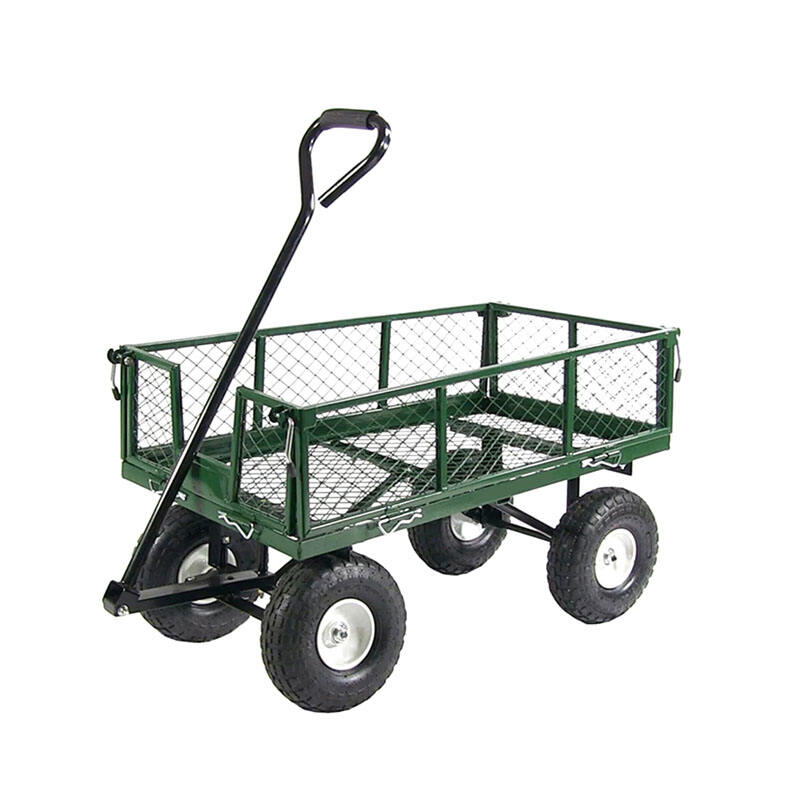
The cargo basket design on a multi-function garden cart rolling work seat significantly influences both practical load capacity and material handling efficiency during professional landscaping operations. Imported units with mesh basket construction offer visibility advantages and automatic drainage for wet materials, while solid-sided baskets contain loose materials like mulch or gravel more effectively. The basket depth and volume specifications must align with the materials landscapers transport most frequently, with minimum 10-inch depth recommended for secure containment of bagged goods and potted plants during transport across properties. Basket mounting systems should distribute load transfer through multiple frame connection points rather than concentrating stress at single attachment locations that become failure points under repeated loading.
Professional-grade imported garden cart rolling work seat models often include removable basket sides or drop-down panels that facilitate loading of large items like shrubs or bulk material bags without lifting over basket walls. This design consideration directly impacts operator ergonomics and reduces injury risk associated with repetitive heavy lifting. The basket floor should incorporate reinforcement ribs or cross-bracing that prevents deflection under concentrated loads, as sagging floors create instability and accelerate structural fatigue. Some quality imports feature tool holder brackets, beverage holders, and small parts organizers integrated into basket design, consolidating multiple functions that would otherwise require separate equipment pieces. However, these convenience features should not compromise the primary cargo capacity or structural integrity that professional landscapers depend on for core material transport functions.
Weight Capacity Degradation Over Service Life
Even well-constructed imported equipment experiences gradual capacity reduction through accumulated wear and material fatigue during professional use. A garden cart rolling work seat that initially meets or exceeds rated specifications will develop play in connection points, bearing wear, and frame flexibility that progressively reduces safe working capacity. Professional landscapers should implement periodic inspection protocols that identify wear indicators before they compromise structural integrity, including frame tube deformation, crack development at weld joints, wheel bearing noise or resistance, and seat platform movement relative to frame mounting points. Equipment that shows visible distress under normal loading should be retired from professional service even when still functionally operational, as continued use creates injury liability exposure.
The rate of capacity degradation correlates directly with maintenance quality and operating conditions. Units stored under cover between use and receiving periodic lubrication, hardware tightening, and cleaning maintain capacity specifications significantly longer than equipment left exposed to weather and operated without maintenance attention. Professional landscaping companies should establish documented maintenance schedules for all garden cart rolling work seat equipment, including wheel bearing service at minimum annual intervals, frame inspection for crack development, and seat platform security verification. Replacement part availability from importers represents a critical reliability factor, as units requiring proprietary components with long lead times create operational disruptions that offset any initial cost advantages. Buyers should verify parts availability and typical delivery timelines before committing to imported equipment platforms, particularly for mechanical components like wheel assemblies and seat mounting hardware that experience predictable wear.
Professional Use Environment Challenges and Equipment Response
Terrain Variation and Mobility Performance
Professional landscapers encounter dramatically varied terrain conditions that test the practical reliability of any garden cart rolling work seat system. Residential properties include established lawns, mulched beds, gravel paths, paved surfaces, and transition zones where equipment must traverse height changes and surface material boundaries. Commercial properties add compacted soil areas, irrigation system components, and landscape edging that create obstacles requiring equipment with sufficient ground clearance and wheel diameter to maintain mobility without constant maneuvering. Imported units designed for professional applications specify minimum 10-inch wheel diameter with adequate tire width to prevent sinking in soft soil conditions while maintaining stability on hard surfaces.
The turning radius capability of a garden cart rolling work seat directly impacts productivity in confined spaces common in residential landscape maintenance. Quality imported units incorporate front swivel caster design or articulated frame construction that enables tight radius turns without requiring the operator to dismount and manually reposition equipment. However, increased maneuverability often introduces mechanical complexity through additional pivot points and steering mechanisms that require maintenance and represent potential failure modes. Professional buyers must balance maneuverability advantages against reliability implications, recognizing that simpler fixed-axle designs with wider turning radius may offer better long-term durability for operations where space constraints are less critical. Testing equipment on representative job sites before purchase allows realistic evaluation of whether mobility performance meets actual professional requirements rather than theoretical specifications.
Weather Exposure and Material Degradation
Unlike residential users who may store equipment in climate-controlled garages between occasional use, professional landscapers subject garden cart rolling work seat units to continuous weather exposure including direct sunlight, precipitation, temperature extremes, and humidity variations. UV radiation degrades plastic components, seat cushion materials, and painted surfaces, with degradation rates accelerating in high-altitude and southern latitude locations receiving intense solar exposure. Quality imported units specify UV-stabilized plastics for any polymer components and incorporate fade-resistant powder coating formulations that maintain protective properties beyond simple aesthetic considerations. The seat cushion covering material requires particular attention, as vinyl and synthetic fabrics vary dramatically in UV resistance and water permeability characteristics that determine service life in outdoor applications.
Freeze-thaw cycling in temperate climates creates unique reliability challenges for garden cart rolling work seat equipment through moisture intrusion into frame tubes, bearing assemblies, and mechanical joints. Water that enters these spaces expands during freezing, creating internal pressure that can split welds, crack castings, and accelerate corrosion at protected interfaces. Reliable imported units incorporate drainage holes at low points in frame tube assemblies and use sealed bearing cartridges that exclude moisture rather than requiring regular lubrication that creates maintenance demands. Professional landscapers operating in regions with significant temperature variation should prioritize equipment with documented cold-weather testing and avoid designs with moisture trap features like enclosed frame tubes without drainage provisions. The rubber and polymer components including tire compounds, seat cushioning, and grip materials must retain flexibility across the operating temperature range, as materials that become brittle in cold weather develop cracks and failure modes that compromise functionality.
Chemical Exposure from Landscape Materials
Professional landscaping operations involve regular contact with fertilizers, herbicides, pesticides, soil amendments, and cleaning chemicals that create corrosive environments accelerating equipment degradation. A garden cart rolling work seat used to transport bagged fertilizer or granular amendments experiences repeated exposure to hygroscopic materials that absorb atmospheric moisture and create corrosive solutions in contact with metal surfaces. The mesh basket construction common in quality imported units provides drainage advantages but also allows chemical contact with frame components and increases surface area exposed to corrosive substances. Powder coating quality and completeness become critical reliability factors, as any coating gaps or damage points provide corrosion initiation sites that rapidly expand under chemical exposure conditions.
Professional landscapers should implement cleaning protocols that remove chemical residues from garden cart rolling work seat equipment at task completion, particularly after transporting materials with known corrosive properties. Simple water rinsing removes most water-soluble chemicals, while periodic washing with mild detergent solutions addresses accumulated organic residues and soil particles that retain moisture against metal surfaces. Units designed for professional applications sometimes incorporate chemical-resistant basket liners or removable trays that create barrier protection for the structural frame, extending service life in high-exposure operations. However, these protective features add weight and cost while requiring their own maintenance attention, creating trade-offs that professional buyers must evaluate against their specific material handling patterns and chemical exposure frequency. Equipment showing accelerated corrosion despite normal maintenance may indicate coating deficiencies or material selection issues that warrant warranty claims or supplier feedback to prevent fleet-wide reliability problems.
Maintenance Requirements and Long-Term Operating Costs
Routine Maintenance Protocols for Professional Applications
Establishing systematic maintenance procedures directly determines whether an imported garden cart rolling work seat achieves its design service life or experiences premature failure under professional use conditions. Daily pre-use inspection should include visual examination of frame integrity, wheel attachment security, tire inflation status, and seat platform stability, with any anomalies addressed before equipment enters service. Weekly maintenance protocols for professional applications should include cleaning to remove accumulated soil and plant debris, particularly from wheel bearings and seat mounting hardware where organic material retains moisture and accelerates corrosion. Monthly service intervals should incorporate lubrication of moving parts including wheel bearings, seat swivel mechanisms, and any folding or adjustment joints, using products appropriate for outdoor equipment exposure.
Professional landscaping companies operating multiple garden cart rolling work seat units should maintain maintenance logs documenting service performed, parts replaced, and any performance issues observed during operation. This documentation establishes patterns that inform future purchasing decisions and provides evidence of proper equipment care relevant to warranty claims or liability situations. Seasonal maintenance should include comprehensive inspection with frame tube examination for crack development, fastener replacement if corrosion or thread damage is evident, and bearing repacking or replacement based on condition assessment rather than fixed intervals. Quality imported units designed for professional service incorporate grease fittings at bearing locations and use standard fastener sizes that simplify maintenance with commonly available tools, while budget-oriented products may use sealed components requiring complete assembly replacement rather than serviceable maintenance.
Replacement Parts Availability and Cost Factors
The long-term reliability of imported equipment depends substantially on replacement parts availability and the economic viability of repair versus replacement decisions. Professional buyers evaluating garden cart rolling work seat options should investigate parts support infrastructure before purchase, including whether the importer maintains domestic inventory, typical delivery timelines, and whether critical wear items like wheels, bearings, and seat components are available individually or only as complete assemblies. Importers using proprietary component specifications create dependency that can result in extended equipment downtime or forced complete unit replacement when parts become unavailable, while designs incorporating standard commercial components enable sourcing from multiple suppliers with competitive pricing.
The economic calculation for professional applications must consider total cost of ownership including purchase price, expected service life, maintenance costs, and eventual replacement timing. A garden cart rolling work seat with lower initial cost but requiring frequent parts replacement or showing reduced service life may prove more expensive than premium-priced equipment with superior durability and parts support. Professional landscaping operations should calculate cost per operating hour or cost per season to enable valid comparisons between equipment options with different price points and longevity expectations. Fleet standardization on specific equipment models reduces parts inventory requirements and simplifies maintenance training, creating operational efficiencies that offset potential cost savings from mixing multiple budget-oriented units from different suppliers with incompatible components and varying maintenance requirements.
Warranty Coverage and Claim Process Realities
Warranty terms provide insight into manufacturer confidence in product reliability, but professional buyers must examine coverage details beyond simple duration claims. Comprehensive warranties on imported garden cart rolling work seat equipment should specify covered components, excluded conditions, claim documentation requirements, and remedy provisions including repair, replacement, or refund options. Many importers offer limited warranties that exclude wear items like tires, seat cushions, and bearings while covering only manufacturing defects in structural components, substantially reducing practical protection for professional users experiencing normal wear acceleration from intensive use patterns. Professional buyers should clarify whether warranty coverage extends to commercial applications or applies only to residential use, as some importers exclude professional use from standard warranty terms.
The warranty claim process practicality affects whether coverage provides meaningful protection or represents marketing language without substance. Professional landscapers requiring equipment return for warranty evaluation face operational disruption and shipping costs that may exceed economic repair value for moderate-cost items like a garden cart rolling work seat. Importers offering photo-based claim evaluation with advance replacement shipping provide superior support for professional users compared to those requiring equipment return before claim assessment. Professional buyers should test warranty responsiveness by contacting support channels before purchase, evaluating response times and representative knowledge that indicate whether meaningful support infrastructure exists beyond warranty document language. Customer reviews and industry references provide valuable insight into actual warranty experience, as some importers demonstrate excellent pre-sale responsiveness but limited post-sale support when product issues emerge.
Decision Framework for Professional Equipment Selection
Matching Equipment Specifications to Operational Requirements
Professional landscapers should begin equipment evaluation by documenting their specific operational requirements rather than selecting based on feature lists or price points alone. A detailed use case analysis identifies the materials transported most frequently, typical load weights, terrain conditions encountered, daily usage duration, and seasonal variation patterns that determine which garden cart rolling work seat features provide functional value versus marketing appeal. Landscaping operations focusing on maintenance activities like weeding, edging, and seasonal planting require equipment emphasizing seating comfort and tool organization, while installation-oriented operations transporting plants, soil amendments, and hardscape materials prioritize cargo capacity and structural durability over seating features.
The scale of operations influences whether standardizing on a single equipment model across crews provides efficiency advantages or whether diverse property types require equipment variety matching specific job characteristics. Large landscaping companies managing both residential and commercial contracts may benefit from equipment differentiation, with lighter-duty garden cart rolling work seat units assigned to maintenance crews while heavy-duty models serve installation teams. However, this approach increases parts inventory complexity and maintenance training requirements compared to fleet standardization on versatile mid-range equipment capable of handling varied applications. Professional buyers should pilot test equipment under actual field conditions before committing to fleet purchases, involving crew members in evaluation to identify ergonomic issues, functional limitations, and reliability concerns that may not emerge during brief demonstration or specification review.
Evaluating Importer Reputation and Support Infrastructure
The reliability of imported equipment extends beyond product design and manufacturing quality to encompass importer business stability, customer support capabilities, and parts supply chain management. Professional buyers should investigate importer operational history, business registration status, and market presence duration as indicators of whether support infrastructure will persist throughout equipment service life. New importers offering attractive pricing may lack the business infrastructure or financial stability to maintain long-term parts availability and warranty support, creating risk that offsets initial cost advantages. Established importers with documented track records in professional equipment markets demonstrate commitment to support quality that justifies potential price premiums over unknown suppliers.
Professional landscapers should request references from existing customers operating similar business scales and application types, as equipment performance in residential hobby contexts differs substantially from professional commercial use patterns. Speaking with reference customers provides insight into actual reliability experience, warranty claim responsiveness, parts availability, and whether the garden cart rolling work seat maintains functionality across multiple seasons of intensive use. Industry association memberships, trade show presence, and professional certifications indicate importer commitment to market sector and willingness to submit to industry oversight that discourages substandard products. However, these indicators should supplement rather than replace direct product evaluation and reference verification, as marketing presence does not guarantee product quality or support reliability.
Total Cost Calculation and Investment Justification
Professional equipment purchasing decisions should incorporate comprehensive financial analysis extending beyond purchase price to include operational costs, productivity impacts, and equipment lifecycle considerations. A garden cart rolling work seat that reduces worker fatigue and enables simultaneous material transport and seated work completion generates productivity value measurable through labor hour reduction and increased daily task completion. Professional landscapers should calculate time savings from eliminating trips between material staging areas and work locations, quantifying the efficiency advantage of mobile tool and material storage combined with ergonomic seating for low-level tasks. These productivity benefits offset equipment costs through reduced labor expenses, earlier project completion enabling additional job scheduling, and decreased worker compensation claims from repetitive strain injuries associated with frequent kneeling and standing during extended work sessions.
The investment justification calculation should project equipment service life based on realistic professional use patterns rather than manufacturer estimates developed from residential application assumptions. A garden cart rolling work seat experiencing daily use across eight-month operating seasons may achieve three to five year service life before accumulated wear necessitates replacement, establishing the timeframe for cost amortization and return on investment calculation. Professional operations should factor equipment residual value at replacement time, as well-maintained units from quality importers retain secondary market value enabling partial cost recovery through used equipment sales. However, this residual value depends on continued market recognition of the brand and model, making equipment selection from established importers advantageous for operations planning to recover partial investment through eventual resale. Fleet replacement planning should stagger equipment purchases to avoid simultaneous replacement requirements that create cash flow challenges while ensuring consistent equipment age profiles that maintain operational reliability.
FAQ
What specific features indicate that an imported garden cart rolling work seat is built for professional daily use rather than residential occasional use?
Professional-grade imported units demonstrate several distinguishing characteristics including minimum 1.2mm wall thickness steel tubing in frame construction, sealed cartridge bearings in wheel assemblies, powder coating with documented corrosion resistance testing, and load capacity ratings of 250 pounds or greater with safety factors incorporated. Additionally, professional equipment features replaceable wear components like seat cushions and wheels available as individual parts rather than requiring complete assembly replacement, has fastener sizes compatible with standard tool sets, and includes user maintenance access points like grease fittings at bearing locations. The seat platform on professional units typically offers contoured ergonomic design with weather-resistant cushioning materials and secure mounting systems that prevent movement during transport operations. Professional landscapers should verify that warranty coverage explicitly includes commercial applications rather than limiting protection to residential use, as this distinction indicates manufacturer confidence in durability under intensive use patterns.
How does wheel configuration affect the reliability of a garden cart rolling work seat on varied landscape terrain?
Wheel diameter, tire construction, and axle configuration directly determine mobility performance and mechanical stress distribution affecting long-term reliability. Minimum 10-inch diameter pneumatic tires with turf-friendly tread patterns provide necessary ground clearance for crossing landscape edging and irrigation components while distributing weight to prevent lawn damage and sinking in soft soil. Puncture-resistant or foam-filled tires eliminate flat tire downtime common with standard tubes when working in areas with thorns or sharp debris. Four-wheel designs with front swivel casters offer superior maneuverability in confined spaces but introduce additional pivot points requiring maintenance, while fixed-axle two-wheel designs with larger diameter wheels provide simpler mechanical systems with fewer maintenance requirements. The wheelbase width should meet or exceed 20 inches to maintain lateral stability during seated operation on slopes, as narrow wheelbase configurations create tip-over risk when operators reach laterally during task performance. Professional buyers should test loaded units on representative terrain including slopes, soft soil, and obstacle transitions to verify that wheel configuration maintains stable tracking without requiring constant steering correction that indicates design inadequacy.
What maintenance schedule should professional landscapers implement to maximize the service life of imported multi-function work equipment?
Comprehensive maintenance for professional applications begins with daily pre-use inspection including visual frame examination, wheel security verification, tire inflation check, and seat platform stability assessment. Weekly service should incorporate thorough cleaning to remove soil, plant debris, and chemical residues, with particular attention to wheel bearing areas and seat mounting hardware. Monthly maintenance intervals require lubrication of all moving parts including wheel bearings, seat swivel mechanisms, and adjustment joints using outdoor-rated lubricants resistant to moisture washout. Seasonal service at operating year beginning and end should include detailed frame inspection for crack development at weld joints, complete bearing assessment with repacking or replacement based on condition, fastener tightness verification with replacement of any corroded hardware, and seat cushion condition evaluation. Professional operations should maintain documented service logs recording maintenance performed, parts replaced, and performance issues observed, creating data supporting warranty claims and informing future equipment selection. Equipment showing frame distortion, bearing noise, or seat platform movement despite maintenance should be retired from professional service to prevent injury liability exposure even when still functional for light-duty applications.
Can imported garden cart rolling work seat equipment provide comparable reliability to domestically manufactured alternatives for professional landscaping operations?
Reliability depends primarily on design quality, manufacturing standards, and materials selection rather than country of origin, with imported equipment spanning the full quality spectrum from budget-oriented residential products to professional-grade commercial equipment. Quality imported units manufactured to rigorous specifications with appropriate materials, proper welding procedures, and comprehensive coating processes deliver reliability comparable to or exceeding domestic alternatives, often at lower cost due to manufacturing efficiency and labor cost differentials. However, imported equipment reliability requires careful supplier selection, as market offerings include substandard products using inadequate materials, poor welding quality, and minimal corrosion protection unsuitable for professional applications. Professional buyers should evaluate specific product specifications, request testing documentation, verify parts availability infrastructure, and obtain references from existing commercial users rather than making assumptions based solely on manufacturing location. The importer support infrastructure including warranty responsiveness, parts inventory, and technical assistance capability often proves more critical to long-term reliability than manufacturing origin, as even well-designed equipment requires support resources when maintenance or repair needs emerge during professional service life.
Table of Contents
- Construction Quality Standards in Imported Multi-Function Work Equipment
- Load Capacity Reality Versus Rated Specifications
- Professional Use Environment Challenges and Equipment Response
- Maintenance Requirements and Long-Term Operating Costs
- Decision Framework for Professional Equipment Selection
-
FAQ
- What specific features indicate that an imported garden cart rolling work seat is built for professional daily use rather than residential occasional use?
- How does wheel configuration affect the reliability of a garden cart rolling work seat on varied landscape terrain?
- What maintenance schedule should professional landscapers implement to maximize the service life of imported multi-function work equipment?
- Can imported garden cart rolling work seat equipment provide comparable reliability to domestically manufactured alternatives for professional landscaping operations?

