 EN
EN

Modern warehouses face mounting pressure to maximize storage density, improve operational efficiency, and maintain worker safety while managing increasingly diverse inventory profiles. Traditional shelving solutions often fall short when dealing with bulky, heavy, or irregularly sized items that dominate industrial supply chains. This operational challenge has driven warehouse managers across manufacturing, distribution, and logistics sectors to adopt specialized storage infrastructure designed specifically for heavy-load applications. The heavy duty longspan storage system has emerged as a critical solution precisely because it addresses the structural, operational, and economic demands that standard shelving cannot meet.
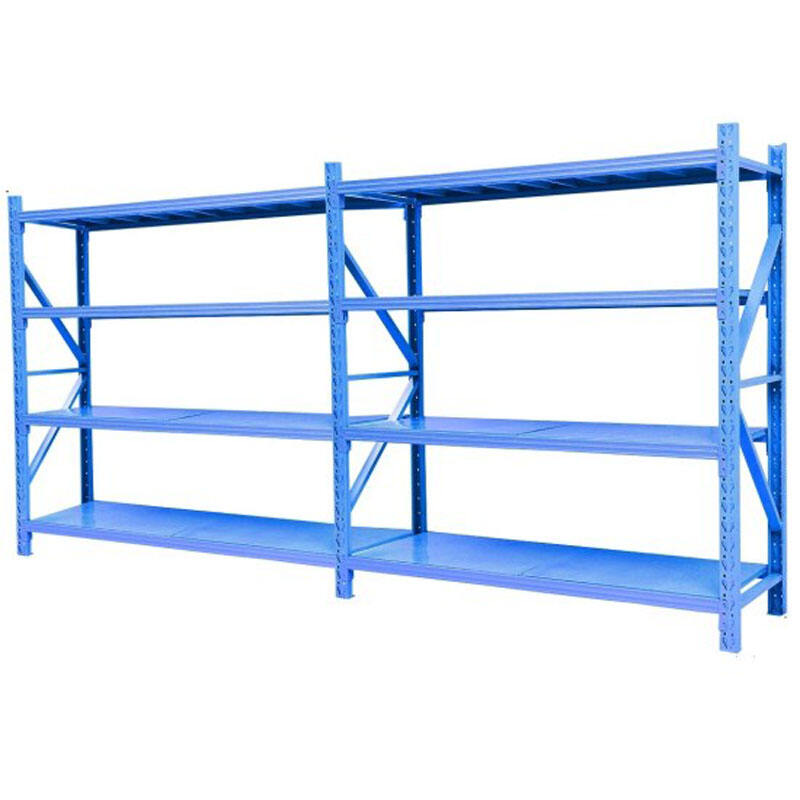
Warehouses choose heavy duty longspan storage systems because these structures deliver superior load-bearing capacity, span flexibility, and vertical space utilization compared to conventional racking. These systems enable facilities to store items weighing hundreds of kilograms per shelf level across wider beam spans without intermediate supports, creating unobstructed storage bays that accommodate oversized inventory. The decision to implement this storage type stems from specific operational pain points including floor space constraints, inventory handling inefficiencies, and the need for scalable storage configurations that adapt to changing product mixes. Understanding why warehouses prioritize this particular storage solution requires examining the structural engineering advantages, operational workflow improvements, and long-term cost efficiencies that make it indispensable in high-demand storage environments.
Structural Engineering Advantages That Drive Warehouse Adoption
Superior Load Distribution Across Extended Beam Spans
The primary engineering reason warehouses select heavy duty longspan storage systems centers on their ability to distribute substantial weight across beam spans that typically range from 1800mm to 3600mm without requiring mid-span supports. This load distribution capability stems from reinforced beam construction using high-grade steel profiles with specific cross-sectional geometries that resist bending under concentrated loads. Warehouse operations handling automotive parts, industrial machinery components, or bulk packaged goods require this span flexibility because their inventory dimensions often exceed standard pallet footprints, making conventional narrow-aisle racking impractical.
The structural design incorporates dual-beam configurations with step-beam or box-beam profiles that create rigid horizontal platforms capable of supporting 400 to 800 kilograms per shelf level depending on span length and beam gauge. This engineering approach eliminates the need for central support posts that would otherwise obstruct access to stored items or complicate picking operations. Manufacturing warehouses storing large sheet metal panels, fabricated steel components, or oversized packaging materials particularly benefit from this unobstructed span design because it allows forklift operators to approach items from multiple angles without navigating around structural obstacles.
Frame Stability Through Braced Upright Design
Warehouses depend on the braced upright frame architecture inherent to heavy duty longspan storage systems because this design provides exceptional lateral stability under dynamic loading conditions. Unlike lighter shelving that may sway or shift when loaded asymmetrically, these systems employ diagonal cross-bracing between vertical uprights and horizontal frame ties that create triangulated load paths. This structural triangulation distributes both vertical loads and horizontal forces caused by forklift impacts, seismic activity, or uneven loading patterns across the entire frame assembly rather than concentrating stress at individual connection points.
The upright frames typically feature perforated posts at regular intervals, allowing warehouse managers to adjust shelf heights in increments as small as 50mm to 75mm without requiring welding or permanent modifications. This adjustment flexibility becomes critical when inventory profiles change seasonally or when facilities transition between product categories with different dimensional requirements. Distribution centers handling both small boxed goods and large appliances simultaneously use this adjustability to create mixed-height storage zones within the same structural framework, optimizing cubic space utilization across varying inventory heights.
Material Specifications That Ensure Longevity Under Stress
The material composition of heavy duty longspan storage systems directly influences their warehouse adoption rates because these structures must withstand decades of continuous loading cycles without structural degradation. High-quality systems utilize cold-rolled steel with minimum yield strengths of 235 MPa to 345 MPa, providing the material toughness necessary to resist deformation under repeated heavy loading. The steel components undergo galvanization or powder-coating processes that create corrosion-resistant surfaces, extending operational lifespans in warehouse environments with variable humidity, temperature fluctuations, or exposure to industrial chemicals.
Warehouses operating in food processing, pharmaceutical distribution, or chemical storage sectors specifically require these protective coatings because their inventory handling involves potential exposure to moisture, corrosive substances, or cleaning agents that would rapidly degrade unprotected steel. The combination of high-strength steel substrate and protective surface treatments ensures that heavy duty longspan storage system maintains structural integrity and load capacity throughout multi-decade service lives, delivering superior return on capital investment compared to lighter alternatives requiring more frequent replacement.
Operational Efficiency Improvements From Longspan Configurations
Direct Access Storage Reducing Retrieval Time
Warehouses implement heavy duty longspan storage systems because the wide-span configuration enables direct access to every stored item without requiring retrieval of multiple units to reach desired inventory. This contrasts sharply with deep-lane or push-back racking where items stored at depth become temporarily inaccessible until front-positioned inventory is removed. The direct-access characteristic proves essential in facilities managing diverse SKU ranges with variable turnover rates, where warehouse associates need immediate access to specific items without disrupting surrounding inventory.
The operational time savings from direct access accumulate substantially across thousands of daily picking operations typical in distribution warehouses. When associates can walk directly to required items and retrieve them without moving obstructing inventory, average pick times decrease by 30 to 50 percent compared to high-density storage systems requiring sequential retrieval. This efficiency improvement translates directly to increased order fulfillment capacity without proportional increases in labor costs, a critical competitive advantage in e-commerce fulfillment operations where same-day or next-day delivery commitments demand rapid order processing.
Forklift Compatibility Across Equipment Types
The design specifications of heavy duty longspan storage systems accommodate standard forklift equipment already deployed in warehouse operations, eliminating the need for specialized narrow-aisle or guided-rail handling equipment. The aisle widths required for longspan systems typically range from 2400mm to 3600mm, matching the turning radius and operational envelope of counterbalance forklifts, reach trucks, and order pickers commonly found in industrial facilities. This equipment compatibility allows warehouses to implement high-capacity storage without incurring substantial capital expenditures for specialized material handling equipment or extensive operator retraining.
Warehouses value this equipment flexibility because it maintains operational continuity during storage system transitions and preserves existing investments in material handling infrastructure. Facilities can incrementally expand their heavy duty longspan storage footprint by adding new bays to existing layouts without creating incompatible zones that require different equipment types. This scalability supports gradual capacity expansion aligned with business growth rather than forcing large-scale, disruptive infrastructure overhauls that interrupt normal operations and require simultaneous equipment fleet upgrades.
Inventory Visibility Supporting Accuracy
The open-frame architecture characteristic of heavy duty longspan storage systems provides superior visual inventory management compared to enclosed or high-density alternatives. Warehouse associates can quickly scan multiple shelf levels and identify stored items by visual inspection without requiring handheld scanners or database queries for every location verification. This visual transparency reduces picking errors, accelerates inventory counts, and simplifies stocktake procedures that would otherwise require systematic bay-by-bay documentation using mobile devices or paper-based recording systems.
Operations managers particularly appreciate this visibility advantage during shift changes, when incoming personnel need rapid situational awareness of storage bay contents and available capacity. The ability to visually assess inventory levels and identify replenishment needs without interrogating warehouse management systems enables faster decision-making regarding receiving priorities, put-away sequencing, and space allocation. Manufacturing warehouses supporting just-in-time production workflows depend on this rapid visual assessment capability to maintain material flow continuity and prevent production line stoppages caused by inventory unavailability or misplacement.
Economic Factors Justifying Investment Decisions
Floor Space Utilization Versus Real Estate Costs
Warehouses adopt heavy duty longspan storage systems as a strategic response to escalating industrial real estate costs that make horizontal expansion increasingly uneconomical. These storage structures enable vertical space utilization by stacking multiple shelf levels within typical warehouse ceiling heights of 6 to 12 meters, effectively multiplying usable storage capacity without increasing facility footprint. When compared to single-level floor stacking, a properly configured heavy duty longspan storage system can increase volumetric storage density by 200 to 400 percent within the same floor area, dramatically reducing the cost per cubic meter of stored inventory.
The financial justification becomes particularly compelling in urban or industrial-park locations where land acquisition costs exceed 150 to 300 dollars per square meter. In these high-cost environments, the capital investment in vertical storage infrastructure delivers payback periods of 18 to 36 months through avoided facility expansion costs and reduced lease expenses. Distribution centers serving metropolitan areas with premium warehouse rental rates recognize that maximizing existing facility capacity through heavy duty longspan storage systems costs substantially less than relocating to larger facilities or opening satellite locations, both of which introduce operational complexity and transportation inefficiencies.
Maintenance Requirements and Lifecycle Economics
The total cost of ownership for heavy duty longspan storage systems remains substantially lower than alternative storage solutions because these structures require minimal maintenance throughout operational lifespans exceeding 20 years. Unlike automated storage and retrieval systems with complex mechanical components requiring regular servicing, or drive-in racking vulnerable to impact damage from equipment collisions, longspan systems consist of passive structural elements that maintain functionality without scheduled maintenance interventions. The primary maintenance requirements involve periodic inspection for frame damage and occasional beam replacement if impacted by material handling equipment.
Warehouses calculate lifecycle costs by amortizing initial capital investment across projected service life while accounting for maintenance expenses, downtime costs, and eventual replacement requirements. Heavy duty longspan storage systems demonstrate superior lifecycle economics because their modular construction allows selective component replacement rather than complete system overhaul. When operational requirements change or capacity expansion becomes necessary, warehouses can reconfigure existing components into new layouts or supplement them with additional bays, preserving substantial portions of the original investment rather than scrapping obsolete infrastructure.
Insurance and Risk Management Considerations
Property insurers and risk management professionals recognize properly installed heavy duty longspan storage systems as lower-risk storage infrastructure compared to ad-hoc stacking methods or overloaded lighter shelving. The engineered load ratings, structural certifications, and safety factor margins inherent to these systems reduce the probability of catastrophic collapse events that generate inventory loss, facility damage, and worker injury claims. Warehouses implementing certified storage systems often negotiate reduced insurance premiums because underwriters assign lower risk scores to facilities with documented structural capacity and safety compliance.
The risk mitigation extends beyond insurance cost reduction to encompass operational continuity protection. Storage collapses in warehouse environments create extended downtime periods while damaged inventory is assessed, structural repairs are completed, and regulatory investigations conclude. These disruption events can suspend operations for days or weeks, generating revenue losses that far exceed the direct costs of damaged goods and structural repairs. Warehouses investing in properly specified heavy duty longspan storage systems effectively purchase operational stability and business continuity insurance through infrastructure that maintains structural integrity under normal operating stresses and reasonably foreseeable accident scenarios.
Application Suitability Across Warehouse Operation Types
Manufacturing Support Warehouses Handling Raw Materials
Manufacturing facilities rely on heavy duty longspan storage systems to organize raw materials, component parts, and work-in-process inventory that feeds production lines. These warehouses face unique challenges because manufacturing materials often arrive in non-standard packaging such as crates, drums, reels, or bundled configurations that do not conform to standard pallet dimensions. The adjustable shelf heights and customizable bay widths of longspan systems accommodate this packaging diversity while maintaining organized storage that supports efficient material requisitioning during production runs.
The storage density achieved through vertical stacking proves particularly valuable in manufacturing support warehouses where floor space adjacent to production areas commands premium value due to its proximity advantages. By concentrating material storage in vertical space immediately accessible to production zones, manufacturers reduce material transport distances and minimize the time lag between material requisition and delivery to workstations. Automotive component manufacturers, metal fabrication shops, and industrial equipment assembly operations depend on this proximity storage because their production workflows require rapid access to hundreds of distinct component types throughout manufacturing cycles.
Distribution Centers Managing Mixed Inventory Profiles
Third-party logistics providers and distribution centers serving multiple clients simultaneously implement heavy duty longspan storage systems because these facilities must accommodate dramatically different inventory characteristics within unified storage infrastructure. A single distribution warehouse might handle small packaged consumer goods alongside bulky appliances, seasonal sporting equipment, and industrial supplies, each category demanding different storage configurations. The shelf-height adjustability and span flexibility of longspan systems allow these facilities to create customized storage zones optimized for specific inventory types without installing completely separate racking systems.
Distribution operations particularly value the reconfiguration capability that heavy duty longspan storage systems provide when client portfolios change or seasonal inventory patterns shift. During peak seasons for particular product categories, warehouse managers can temporarily adjust shelf spacing to maximize capacity for high-volume items, then reconfigure those same bays for different products during subsequent periods. This operational flexibility reduces the need to maintain excess storage capacity year-round to accommodate periodic volume spikes, improving overall facility utilization rates and reducing the fixed cost burden allocated across stored inventory.
Wholesale and Retail Backroom Storage Operations
Wholesale suppliers and large-format retail operations utilize heavy duty longspan storage systems in backroom and reserve storage areas where product replenishment inventory awaits transfer to customer-facing sales floors. These environments require storage solutions that balance high capacity with accessibility because associates must rapidly retrieve specific items to restock depleted shelf positions during business hours. The direct-access configuration and visual transparency of longspan systems support quick location identification and retrieval, maintaining sales floor inventory availability without extensive searching or database navigation.
The heavy load capacity becomes essential in wholesale operations where inventory often consists of bulk-packaged goods, case quantities, or multi-unit displays that substantially exceed the weight of individual consumer units. Building supply retailers, wholesale grocery distributors, and industrial supply houses regularly store items weighing 50 to 200 kilograms per carton or bundle, requiring storage infrastructure that safely supports these concentrated loads across multiple shelf levels. The heavy duty longspan storage system delivers this capacity while maintaining the accessibility patterns necessary for efficient order fulfillment and floor replenishment operations that sustain customer service levels.
Safety and Regulatory Compliance Drivers
Load Capacity Documentation and Liability Protection
Warehouses implement certified heavy duty longspan storage systems to satisfy occupational safety regulations requiring documented load capacity ratings for all storage infrastructure. These regulations, enforced through workplace safety agencies in most industrial jurisdictions, mandate that employers provide structurally adequate storage facilities and clearly communicate maximum load limits to warehouse personnel. Properly engineered longspan systems include load capacity placards affixed to each bay, specifying maximum shelf loads and total bay capacity, creating compliance documentation that protects employers from liability in the event of overloading incidents.
The liability protection extends to property damage and business interruption scenarios where storage system failures might generate third-party claims. When warehouses store client-owned inventory or operate under contractual service agreements, they assume responsibility for maintaining suitable storage conditions that prevent damage from infrastructure inadequacy. Installing storage systems with certified load ratings and documented engineering specifications provides evidence of reasonable care and professional storage practices, strengthening legal defenses against negligence claims that might arise from storage-related damage events.
Seismic Resistance in Earthquake-Prone Regions
Warehouses located in seismically active regions specifically select heavy duty longspan storage systems engineered to meet regional earthquake resistance standards. These systems incorporate base plates with multiple anchor points that secure uprights to concrete floor slabs, preventing rack movement during seismic events. The braced frame design and rigid beam connections create structural assemblies that dissipate seismic energy through controlled deflection rather than catastrophic failure, protecting both stored inventory and warehouse personnel during earthquake activity.
Building codes in earthquake zones frequently mandate seismic certification for storage systems exceeding certain height or load thresholds, making properly engineered storage infrastructure a regulatory requirement rather than an optional enhancement. Warehouses operating in these jurisdictions cannot legally install uncertified storage systems or modify certified designs without engineering approval because such actions violate building codes and void occupancy permits. The heavy duty longspan storage system market in seismic regions consequently emphasizes engineering documentation, certified installations, and periodic structural inspections that maintain compliance with evolving seismic safety standards.
Fire Safety and Emergency Access Considerations
Fire safety regulations influence warehouse storage system selection because building codes mandate minimum aisle widths, sprinkler clearances, and emergency egress paths that vary based on storage system type and configuration. Heavy duty longspan storage systems typically comply more readily with these requirements than high-density alternatives because their wider aisle widths accommodate emergency responder access and their open-frame design allows sprinkler water penetration to lower shelf levels. Fire marshals and building inspectors evaluate storage layouts during permit reviews and periodic inspections, potentially requiring modifications to systems that create fire safety hazards through inadequate clearances or blocked emergency routes.
Warehouses storing combustible materials, hazardous substances, or high-value inventory face particularly stringent fire safety requirements that influence storage system design decisions. The open architecture of heavy duty longspan storage systems facilitates compliance with flue space requirements that mandate vertical air gaps between stored materials, allowing heat and smoke venting during fire events while improving suppression system effectiveness. These fire safety advantages translate to lower insurance premiums, reduced sprinkler system costs, and faster permit approval processes compared to storage configurations that require enhanced fire protection measures to achieve equivalent safety ratings.
FAQ
What weight capacity distinguishes heavy duty longspan storage systems from standard shelving?
Heavy duty longspan storage systems typically support 400 to 800 kilograms per shelf level across spans of 1800mm to 3600mm, substantially exceeding the 100 to 250 kilogram capacity of light-duty or medium-duty shelving. This capacity difference stems from reinforced beam construction using heavier gauge steel and structural profiles specifically engineered to resist bending under concentrated loads. The distinction becomes operationally significant when storing automotive components, machinery parts, bulk packaged goods, or industrial materials that individually weigh 50 to 200 kilograms per unit, requiring storage infrastructure designed for cumulative loads that quickly exceed standard shelving capacity.
Can heavy duty longspan storage systems be reconfigured after initial installation?
Yes, the modular design of heavy duty longspan storage systems allows extensive reconfiguration without permanent structural modifications. The beam-to-upright connections typically use drop-in hooks or bolt-together assemblies that enable shelf height adjustments in small increments, bay width changes through beam replacement, and complete layout reorganization by relocating frame components. This reconfiguration capability provides substantial long-term value because warehouses can adapt storage configurations to accommodate changing inventory profiles, seasonal volume fluctuations, or operational workflow improvements without replacing entire storage systems. The ability to reuse existing components during facility expansions or layout optimizations preserves capital investment and reduces the total cost of ownership across multi-decade operational lifespans.
How do warehouses determine appropriate aisle widths for heavy duty longspan storage installations?
Aisle width determination depends primarily on the turning radius and operational envelope of material handling equipment used for loading and retrieval operations. Counterbalance forklifts typically require 2700mm to 3600mm aisles for comfortable operation, while reach trucks may function adequately in 2400mm to 2800mm aisles due to their tighter turning capabilities. Warehouses conduct equipment turning radius assessments by measuring the space required for loaded forklifts to execute 90-degree turns from travel aisles into storage bays, then adding safety clearances of 150mm to 300mm on each side to prevent contact between equipment and racking components. Facilities prioritizing storage density over equipment speed may minimize aisles to equipment-specific minimums, while operations emphasizing rapid throughput typically provide wider aisles that accommodate higher travel speeds and reduce congestion during peak activity periods.
What installation requirements must warehouses satisfy before implementing heavy duty longspan storage systems?
Successful heavy duty longspan storage installation requires concrete floor slabs with minimum thickness of 100mm to 150mm and compressive strength exceeding 25 MPa to support floor loading and anchor bolt holding forces. The floor surface must meet flatness specifications typically defined as maximum 5mm deviation across 3-meter spans to prevent racking twist or uneven loading that compromises structural stability. Warehouses must verify adequate ceiling height to accommodate desired storage levels while maintaining required clearances below sprinkler heads, lighting fixtures, and overhead doors. Electrical considerations include ensuring adequate lighting levels at all shelf heights for safe picking operations and providing clear zones around electrical panels and fire safety equipment that storage installations cannot obstruct. Professional installation typically includes engineering site assessments that verify these prerequisites before system deployment to prevent costly modifications or performance compromises after installation completion.
Table of Contents
- Structural Engineering Advantages That Drive Warehouse Adoption
- Operational Efficiency Improvements From Longspan Configurations
- Economic Factors Justifying Investment Decisions
- Application Suitability Across Warehouse Operation Types
- Safety and Regulatory Compliance Drivers
-
FAQ
- What weight capacity distinguishes heavy duty longspan storage systems from standard shelving?
- Can heavy duty longspan storage systems be reconfigured after initial installation?
- How do warehouses determine appropriate aisle widths for heavy duty longspan storage installations?
- What installation requirements must warehouses satisfy before implementing heavy duty longspan storage systems?

