 EN
EN

Understanding the longevity advantages inherent in a foldable pvc platform hand truck trolley design requires examining how structural engineering, material science, and user-centered functionality converge to create durable material handling solutions. Modern industrial and commercial environments demand equipment that not only performs reliably under stress but also maintains operational integrity throughout extended service periods. The foldable design paradigm introduces specific engineering considerations that directly impact the overall service life of these essential tools, making the investigation of lifespan benefits both practical and economically significant for procurement decision-makers.
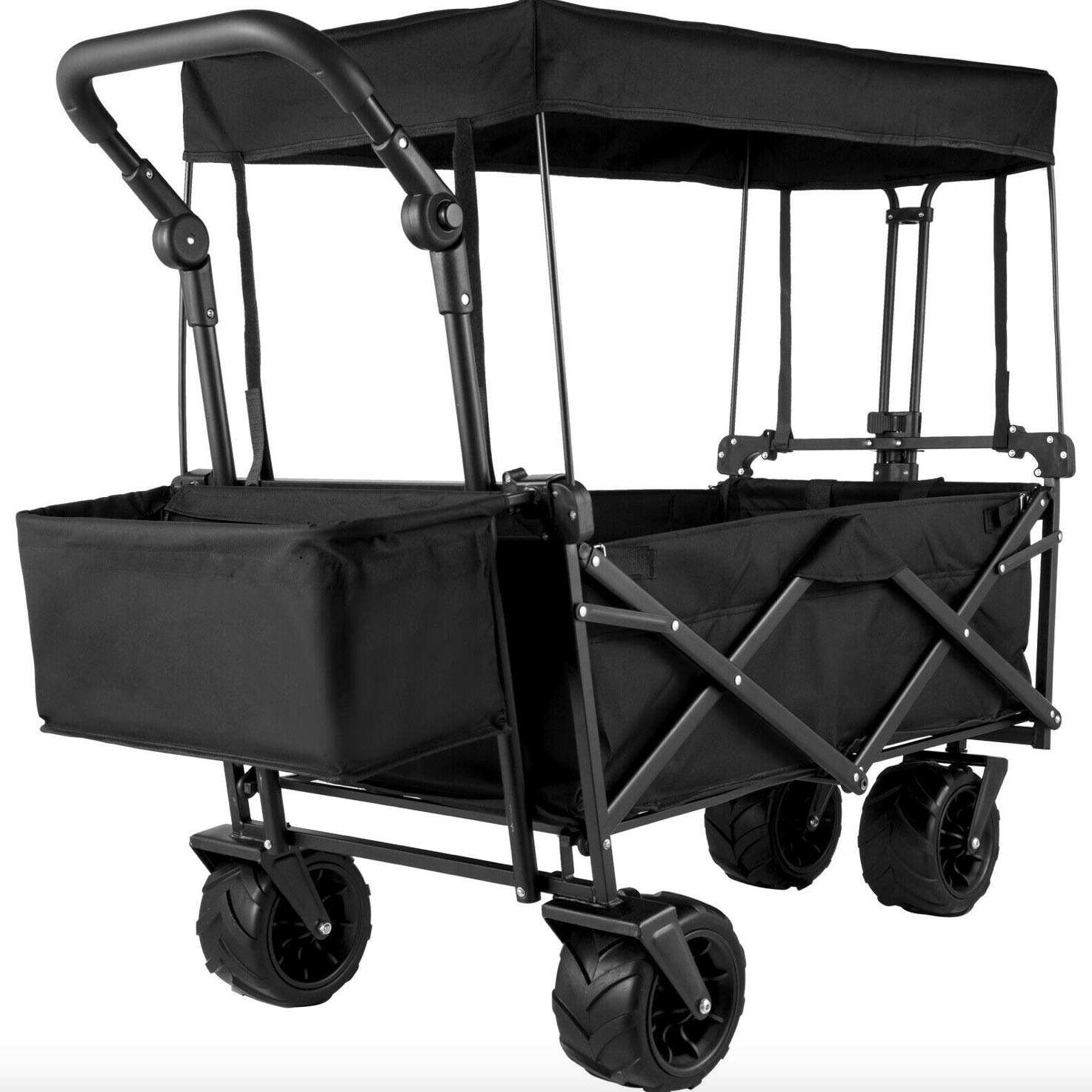
The intersection of foldability and PVC construction creates a unique value proposition that extends beyond simple portability considerations. When properly engineered, the folding mechanism itself can contribute to protective storage capabilities that shield critical components from environmental degraders during non-use periods. This protective dimension complements the inherent chemical resistance and weathering stability that characterize quality PVC formulations, establishing a multi-layered defense system against the accelerated aging factors that typically limit equipment lifespan in warehouse, retail, and logistics applications.
Material Composition and Durability Enhancement
PVC Polymer Stability in Structural Applications
The polyvinyl chloride compounds selected for a foldable pvc platform hand truck trolley undergo specific formulation adjustments that balance flexibility requirements with structural rigidity demands. High-grade PVC blends incorporate impact modifiers and UV stabilizers that protect the polymer matrix from photodegradation and mechanical stress fractures. These additives function at the molecular level to absorb impact energy and dissipate UV radiation before it can initiate chain scission reactions that would otherwise compromise material integrity over time.
Advanced plasticizer systems within premium PVC formulations maintain dimensional stability across temperature fluctuations while preventing embrittlement that commonly affects thermoplastic materials in cold storage environments. The carefully controlled plasticizer migration rate ensures that the foldable pvc platform hand truck trolley retains its designed flexibility characteristics throughout thousands of folding cycles without developing stress whitening or surface crazing. This molecular-level engineering directly translates to extended service intervals between replacement needs.
Chemical crosslinking processes applied during manufacturing create three-dimensional polymer networks that enhance the creep resistance of platform surfaces under sustained loading. This structural modification prevents the gradual deformation that would otherwise accumulate during repeated use cycles, maintaining the precise dimensional tolerances necessary for smooth folding operations. The crosslinked architecture also improves resistance to common warehouse chemicals including cleaning agents, hydraulic fluids, and organic solvents that contact the trolley during normal operations.
Wear Resistance Through Surface Engineering
The platform surface of a quality foldable pvc platform hand truck trolley incorporates texture patterns that distribute contact stresses across broader areas, minimizing localized wear that would create failure initiation points. These engineered surface geometries reduce friction coefficients during load sliding operations while simultaneously increasing grip security, creating a balanced performance profile that extends both the platform lifespan and the integrity of transported goods. The micro-texture design prevents abrasive particle embedment that would accelerate surface erosion.
Protective coatings applied to high-wear zones utilize nano-particle reinforcement technologies that create exceptionally hard surface layers without compromising the underlying PVC flexibility. These selective reinforcement strategies concentrate wear resistance precisely where operational experience indicates maximum benefit, allowing the broader structure to maintain the compliance necessary for reliable folding function. The coating adhesion chemistry ensures these protective layers remain bonded throughout the thermal cycling and mechanical flexing inherent in foldable designs.
Corner and edge geometries receive particular attention in designs optimized for lifespan extension, with radiused transitions replacing sharp angles that would concentrate stress and initiate crack propagation. The generous radius specifications allow a foldable pvc platform hand truck trolley to absorb impact energy from accidental collisions without sustaining permanent deformation, preserving both aesthetic appearance and structural performance throughout extended service periods.
Folding Mechanism Engineering and Longevity
Hinge System Design Philosophy
The articulation points within a foldable pvc platform hand truck trolley represent critical engineering challenges where material science, mechanical design, and manufacturing precision intersect. Premium hinge assemblies incorporate stainless steel pivot pins with precision-ground surfaces running in self-lubricating polymer bushings that eliminate metal-to-metal contact wear. This bearing configuration maintains consistent operational smoothness through tens of thousands of folding cycles while preventing the development of excessive clearance that would introduce structural instability.
Load path optimization around hinge locations ensures that operational forces flow through reinforced structural members rather than concentrating stress directly on pivot components. This force distribution strategy allows the foldable pvc platform hand truck trolley to maintain its rated capacity throughout its service life without requiring hinge component replacement. The geometric relationship between load application points and pivot axes receives careful analysis during the design phase to minimize bending moments that would accelerate fatigue failure.
Locking mechanism redundancy provides fail-safe engagement that prevents unintended folding under load while distributing locking forces across multiple engagement points. This distributed locking architecture eliminates single-point failure modes that would compromise operator safety and equipment longevity. The positive engagement design creates audible and tactile feedback that confirms proper deployment, reducing the likelihood of incomplete setup that could lead to catastrophic collapse and consequent structural damage.
Fatigue Resistance Through Stress Management
Finite element analysis during the development phase of advanced foldable pvc platform hand truck trolley designs identifies stress concentration zones that would otherwise limit fatigue life. These computational investigations guide material thickness variations and structural reinforcement placement that flatten stress gradients below the endurance limits of the PVC compounds. The resulting designs exhibit predictable linear fatigue behavior rather than the accelerated degradation characteristic of poorly optimized structures.
Transitional radius specifications between platform sections and folding joints follow established mechanical engineering principles that prevent stress risers from developing during the repeated bending cycles inherent in foldable designs. These carefully proportioned transitions ensure that strain energy dissipates gradually through elastic deformation rather than concentrating in localized zones where microcrack initiation would occur. The geometric continuity maintained throughout load-bearing members contributes directly to the exceptional cycle life achieved by properly engineered equipment.
Material selection in high-cycle zones prioritizes fatigue performance over absolute strength metrics, recognizing that endurance under repeated loading governs lifespan more definitively than peak load capability in foldable applications. This design philosophy leads to the specification of modified PVC formulations with enhanced elastic recovery characteristics that prevent the accumulation of permanent set during folding operations. The recovery performance ensures that each deployment cycle begins from the designed neutral geometry rather than from an incrementally degraded baseline condition.
Storage Configuration and Component Protection
Compact Storage Benefits for Longevity
The space-efficient storage posture achievable with a foldable pvc platform hand truck trolley provides inherent protection against incidental damage during non-use periods. When collapsed to its minimal footprint configuration, the equipment presents significantly reduced exposed surface area vulnerable to collision, contamination, or environmental exposure. This geometric advantage translates directly to reduced accident frequency and consequent repair needs, extending the interval between service interventions and ultimately prolonging useful equipment life.
Vertical storage orientations made possible by folding designs elevate critical components above floor-level moisture, chemical spills, and mechanical hazards that proliferate in active warehouse environments. This elevation strategy protects wheel bearings, pivot mechanisms, and structural joints from premature degradation caused by contact with corrosive substances or abrasive debris. The ability to wall-mount or rack-store folded units removes equipment entirely from traffic zones where forklift impacts and pallet jack collisions would otherwise inflict cumulative damage.
Environmental exposure reduction during storage periods significantly decelerates the photodegradation and thermal cycling effects that would otherwise age PVC components prematurely. A properly stored foldable pvc platform hand truck trolley spends substantial portions of its lifecycle shielded from UV radiation and temperature extremes, effectively extending its chronological service duration by reducing the accumulated stress experienced per unit time. This protective benefit becomes particularly significant in operations with intermittent usage patterns where equipment may spend weeks between deployment cycles.
Contamination Avoidance Through Design
The smooth, continuous surfaces characteristic of quality foldable pvc platform hand truck trolley designs resist the accumulation of particulate contamination that would otherwise abrade components during movement. Unlike open-framework metal designs with numerous crevices and recesses, the monolithic PVC construction presents minimal surface complexity where debris can lodge and create three-body wear conditions. This contamination resistance maintains the pristine condition of bearing surfaces and sliding interfaces throughout extended service periods.
Sealed joint configurations protect internal hinge mechanisms from intrusion by dust, moisture, and chemical vapors that would degrade lubricants and initiate corrosion processes. These environmental seals function as longevity multipliers by preserving the controlled tribological conditions established during manufacturing. The sealed architecture proves particularly valuable in food processing, pharmaceutical, and cleanroom applications where both equipment longevity and contamination control represent critical operational requirements.
Drainage features integrated into platform designs prevent liquid accumulation that would otherwise create persistent moisture exposure conditions accelerating material degradation. Strategic drain hole placement ensures rapid water evacuation following cleaning operations or incidental spills, maintaining the dry operating conditions under which PVC materials exhibit their maximum service life. The self-draining characteristic reduces maintenance burden while simultaneously extending component longevity through environmental control.
Operational Efficiency and Lifespan Correlation
Ergonomic Design Reducing Misuse Damage
The intuitive operation enabled by well-designed foldable pvc platform hand truck trolley configurations minimizes operator errors that would otherwise inflict damage and shorten equipment life. Clear visual indicators for proper deployment procedures reduce the incidence of incomplete setup conditions that could lead to structural overload and catastrophic failure. This human factors optimization functions as a passive protection system that extends equipment longevity without requiring additional material investment or maintenance intervention.
Balanced weight distribution inherent in properly engineered foldable designs reduces the physical effort required for maneuvering, which in turn decreases the likelihood of operators resorting to improper handling techniques that stress components beyond design limits. When equipment operates within its intended ergonomic envelope, structural members experience loading profiles consistent with their fatigue design criteria, ensuring that predicted service life aligns with actual field performance. The correlation between operator comfort and equipment longevity represents an often-overlooked dimension of total cost optimization.
Handle positioning and grip design on advanced foldable pvc platform hand truck trolley models encourage proper body mechanics during pushing and pulling operations, which maintains controlled directional forces aligned with the structural load paths. This force alignment prevents the introduction of torsional and lateral loads that would accelerate joint wear and potentially induce premature failure modes. The ergonomic optimization serves dual purposes of operator protection and equipment preservation throughout the operational lifecycle.
Maintenance Accessibility Extending Service Intervals
The simplified component architecture characteristic of foldable designs facilitates rapid inspection and maintenance procedures that can be performed by general operations personnel without specialized training or tooling. This maintenance accessibility ensures that minor issues receive prompt attention before they escalate into major failures requiring component replacement or equipment retirement. The ability to conduct quick visual inspections during routine cleaning operations creates opportunities for early problem detection that significantly extends overall equipment lifespan.
Modular wheel assemblies on quality foldable pvc platform hand truck trolley designs enable field replacement using basic hand tools, eliminating the extended downtime and disposal waste associated with non-serviceable integrated designs. This replaceability transforms wheels from lifespan-limiting consumables into routine maintenance items, effectively decoupling the platform structure longevity from the wear characteristics of the highest-wear components. The resulting service life extension provides substantial economic value in high-utilization environments.
Cleaning protocol simplicity enabled by smooth PVC surfaces reduces the time and chemical exposure required for sanitation, which translates to reduced handling frequency and consequent mechanical stress accumulation. The ability to quickly restore equipment to pristine condition encourages regular cleaning that prevents the buildup of corrosive residues that would otherwise accelerate degradation. This positive feedback loop between maintenance ease and longevity performance creates compounding value throughout the equipment lifecycle.
Economic Value Through Extended Service Life
Total Cost of Ownership Analysis
Comprehensive lifecycle cost modeling reveals that the extended service duration achievable with properly engineered foldable pvc platform hand truck trolley designs dramatically reduces the annualized equipment cost compared to shorter-lived alternatives. When initial acquisition cost is amortized over the typical eight to twelve year service life of premium units, the effective annual expense drops below that of superficially cheaper options requiring replacement every two to three years. This economic advantage compounds when factoring in the procurement administration costs and operational disruption associated with frequent equipment turnover.
Maintenance cost reduction throughout the extended service period further enhances the total cost advantage, as durable designs require fewer component replacements and repair interventions. The cumulative savings from avoided maintenance episodes often exceed the differential in initial purchase price within the first half of the equipment lifecycle. Forward-thinking procurement strategies recognize this economic reality and prioritize longevity characteristics over minimum first cost when evaluating competing equipment options.
Disposal cost avoidance represents an increasingly significant economic factor as environmental regulations tighten and landfill fees escalate. Equipment that maintains functional performance for a decade or more generates proportionally less disposal burden and associated expense compared to frequently replaced alternatives. The environmental compliance dimension of extended equipment life creates both direct economic savings and indirect benefits through enhanced corporate sustainability metrics that support brand reputation and regulatory standing.
Operational Continuity Value
The reliability inherent in long-lived foldable pvc platform hand truck trolley designs eliminates the productivity disruptions associated with unexpected equipment failures during critical operations. This operational continuity provides difficult-to-quantify but genuinely significant value in time-sensitive logistics environments where material handling delays cascade through downstream processes. The confidence that equipment will perform reliably throughout demanding shifts allows operations managers to optimize workflow without building in excessive contingency buffers to compensate for potential equipment unavailability.
Standardization opportunities enabled by extended equipment lifespans allow organizations to maintain consistent operating procedures and training protocols across their material handling fleet. When diverse equipment types with varying operational characteristics proliferate through frequent replacement cycles, training complexity increases and operator efficiency suffers. The stable equipment platform provided by durable, long-service designs supports procedural consistency that enhances both safety performance and operational efficiency throughout the organization.
Inventory optimization benefits emerge when equipment longevity allows organizations to right-size their material handling fleets based on actual operational requirements rather than maintaining excess capacity to buffer against equipment attrition. The predictable availability of well-maintained foldable pvc platform hand truck trolley units enables lean inventory strategies that reduce capital tied up in redundant equipment while ensuring adequate capacity for peak demand periods. This optimization represents a strategic advantage that extends beyond simple equipment cost considerations into broader working capital management.
FAQ
How does folding mechanism design specifically impact the overall lifespan of a PVC trolley?
The folding mechanism directly influences lifespan through its effect on stress concentration management and component fatigue accumulation. Well-engineered hinge systems with precision bearings and optimized load paths distribute operational forces across reinforced structural members, preventing the localized stress concentrations that would initiate crack propagation and premature failure. The mechanism design also determines whether the trolley can achieve compact storage configurations that protect components from environmental exposure and incidental damage during non-use periods, effectively extending the chronological service duration by reducing accumulated degradation per unit time.
What material properties of PVC contribute most significantly to extended trolley service life?
The chemical resistance and weathering stability inherent in quality PVC formulations provide fundamental longevity advantages by protecting the polymer matrix from degradation caused by common warehouse chemicals, moisture exposure, and UV radiation. Impact-modified PVC compounds absorb mechanical shock energy without fracturing, preventing the catastrophic failures that would otherwise occur from accidental collisions or dropped loads. The dimensional stability of properly plasticized PVC across temperature variations maintains structural integrity and folding mechanism precision throughout thousands of operational cycles, while the material's natural corrosion immunity eliminates the rust and oxidation issues that limit the lifespan of metal alternatives in humid or chemically aggressive environments.
Can the compact storage capability of foldable designs actually extend equipment lifespan beyond operational benefits?
Compact storage configurations provide genuine lifespan extension through multiple protective mechanisms beyond simple space efficiency. Folded units present dramatically reduced surface area exposed to potential collision damage, UV radiation, and environmental contaminants during storage periods, which can represent substantial portions of total equipment lifecycle in intermittent-use applications. Vertical storage orientations elevate critical components above floor-level hazards including moisture accumulation, chemical spills, and mechanical impacts from other equipment, protecting bearing assemblies and structural joints from accelerated degradation. The cumulative effect of these protective benefits significantly extends practical service life compared to equipment that must remain deployed or cannot achieve truly compact storage footprints.
What maintenance practices maximize the inherent longevity advantages of foldable PVC trolley designs?
Regular cleaning using mild detergents and water removes abrasive particles and corrosive residues before they can accelerate wear or initiate material degradation, with the smooth PVC surfaces facilitating rapid cleaning that encourages compliance with maintenance schedules. Periodic inspection of hinge mechanisms and locking assemblies allows early detection of excessive clearance or engagement issues that could lead to catastrophic failure if left unaddressed, with most problems easily correctable through simple adjustments when caught early. Wheel bearing lubrication according to manufacturer specifications maintains smooth rolling performance while preventing the development of flat spots or seizure conditions that would stress the trolley frame during maneuvering operations. Proper storage in designated areas away from direct sunlight and temperature extremes further extends component life by minimizing environmental stress accumulation during non-use periods.
Table of Contents
- Material Composition and Durability Enhancement
- Folding Mechanism Engineering and Longevity
- Storage Configuration and Component Protection
- Operational Efficiency and Lifespan Correlation
- Economic Value Through Extended Service Life
-
FAQ
- How does folding mechanism design specifically impact the overall lifespan of a PVC trolley?
- What material properties of PVC contribute most significantly to extended trolley service life?
- Can the compact storage capability of foldable designs actually extend equipment lifespan beyond operational benefits?
- What maintenance practices maximize the inherent longevity advantages of foldable PVC trolley designs?

