 EN
EN

When importing industrial material handling equipment, one of the most critical yet often overlooked quality factors is weld integrity. For buyers sourcing a platform hand truck trolley from overseas manufacturers, understanding how to properly assess welding quality can mean the difference between a reliable fleet and costly operational failures. Poor welding compromises structural strength, creates safety hazards, and leads to premature equipment failure that disrupts warehouse operations and increases total cost of ownership. This comprehensive guide provides procurement professionals and quality control teams with a systematic approach to evaluating welding standards before finalizing import orders.
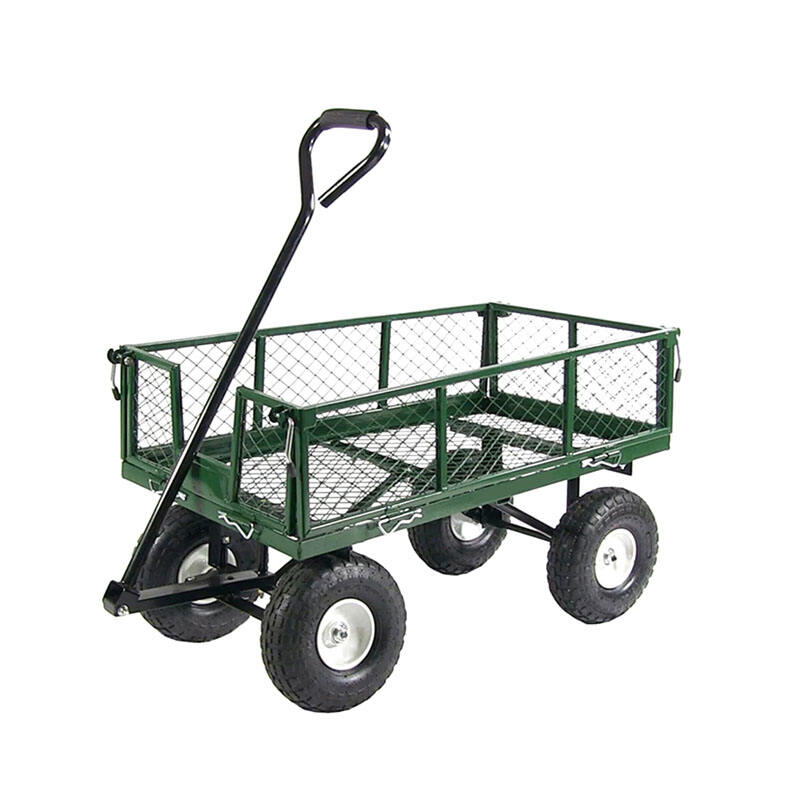
Welding quality directly impacts the load-bearing capacity, durability under stress, and overall lifespan of any platform hand truck trolley. Manufacturing facilities in different countries employ varying welding standards, techniques, and quality control protocols, making it essential for importers to establish clear evaluation criteria during the sourcing phase. This evaluation process should begin during factory audits, continue through pre-shipment inspections, and extend into receiving quality checks. By implementing the proper inspection methodology and understanding the technical characteristics of superior weld joints, businesses can significantly reduce the risk of receiving substandard equipment that fails to meet operational demands or safety regulations in their target markets.
Understanding Critical Welding Points on Platform Hand Truck Structures
Primary Load-Bearing Weld Locations
The structural integrity of a platform hand truck trolley depends heavily on specific weld joints that bear the majority of operational stress. The connection between the platform deck and the main frame represents the most critical welding zone, as this junction transfers the entire loaded weight to the chassis structure. When evaluating imports, inspectors must pay particular attention to the weld quality at these frame-to-deck attachment points, examining both the weld bead continuity and penetration depth. Insufficient penetration at these joints can lead to catastrophic failure when the trolley carries loads approaching its rated capacity.
Handle attachment welds constitute another high-stress area requiring thorough examination. The forces applied during pushing, pulling, and maneuvering concentrate at the points where the handle assembly connects to the trolley frame. Quality welds in these locations must demonstrate full fusion between base metals with consistent bead appearance and no visible gaps or undercuts. Importers should request detailed photographs or conduct in-person inspections of these specific areas before approving production runs, as handle failures create immediate safety risks for operators.
Wheel mounting bracket welds experience constant dynamic loading during operation, making them particularly vulnerable to fatigue failure if welding quality is inadequate. Each platform hand truck trolley typically has four wheel mounting points that must withstand not only vertical loads but also lateral forces during turning and uneven floor surfaces. Examination of these welds should include verification of proper joint preparation, adequate weld size relative to the bracket thickness, and absence of stress concentrators such as sharp weld toes or surface porosity that could initiate crack propagation.
Secondary Structural Weld Assessment
While primary load-bearing welds receive the most attention, secondary structural connections also contribute to overall trolley performance and longevity. Cross-bracing welds, side rail attachments, and reinforcement gusset connections may not carry direct operational loads but provide essential rigidity and distribute forces throughout the frame structure. During import evaluation, these secondary welds should be assessed for consistency with primary welds in terms of technique, appearance, and quality standards. Inconsistent welding quality across different areas of the same unit often indicates inadequate quality control procedures at the manufacturing facility.
The platform hand truck trolley often includes optional accessories such as mesh sides, push bars, or cargo retention features that attach through welded connections. Although these components may seem ancillary, their weld quality impacts both functionality and safety. Poorly welded accessories can detach during use, creating hazards or rendering the trolley unsuitable for its intended purpose. Importers should establish clear specifications requiring all welds, regardless of location or perceived importance, to meet the same baseline quality standards throughout the entire unit.
Visual Inspection Techniques for Weld Quality Assessment
Surface Appearance and Weld Bead Characteristics
Visual inspection represents the first and most accessible method for evaluating welding quality on imported equipment. A properly executed weld on a platform hand truck trolley displays a uniform bead with consistent width and ripple pattern across its entire length. The weld surface should exhibit a smooth, regular appearance without excessive spatter, irregular ripples, or abrupt changes in bead geometry. Trained inspectors can identify numerous defects through careful visual examination, including undercut, overlap, excessive reinforcement, and incomplete fusion indicators visible at the weld toes.
Color variation in the weld zone and heat-affected area provides valuable information about welding parameters and potential quality issues. Excessive heat input creates wide discoloration zones and may indicate over-welding that compromises base metal properties through excessive grain growth. Conversely, insufficient heat produces narrow, inconsistent beads with poor fusion characteristics. When evaluating platform hand truck trolley imports, inspectors should document weld colors ranging from straw yellow to dark blue, as extreme oxidation colors suggest problematic welding conditions that may affect joint strength and corrosion resistance.
Spatter distribution around weld areas reveals information about welding technique quality and equipment settings. While some spatter is inevitable in certain welding processes, excessive spatter adhering to surfaces near the weld indicates poor parameter control or inadequate shielding gas coverage. Beyond aesthetic concerns, heavy spatter can create stress concentration points and interfere with protective coatings applied after welding. Quality manufacturers minimize spatter through proper equipment maintenance and skilled operator technique, making spatter assessment a useful indicator of overall manufacturing discipline.
Identifying Common Weld Defects Through Visual Methods
Porosity manifests as small cavities or voids visible on the weld surface, typically caused by gas entrapment during the welding process. On a platform hand truck trolley, surface porosity indicates potential internal voids that reduce effective weld cross-section and create stress concentrators. Importers should establish acceptance criteria specifying maximum allowable porosity size and frequency, as minor scattered porosity may be acceptable while clustered or large pores require rejection. Visual detection of porosity requires adequate lighting and sometimes magnification to identify small defects that could compromise structural integrity.
Cracks represent the most serious weld defect and can occur in multiple forms including longitudinal cracks running along the weld centerline, transverse cracks crossing the weld, or crater cracks at weld termination points. Any visible cracking in welds on platform hand truck trolley components should result in immediate rejection, as cracks propagate under load and lead to sudden structural failure. Pre-shipment inspection protocols must include systematic crack detection procedures using appropriate lighting angles and, when necessary, dye penetrant testing to reveal fine surface-breaking defects not readily visible under normal lighting conditions.
Undercut appears as a groove or depression at the weld toe where the base metal has melted away, creating a notch effect that significantly reduces fatigue strength. This defect is particularly concerning in high-stress areas of the platform hand truck trolley structure. Visual identification of undercut requires inspection from multiple angles, as the defect may be subtle when viewed perpendicular to the weld but becomes obvious when examined along the joint line. Acceptance standards should specify maximum allowable undercut depth, typically not exceeding a small fraction of the base metal thickness depending on the application criticality.
Dimensional and Mechanical Verification Methods
Weld Size and Geometry Measurements
Proper weld sizing ensures adequate strength without excessive material usage or distortion. For fillet welds commonly used in platform hand truck trolley construction, leg length measurement using weld gauges verifies that the specified weld size has been achieved. Undersized welds compromise load-carrying capacity, while oversized welds waste material and may introduce excessive distortion or residual stresses. Import quality control procedures should include random sampling with gauge measurements to confirm weld dimensions match engineering specifications, particularly at critical structural connections.
Throat thickness represents the shortest distance from the weld root to the face and determines the effective load-bearing area of fillet welds. Although direct throat measurement on completed welds is challenging, calculated throat thickness can be verified through leg length measurements on properly proportioned welds. When evaluating platform hand truck trolley imports, procurement teams should ensure that manufacturers provide weld specifications indicating required throat dimensions and that inspection procedures include verification that actual welds meet these requirements. Inadequate throat thickness directly translates to reduced strength and potential failure under rated loads.
Weld profile assessment examines the contour and reinforcement characteristics of completed welds. Excessive convexity in fillet welds creates stress concentration at the weld toes, while excessive concavity reduces effective throat thickness. Proper weld profiles on platform hand truck trolley structures should exhibit slightly convex to flat configurations that optimize stress distribution. Profile gauges and templates allow inspectors to quickly assess whether weld contours fall within acceptable ranges, providing a practical field inspection method during factory audits or pre-shipment verification.
Non-Destructive Testing Applications
Dye penetrant testing offers a cost-effective method for detecting surface-breaking defects invisible to unaided visual inspection. This technique involves applying colored or fluorescent penetrant liquid to cleaned weld surfaces, allowing capillary action to draw the penetrant into any surface cracks or porosity, then removing excess penetrant and applying developer to reveal defect indications. For critical welds on platform hand truck trolley imports, dye penetrant testing provides valuable confirmation that no fine cracks exist at high-stress locations such as handle attachments or wheel mounting brackets.
Magnetic particle inspection serves as another surface and near-surface defect detection method applicable to ferromagnetic materials commonly used in platform hand truck trolley construction. This technique magnetizes the component and applies fine magnetic particles that accumulate at locations where defects disrupt the magnetic field, creating visible indications of cracks, lack of fusion, or other discontinuities. Import quality programs for high-value or safety-critical applications may specify magnetic particle testing of primary structural welds as part of pre-shipment inspection protocols.
Ultrasonic testing can assess internal weld quality and detect subsurface defects not visible through surface examination methods. While generally reserved for critical applications due to equipment cost and operator skill requirements, ultrasonic inspection of platform hand truck trolley welds may be warranted for specialized heavy-duty models or applications where weld failure could create serious safety consequences. This technique measures ultrasonic wave reflections to identify internal porosity, lack of fusion, or incomplete penetration, providing comprehensive quality assurance for critical structural joints.
Manufacturing Process and Quality Control Verification
Welding Procedure Specifications and Qualification
Reputable manufacturers develop and document Welding Procedure Specifications that define all essential variables for producing quality welds, including welding process, base metal specifications, filler metal type, current settings, travel speed, and shielding gas composition. When sourcing platform hand truck trolley imports, buyers should request copies of WPS documents covering the specific joints and materials used in the product construction. The existence of formal, qualified welding procedures indicates a manufacturer's commitment to consistent quality and provides the technical foundation for reproducible weld quality across production runs.
Welder qualification and certification programs ensure that personnel performing critical welds possess demonstrated competency in the required techniques. International standards such as those published by the American Welding Society or International Organization for Standardization establish qualification requirements based on welding process, material type, joint configuration, and position. Importers evaluating platform hand truck trolley suppliers should verify that welders working on their products hold current qualifications appropriate to the welding tasks being performed, as qualified welders consistently produce superior results compared to untrained operators.
Quality control documentation systems track welding parameters, operator identification, and inspection results for each production batch or individual unit. Manufacturers with mature quality programs maintain records linking specific platform hand truck trolley serial numbers to the welders who performed the work, the welding procedures used, and the inspection results obtained. This traceability enables rapid identification and containment of quality issues if problems emerge after shipment, and demonstrates the manufacturer's commitment to accountability and continuous improvement in welding operations.
In-Process Inspection and Control Measures
Effective quality control occurs during production rather than relying solely on final inspection to catch defects. Progressive inspection checkpoints throughout platform hand truck trolley assembly allow early detection of welding problems before significant value-added work continues on defective units. Manufacturers should implement inspection stages after completion of critical welds, verifying quality before proceeding to subsequent operations such as surface preparation or coating application. Import buyers benefit from understanding the supplier's in-process inspection protocols and may request documentation showing inspection frequency and defect detection rates.
Fixture and jigging systems significantly influence welding quality by maintaining proper joint alignment and fit-up during the welding process. Well-designed fixtures ensure consistent gap dimensions, minimize distortion, and allow welders to work in favorable positions that promote quality. When conducting factory audits, procurement teams should evaluate the tooling and fixtures used in platform hand truck trolley production, as inadequate fixturing often correlates with inconsistent weld quality, excessive rework rates, and dimensional variation between units. Investment in proper production tooling indicates manufacturer commitment to quality and efficiency.
Statistical process control applications in welding operations track key variables and identify trends before they result in defective products. Progressive manufacturers monitor parameters such as welding current, voltage, travel speed, and defect rates, using control charts to detect process drift and trigger corrective action. Importers sourcing platform hand truck trolley products should inquire about the supplier's use of SPC methods in welding operations, as this data-driven approach to quality management substantially reduces variation and improves overall consistency compared to inspection-dependent quality systems.
Establishing Import Specifications and Acceptance Criteria
Defining Quality Standards in Purchase Orders
Clear, unambiguous specifications in purchase documentation eliminate confusion about quality expectations and provide enforceable criteria for acceptance decisions. Import contracts for platform hand truck trolley products should reference specific welding standards such as AWS D1.1 Structural Welding Code or ISO 5817 Welding Quality Levels, along with the acceptance level required for the application. Rather than generic statements about good quality or industry standard, effective specifications cite recognized standards and explicitly state the quality level required, enabling objective assessment and reducing disputes over acceptance.
Sampling plans and inspection intensity should be defined in advance based on order quantity, product criticality, and supplier history. A new supplier manufacturing platform hand truck trolley units for the first time may require 100 percent inspection of critical welds on initial shipments, while established suppliers with proven quality records might be subject to reduced inspection frequencies based on statistical sampling plans. The purchase agreement should clearly specify inspection quantities, methods, and the disposition of nonconforming products, including provisions for sorting, rework, or rejection of entire shipments if quality proves unacceptable.
Documentation requirements establish what records the supplier must provide to demonstrate compliance with welding quality specifications. Comprehensive import programs require manufacturers to submit welding procedure specifications, welder qualification certificates, inspection reports, and material certifications along with each shipment. For platform hand truck trolley imports, this documentation provides traceability and evidence that specified quality requirements have been met, while also creating accountability that motivates suppliers to maintain consistent standards knowing that performance is documented and subject to audit.
Pre-Shipment Inspection Protocols
Third-party inspection services provide independent verification of welding quality before goods leave the manufacturer's facility, reducing the risk of discovering problems after international shipment. Professional inspection agencies employ trained personnel who can assess platform hand truck trolley weld quality using visual methods, dimensional verification, and non-destructive testing as specified in the purchase agreement. Pre-shipment inspection reports document findings with photographs and measurements, providing buyers with objective evidence of quality status and supporting acceptance decisions based on actual product condition rather than supplier claims.
Inspection timing coordination ensures that quality assessment occurs when meaningful corrective action remains possible. Conducting final inspection only after the entire order has been completed, packaged, and prepared for shipment limits options for addressing defects, as extensive rework or replacement may be impractical. Effective import programs schedule interim inspections during platform hand truck trolley production, allowing detection of systematic welding problems early enough to implement corrections on remaining units. This phased approach protects buyers from receiving large quantities of defective products while giving suppliers opportunity to correct process issues.
Inspection checklist development based on product-specific failure modes ensures that assessment activities focus on the characteristics most critical to performance and safety. Generic welding inspection checklists may overlook particular concerns relevant to platform hand truck trolley applications, such as weld quality at specific high-stress attachment points or proper execution of joints subjected to fatigue loading. Customized inspection protocols address the unique requirements of the product category and application, providing more effective quality assurance than standardized inspection approaches that may miss application-specific critical features.
FAQ
What welding standards should I specify for platform hand truck trolley imports?
For general commercial platform hand truck trolley applications, specifying AWS D1.1 Structural Welding Code or ISO 5817 welding quality level C provides appropriate quality expectations balancing cost and performance. These standards establish clear criteria for acceptable and rejectable weld defects, weld sizing requirements, and visual inspection procedures recognized internationally. For heavy-duty industrial applications or specialized equipment, you may specify higher quality levels such as ISO 5817 level B, which imposes tighter limits on allowable imperfections. The key is explicitly referencing these standards in purchase documentation and confirming that suppliers understand and can meet the specified requirements before placing orders.
Can I rely on manufacturer self-inspection for welding quality verification?
While reputable manufacturers maintain internal quality control systems, relying exclusively on supplier self-inspection creates inherent conflicts of interest and eliminates independent verification. Best practice for platform hand truck trolley imports combines manufacturer inspection as the primary quality control with periodic third-party verification to validate effectiveness. New suppliers or those with limited track records warrant more intensive independent inspection, potentially including third-party presence during production for critical shipments. Established suppliers with documented quality performance may be subject to reduced independent inspection frequency, but periodic verification audits remain advisable to ensure continued compliance with specifications and detect any process degradation over time.
What are the most common welding defects found in imported platform hand truck trolleys?
The most frequently encountered welding quality issues in imported material handling equipment include insufficient weld size particularly at critical load-bearing connections, excessive porosity caused by inadequate shielding gas coverage or contaminated base metal, and undercut at weld toes that reduces fatigue strength. Incomplete fusion between weld metal and base metal represents another common but sometimes difficult-to-detect defect that seriously compromises joint strength. Many of these defects result from inadequate welder training, poor process control, or insufficient quality oversight rather than inherent material or design problems. Implementing clear specifications, conducting pre-production qualification, and maintaining inspection vigilance effectively addresses these common quality issues.
How can I assess a supplier's welding capability before placing a large order?
Conduct a comprehensive factory audit examining welder qualifications, welding procedure documentation, production fixtures and tooling, and quality control systems before committing to significant platform hand truck trolley purchases. Request sample units for destructive testing, which may include sectioning welds to examine internal quality, performing strength tests on welded joints, and conducting thorough dimensional and visual inspection. Review quality records from previous production runs to assess defect rates, corrective action effectiveness, and consistency over time. Consider placing a small pilot order with intensive inspection before proceeding to larger volumes, as actual production performance provides the most reliable indicator of supplier capability and commitment to meeting your quality requirements.
Table of Contents
- Understanding Critical Welding Points on Platform Hand Truck Structures
- Visual Inspection Techniques for Weld Quality Assessment
- Dimensional and Mechanical Verification Methods
- Manufacturing Process and Quality Control Verification
- Establishing Import Specifications and Acceptance Criteria
-
FAQ
- What welding standards should I specify for platform hand truck trolley imports?
- Can I rely on manufacturer self-inspection for welding quality verification?
- What are the most common welding defects found in imported platform hand truck trolleys?
- How can I assess a supplier's welding capability before placing a large order?

