 EN
EN


Procurement teams face a critical decision when selecting a flatbed hand trolley for their operations: choosing the right wheel type directly impacts equipment longevity, workplace safety, and operational efficiency. Unlike consumer-grade carts, industrial flatbed hand trolleys must withstand demanding environments, diverse flooring surfaces, and continuous load cycles. The wheel assembly represents a critical interface between the trolley structure and the working surface, making wheel assessment a fundamental component of the procurement evaluation process. Professional buyers recognize that inadequate wheel specification leads to premature equipment failure, increased maintenance costs, worker fatigue, and potential safety incidents that extend far beyond the initial purchase price.
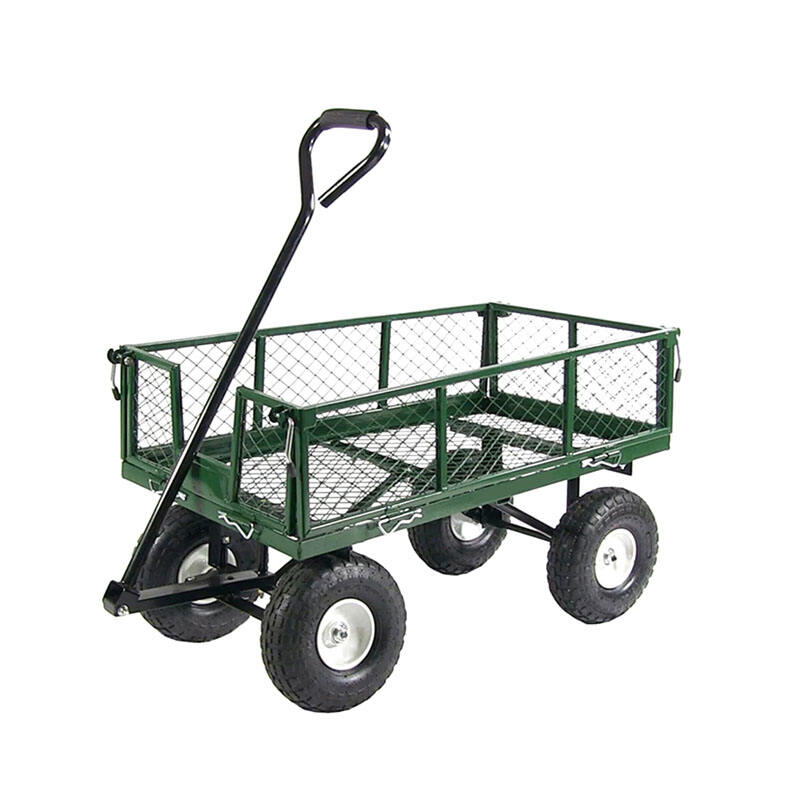
Effective procurement teams employ a systematic methodology when evaluating wheel configurations on flatbed hand trolleys, examining material composition, load capacity alignment, bearing quality, mounting hardware durability, and operational environment compatibility. This assessment process requires technical knowledge of wheel engineering principles combined with practical understanding of specific workplace conditions. The selection methodology extends beyond simple diameter measurements to encompass tread hardness analysis, hub construction evaluation, rolling resistance calculation, and maintenance requirement forecasting. Organizations that implement rigorous wheel assessment protocols experience measurably lower total cost of ownership, reduced equipment replacement frequency, and improved worker satisfaction compared to those making selections based solely on initial purchase price or superficial product specifications.
Understanding Wheel Material Composition and Performance Characteristics
Polyurethane Wheel Properties and Application Suitability
Procurement specialists evaluate polyurethane wheels as a premium option for flatbed hand trolley applications requiring floor protection combined with load-bearing capability. Polyurethane formulations offer durometer ratings typically ranging from 70A to 95A on the Shore hardness scale, with softer compounds providing superior floor protection and shock absorption while harder formulations deliver enhanced load capacity and wear resistance. The chemical bonding between polyurethane treads and metal cores creates a permanent assembly that eliminates delamination failures common in cheaper wheel constructions. Professional buyers assess polyurethane wheels based on specific performance metrics including abrasion resistance measured through ASTM D4060 testing, compression set characteristics that indicate long-term performance under constant loading, and rebound resilience that affects rolling efficiency and operator effort requirements.
The procurement evaluation process for polyurethane-wheeled flatbed hand trolleys examines manufacturing quality indicators such as uniform tread thickness, absence of voids or inconsistencies in the polyurethane casting, and proper core integration. High-quality polyurethane wheels demonstrate minimal chunk-out resistance when encountering debris or surface irregularities, maintain dimensional stability across temperature variations from minus 40 to plus 180 degrees Fahrenheit, and resist degradation from exposure to oils, solvents, and cleaning chemicals commonly present in industrial environments. Assessment teams conduct side-by-side comparisons of polyurethane formulations from different manufacturers, recognizing that proprietary compound variations significantly impact real-world performance despite similar nominal specifications.
Rubber Wheel Evaluation for Specific Operating Conditions
Rubber wheels on flatbed hand trolleys present distinct performance characteristics that procurement teams evaluate against specific operational requirements. Natural rubber compounds offer exceptional shock absorption and quiet operation, making them suitable for noise-sensitive environments and applications involving fragile cargo. Synthetic rubber formulations including styrene-butadiene rubber and nitrile rubber provide enhanced chemical resistance and temperature stability compared to natural rubber alternatives. Procurement specialists assess rubber wheel construction methodology, distinguishing between solid rubber wheels that offer puncture immunity and pneumatic designs that provide superior cushioning for delicate loads. The evaluation process examines tread pattern design, recognizing that smooth treads minimize floor marking while patterned surfaces enhance traction on inclined surfaces or slippery conditions.
Professional buyers implementing rubber wheel assessment protocols for flatbed hand trolleys measure specific performance parameters including compression deflection under rated loads, rolling resistance coefficients that impact operator effort, and expected service life under documented usage patterns. Rubber hardness testing using durometer instruments provides objective comparison data, with typical industrial applications requiring hardness values between 60 and 80 Shore A depending on load requirements and floor surface characteristics. The procurement evaluation distinguishes between molded-on rubber wheels featuring permanent tread-to-core bonding and pressed-on designs where rubber sleeves fit over metal hubs, with the former construction offering superior durability and the latter providing field replaceability advantages in specific maintenance scenarios.
Nylon and Phenolic Wheel Assessment Methodology
Hard wheel materials including nylon and phenolic compounds receive careful procurement evaluation for flatbed hand trolley applications prioritizing maximum load capacity and minimal rolling resistance over floor protection considerations. Nylon wheels manufactured through injection molding processes offer exceptional strength-to-weight ratios, chemical resistance, and the ability to operate in temperature extremes that would degrade elastomeric wheel materials. Procurement teams assess nylon wheel specifications including glass fiber reinforcement percentages that enhance rigidity and load capacity, precision bearing races molded directly into wheel hubs that reduce friction and improve longevity, and surface finish quality that affects both rolling smoothness and floor interaction characteristics.
Phenolic resin wheels represent the premium segment of hard wheel options for flatbed hand trolleys operating in extreme environments including high-temperature applications, exposure to aggressive chemicals, and situations requiring absolute dimensional stability under sustained loading. The procurement assessment process for phenolic wheels examines laminate construction quality, evaluating the uniformity of fabric or paper reinforcement layers within the resin matrix and verifying proper curing that ensures maximum mechanical properties. Professional buyers recognize that phenolic wheels command price premiums justified by exceptional load ratings often exceeding 1000 pounds per wheel, resistance to temperatures up to 400 degrees Fahrenheit, and operational lifespans measured in decades rather than years under appropriate application conditions.
Load Capacity Verification and Safety Factor Analysis
Calculating Dynamic Load Requirements for Flatbed Hand Trolleys
Procurement teams assess wheel load capacity specifications on flatbed hand trolleys by distinguishing between static load ratings and dynamic capacity requirements that account for real-world operational stresses. Static load capacity represents the maximum weight a stationary wheel can support without permanent deformation, while dynamic ratings reflect performance under rolling conditions including shock loads from floor transitions, lateral forces during turning maneuvers, and impact stresses from sudden stops or starts. Professional buyers calculate actual wheel loading by dividing total flatbed hand trolley capacity by the number of wheels, then applying safety factors typically ranging from 1.5 to 2.5 depending on operational severity and liability exposure considerations.
The assessment methodology examines manufacturer testing protocols used to establish load ratings, evaluating whether specifications derive from actual physical testing or theoretical calculations that may not account for material fatigue, bearing degradation, and mounting hardware stress concentration. Procurement specialists conducting rigorous wheel evaluations request documentation of testing standards compliance including results from sustained load testing over extended periods, impact resistance validation, and failure mode analysis that identifies weakest system components. Organizations specifying flatbed hand trolleys for critical applications implement verification testing programs where sample units undergo accelerated lifecycle protocols simulating years of operational stress within compressed timeframes, providing empirical validation of manufacturer claims before fleet-wide procurement commitments.
Wheel Diameter Impact on Load Distribution and Maneuverability
Professional procurement teams evaluate wheel diameter specifications on flatbed hand trolleys recognizing the engineering trade-offs between rolling efficiency, obstacle clearance capability, and overall equipment height. Larger diameter wheels reduce rolling resistance by decreasing the contact patch deformation with each revolution, enabling operators to move heavy loads with less effort while simultaneously improving the trolley's ability to traverse floor joints, expansion gaps, and minor surface irregularities. The assessment process calculates the relationship between wheel diameter and maximum negotiable obstacle height, applying the general principle that wheels can traverse obstacles approximately 25 percent of their diameter without requiring excessive operator force or risking load instability.
Diameter selection methodology for flatbed hand trolley wheels balances performance advantages against practical constraints including deck height requirements, storage space limitations, and cost considerations that increase proportionally with wheel size. Procurement specifications typically range from four-inch diameter wheels for compact, lightweight applications to ten-inch or larger wheels for heavy-capacity units operating in challenging environments. The evaluation examines aspect ratios between wheel diameter and tread width, recognizing that optimal configurations maintain width-to-diameter ratios preventing excessive side loading on bearings while providing adequate stability during loaded operation across uneven surfaces or during turning maneuvers.
Bearing Quality Assessment and Maintenance Implications
Bearing assemblies within flatbed hand trolley wheels receive critical procurement scrutiny as these components directly determine rolling efficiency, operational lifespan, and maintenance burden. Professional buyers distinguish between plain bronze bushings offering simplicity and corrosion resistance, precision ball bearings providing superior efficiency and load capacity, and sealed roller bearings delivering maximum durability in contaminated environments. The assessment methodology examines bearing shielding or sealing effectiveness, recognizing that unprotected bearings rapidly accumulate debris leading to increased rolling resistance, premature wear, and eventual catastrophic failure requiring complete wheel replacement.
Procurement teams conducting thorough flatbed hand trolley wheel evaluations request specific bearing specifications including ABEC precision ratings for ball bearings, radial and thrust load capacities for bearing assemblies, and documented maintenance intervals or sealed-for-life designations that impact total cost of ownership calculations. The analysis examines bearing installation methodology, evaluating whether bearings press directly into wheel cores providing optimal load transfer or utilize separate housings that may introduce alignment variables affecting performance. Organizations implementing preventive maintenance programs for material handling equipment assess bearing replaceability, comparing wheels with field-serviceable bearing assemblies against sealed units requiring complete wheel replacement upon bearing failure, with selection decisions based on labor availability, technical capabilities, and equipment utilization intensity.
Mounting Hardware Configuration and Structural Integration
Swivel Caster Mechanism Evaluation for Directional Control
Procurement specialists assess swivel caster assemblies on flatbed hand trolley designs, recognizing these mechanisms enable directional changes while introducing potential failure points requiring careful evaluation. High-quality swivel casters feature precision-machined kingpins operating within race assemblies manufactured to tight tolerances, minimizing play that causes wobbling, reduces directional control, and accelerates wear. The evaluation process examines swivel offset distance, measuring the horizontal space between the kingpin centerline and wheel contact patch, with proper offset specifications ensuring smooth rotation initiation while preventing excessive trail that increases turning resistance and causes wheel scrubbing during directional changes.
Professional buyers conducting flatbed hand trolley wheel assessments evaluate swivel caster bearing configurations, comparing single-row ball bearing designs suitable for light-duty applications against dual-raceway or tapered roller bearing assemblies required for heavy-capacity equipment. The procurement methodology examines swivel lock mechanisms when specified, testing engagement reliability, holding force adequacy, and operator accessibility during typical workflows. Assessment teams evaluate caster housing materials and construction methods, distinguishing between stamped steel assemblies suitable for cost-sensitive applications, welded steel fabrications offering enhanced durability, and forged or cast iron housings providing maximum strength for demanding industrial environments where flatbed hand trolleys encounter rough handling and heavy loads.
Rigid Wheel Mounting Analysis and Stability Considerations
Rigid wheel mounting configurations on flatbed hand trolleys receive procurement evaluation focused on structural integrity, alignment precision, and load transfer efficiency. Fixed wheel assemblies eliminate swivel complexity while providing directional stability and simplified mechanical design that reduces potential failure modes. Professional buyers assess rigid wheel axle mounting methods, comparing designs utilizing threaded axles with lock nuts, pressed-in axle pins, and bolt-through configurations that offer different performance characteristics regarding installation ease, bearing preload consistency, and field serviceability.
The procurement assessment examines frame attachment methodology for rigid wheel assemblies on flatbed hand trolleys, evaluating welded mounting brackets for permanent installation strength against bolted connections offering modularity and repair advantages. Structural analysis verifies adequate material thickness in mounting zones, proper reinforcement around bolt holes preventing stress concentration failures, and geometric configurations distributing loads efficiently across frame members. Organizations specifying heavy-capacity flatbed hand trolleys implement finite element analysis or physical load testing protocols verifying that wheel mounting structures maintain integrity under maximum rated loads with appropriate safety margins preventing catastrophic failures that could result in injuries, product damage, or operational disruptions.
Wheel Tread Width Selection and Stability Optimization
Tread width specifications on flatbed hand trolley wheels undergo procurement evaluation balancing stability enhancement against increased rolling resistance and cost implications. Wider treads distribute loads across larger floor contact areas, reducing point loading that may damage delicate floor surfaces while simultaneously improving equipment stability by lowering the effective center of gravity and increasing resistance to tipping during loaded operation on inclined surfaces. Professional buyers calculate optimal tread width specifications based on maximum load configurations, typical cargo distribution patterns, and floor surface characteristics, recognizing that excessive width increases material costs and rolling resistance without proportional performance benefits.
The assessment methodology examines tread profile geometry on flatbed hand trolley wheels, evaluating crowned surfaces that reduce edge loading and floor marking against flat profiles maximizing contact area and load distribution. Procurement teams analyzing applications involving frequent directional changes assess how tread width affects scrubbing during turns, with wider treads increasing lateral drag that may accelerate wear and require greater operator effort. The evaluation considers environmental factors including presence of debris that may accumulate between dual-wheel configurations, floor surface conditions affecting optimal contact patch dimensions, and maintenance access requirements for cleaning and inspection activities throughout equipment service life.
Environmental Compatibility and Operational Context Assessment
Floor Surface Interaction Analysis for Optimal Wheel Selection
Procurement teams evaluate wheel material compatibility with specific floor surfaces present in operational environments where flatbed hand trolleys will function. Concrete floors with varied finish qualities including smooth troweled surfaces, broom-finished textures, and aggregate exposures require different wheel hardness specifications optimizing the balance between traction, wear resistance, and floor marking prevention. Professional buyers assess whether facilities feature painted or sealed concrete requiring non-marking wheel compounds, polished concrete demanding harder wheel materials preventing tread degradation, or untreated surfaces accepting standard wheel formulations without special compatibility considerations.
The evaluation methodology for flatbed hand trolley wheels examines performance on specialized flooring materials including epoxy coatings, vinyl composition tile, hardwood surfaces, and metal plates or grating common in industrial settings. Each surface type presents distinct interaction characteristics affecting wheel material selection, with softer elastomeric compounds protecting delicate floors but potentially degrading on rough surfaces, while hard wheels preserve integrity on abrasive floors but may damage softer materials or create unacceptable noise levels. Procurement specifications document actual floor conditions through site surveys measuring surface roughness, contamination levels, and maintenance protocols that affect wheel longevity and performance consistency throughout equipment operational life.
Temperature Range Verification and Material Stability
Temperature exposure ranges receive critical procurement assessment when specifying wheels for flatbed hand trolleys operating in environments with thermal extremes. Cold storage facilities, outdoor applications in northern climates, and freezer operations require wheel materials maintaining flexibility and impact resistance at temperatures reaching minus 40 degrees Fahrenheit or lower, eliminating standard rubber compounds that become brittle and crack under cold exposure. Professional buyers evaluate manufacturer specifications documenting verified operating temperature ranges derived from actual material testing rather than theoretical projections, requesting validation data showing maintained load capacity, rolling resistance stability, and structural integrity across specified thermal ranges.
High-temperature applications including foundries, commercial kitchens, and manufacturing processes with elevated ambient conditions require flatbed hand trolley wheels resisting thermal degradation, dimensional changes, and mechanical property loss. The procurement evaluation examines heat deflection temperatures for thermoplastic wheel materials, continuous operating temperature limits for elastomeric compounds, and thermal cycling durability indicating performance stability through repeated heating and cooling cycles. Assessment protocols verify that wheel-to-hub bonding systems maintain integrity under thermal stress, bearing lubricants retain effectiveness across temperature ranges, and mounting hardware materials prevent loosening from differential thermal expansion between components.
Chemical Resistance Requirements and Contamination Exposure
Procurement teams assess chemical resistance characteristics when specifying wheels for flatbed hand trolleys operating in environments with exposure to oils, solvents, cleaning agents, or process chemicals. Standard polyurethane formulations demonstrate excellent resistance to petroleum-based oils and hydraulic fluids while showing vulnerability to strong acids, bases, and certain organic solvents requiring specialized compound selections. Professional buyers conducting chemical compatibility evaluations reference material resistance charts correlating specific wheel compounds with documented chemicals present in operational environments, verifying compatibility through actual exposure testing when applications involve unusual or aggressive chemical combinations.
The assessment methodology examines contamination scenarios including floor cleaning protocols using aggressive detergents, incidental spills during material handling operations, and atmospheric exposure to chemical vapors or mists in manufacturing environments. Procurement specifications for flatbed hand trolleys in chemical processing, pharmaceutical manufacturing, or laboratory settings require documentation of wheel material resistance to specific compounds including concentrations and exposure durations reflecting actual operational conditions. Organizations implementing comprehensive chemical compatibility assessment programs maintain test protocols where sample wheels undergo accelerated exposure testing simulating years of chemical contact within compressed timeframes, providing empirical validation of manufacturer resistance claims before equipment deployment in critical applications where wheel failure could result in contamination incidents, safety hazards, or costly operational disruptions.
Total Cost of Ownership Calculation and Long-Term Value Assessment
Service Life Projection and Replacement Cycle Planning
Professional procurement teams evaluate flatbed hand trolley wheel specifications within comprehensive total cost of ownership frameworks extending beyond initial purchase price to encompass expected service life, maintenance requirements, and replacement costs. Service life projections require analyzing manufacturer warranty terms, documented field performance data from similar applications, and material properties indicating wear resistance and fatigue characteristics. The assessment methodology calculates cost per operating hour by dividing total wheel system cost including installation labor by projected service hours derived from expected daily usage intensity, operational environment severity, and maintenance program effectiveness.
Procurement specialists implementing lifecycle cost analysis for flatbed hand trolley wheels establish performance benchmarks measuring actual service life against manufacturer projections, creating organizational databases documenting wheel performance across different operational contexts. This empirical approach enables data-driven selection decisions replacing subjective assessments with quantified performance metrics. The evaluation examines failure mode patterns determining whether wheels typically wear gradually allowing planned replacement or fail catastrophically requiring emergency repairs that disrupt operations and incur premium replacement part costs. Organizations managing large flatbed hand trolley fleets implement condition monitoring programs using wear indicators, routine inspection protocols, and predictive replacement scheduling that minimizes unplanned downtime while optimizing component utilization.
Maintenance Burden Analysis and Operational Impact
Maintenance requirements for flatbed hand trolley wheels receive procurement evaluation recognizing that ongoing service needs significantly impact total ownership costs beyond initial equipment investment. Assessment protocols examine bearing lubrication requirements, documenting specified intervals, lubricant types, and labor hours required for proper maintenance execution. Professional buyers compare sealed bearing designs eliminating lubrication needs against serviceable configurations requiring periodic maintenance, calculating long-term cost implications based on labor rates, lubricant expenses, and organizational maintenance capabilities. The evaluation considers whether maintenance requirements align with existing preventive maintenance programs or necessitate separate scheduling adding administrative complexity and potential compliance challenges.
The procurement methodology assesses wheel inspection requirements including frequency specifications, technical skill levels needed for proper evaluation, and diagnostic tools required for condition assessment. Organizations implementing comprehensive maintenance programs for material handling equipment evaluate whether flatbed hand trolley wheel designs incorporate wear indicators, inspection access features, or other characteristics simplifying condition monitoring and reducing inspection labor requirements. The analysis examines parts availability for consumable components including bearings, axle hardware, and wheels themselves, verifying that replacement parts remain readily available through established distribution channels preventing extended equipment downtime awaiting component delivery. Assessment teams evaluate standardization opportunities where common wheel specifications across multiple equipment types reduce parts inventory complexity, simplify maintenance training requirements, and enable volume purchasing advantages reducing per-unit replacement costs.
Performance Consistency and User Satisfaction Metrics
Procurement teams assess flatbed hand trolley wheel specifications based on expected performance consistency throughout service life, recognizing that gradual degradation affecting rolling resistance, noise generation, and maneuverability impacts worker productivity and satisfaction. Professional buyers evaluate whether wheel designs maintain consistent performance characteristics as tread wear progresses or exhibit performance deterioration requiring premature replacement despite remaining structural integrity. The assessment methodology examines noise generation patterns throughout wheel lifecycle, particularly important in noise-sensitive environments where gradual increases in rolling noise from bearing wear or tread degradation create workplace quality issues even when wheels retain load capacity and structural soundness.
User satisfaction metrics including operator feedback, equipment utilization rates, and maintenance complaint frequency provide procurement teams with qualitative performance indicators complementing quantitative specifications. Organizations implementing comprehensive equipment assessment programs conduct operator surveys measuring satisfaction with flatbed hand trolley maneuverability, effort requirements, and reliability perceptions, correlating user feedback with specific wheel configurations and operational contexts. This user-centered evaluation approach identifies wheel characteristics most valued by actual equipment operators, enabling procurement specifications reflecting real-world priorities rather than purely technical parameters. The analysis recognizes that wheel selections optimizing operator experience yield indirect benefits including reduced worker fatigue, improved safety outcomes, enhanced productivity, and decreased workers' compensation exposure that justify premium wheel specifications through comprehensive value delivery beyond simple mechanical performance metrics.
FAQ
What wheel diameter should procurement teams specify for standard warehouse flatbed hand trolleys?
Professional procurement teams typically specify wheel diameters between six and eight inches for standard warehouse flatbed hand trolleys, as this range provides optimal balance between rolling efficiency, obstacle clearance capability, and deck height management. Six-inch wheels suit applications prioritizing low deck height and compact storage while eight-inch configurations enhance rolling ease across floor joints and minor surface irregularities common in warehouse environments. The selection should account for typical load weights, floor surface quality, and frequency of transitions between different surface types, with heavier loads and rougher floors benefiting from larger diameter specifications despite increased equipment cost.
How do procurement specialists verify load capacity claims for flatbed hand trolley wheels?
Verification of load capacity specifications requires procurement teams to request documentation of testing protocols manufacturers employed to establish ratings, including identification of applicable industry standards such as ASTM or ISO specifications governing wheel testing methodology. Professional buyers examine whether load ratings derive from actual physical testing or theoretical calculations, with preference for specifications validated through sustained load testing over extended periods. Organizations making critical procurement decisions often implement independent verification testing where sample wheels undergo loading protocols simulating actual operational conditions, providing empirical validation before committing to fleet-wide equipment purchases. The assessment should include safety factor analysis ensuring specified wheels provide adequate capacity margins above maximum anticipated loads accounting for dynamic stress factors inherent in real-world material handling operations.
What indicators suggest inadequate wheel selection on existing flatbed hand trolley equipment?
Procurement teams identifying wheel specification inadequacies on existing flatbed hand trolleys observe multiple performance indicators including premature tread wear patterns suggesting material incompatibility with floor surfaces, bearing failures occurring before expected service life indicating insufficient load capacity or inadequate sealing, and operator complaints regarding excessive pushing effort signaling rolling resistance issues. Additional indicators include floor marking or damage from inappropriately hard wheel compounds, noise generation exceeding acceptable workplace levels, and frequent wheel replacements suggesting misalignment between specified components and actual operational demands. These observations inform future procurement decisions by identifying specific performance deficiencies requiring correction through alternative wheel specifications, and organizations should document failure patterns systematically creating empirical databases guiding evidence-based selection criteria for replacement equipment purchases.
Should procurement teams prioritize lowest initial cost or long-term value when selecting flatbed hand trolley wheels?
Professional procurement methodology prioritizes total cost of ownership over initial purchase price when selecting wheels for flatbed hand trolleys, as premium wheel specifications delivering extended service life, reduced maintenance requirements, and consistent performance typically provide superior long-term value despite higher upfront investment. The assessment should calculate lifecycle costs including expected replacement frequency, maintenance labor requirements, operational efficiency impacts, and potential safety incident exposure, enabling informed decisions based on comprehensive value analysis rather than isolated price comparisons. Organizations managing material handling equipment fleets benefit from establishing standardized wheel specifications optimized for total cost of ownership, accepting initial cost premiums justified through reduced long-term expenses, improved equipment reliability, and enhanced worker satisfaction contributing to overall operational effectiveness and competitive advantage in cost-sensitive business environments.
Table of Contents
- Understanding Wheel Material Composition and Performance Characteristics
- Load Capacity Verification and Safety Factor Analysis
- Mounting Hardware Configuration and Structural Integration
- Environmental Compatibility and Operational Context Assessment
- Total Cost of Ownership Calculation and Long-Term Value Assessment
-
FAQ
- What wheel diameter should procurement teams specify for standard warehouse flatbed hand trolleys?
- How do procurement specialists verify load capacity claims for flatbed hand trolley wheels?
- What indicators suggest inadequate wheel selection on existing flatbed hand trolley equipment?
- Should procurement teams prioritize lowest initial cost or long-term value when selecting flatbed hand trolley wheels?

