 EN
EN

When purchasing industrial workstations, understanding load capacity stands as one of the most critical decision factors that directly impacts safety, productivity, and long-term operational costs. Buyers evaluating a heavy duty steel work table must navigate technical specifications, safety margins, structural engineering principles, and real-world application requirements to ensure their investment supports both current workflows and future expansion. The process extends far beyond simply reading a manufacturer's weight rating, requiring careful analysis of how loads distribute across surfaces, how frame geometry influences stability, and how material properties respond under sustained stress conditions.
Professional procurement teams recognize that load rating evaluation represents a multidimensional assessment combining engineering data, application-specific testing scenarios, and operational risk management. A thorough evaluation process examines static versus dynamic loading conditions, investigates structural reinforcement patterns, considers surface area distribution effects, and validates manufacturer claims through certification review and real-world performance evidence. This comprehensive approach ensures that the selected heavy duty steel work table not only meets stated capacity requirements but delivers reliable performance across the full spectrum of intended industrial applications without premature failure or safety compromises.
Understanding Load Rating Fundamentals and Classification Systems
Static Load Capacity Versus Dynamic Load Ratings
The distinction between static and dynamic load ratings forms the foundation of proper capacity evaluation for any heavy duty steel work table. Static load capacity refers to the maximum weight the table can support when loads remain stationary and evenly distributed across the work surface. This measurement assumes no impact forces, vibration, or movement occurs during operation. Manufacturing facilities typically encounter static loading scenarios when using work tables for assembly stations, inspection areas, or storage of heavy components between production cycles. Buyers must recognize that static ratings represent ideal conditions rarely encountered in actual industrial environments.
Dynamic load capacity accounts for forces generated during active work processes including equipment vibration, material handling impacts, worker movement, and tool operation. These ratings typically range from fifty to seventy percent of static capacity due to the additional stress factors introduced by motion and variable force application. When evaluating a heavy duty steel work table for machine mounting, powered equipment operation, or high-intensity fabrication work, dynamic ratings provide more realistic performance indicators. Procurement professionals should request both rating types and select tables based on whichever condition predominates in their specific application environment.
Uniform Distributed Load Standards and Point Load Considerations
Load rating specifications typically assume uniform distribution across the entire work surface, a condition that simplifies engineering calculations but rarely reflects actual usage patterns. Uniform distributed load (UDL) ratings indicate the total weight capacity when mass spreads evenly across every square inch of the table top. This standardized approach allows meaningful comparison between different heavy duty steel work table models but may overestimate real-world performance when concentrated loads exist. Buyers must understand that placing equivalent total weight in a small area creates exponentially higher stress than the same weight distributed uniformly.
Point load capacity addresses concentrated weight scenarios where heavy equipment, vises, presses, or dense material containers occupy limited surface areas. These concentrated forces create localized stress points that can exceed material yield strength even when total weight remains well below the UDL rating. Advanced buyers evaluate heavy duty steel work table designs for reinforcement patterns, gusset placement, and cross-member spacing that enhance point load resistance. Tables intended for machine mounting or heavy tool usage should feature reinforced zones, thicker gauge steel in high-stress areas, and support structures aligned beneath expected load concentration points.
Safety Factor Integration in Load Rating Calculations
Responsible manufacturers incorporate safety factors into published load ratings to account for material variability, manufacturing tolerances, and unpredictable operating conditions. A safety factor represents the ratio between the actual failure threshold and the published capacity rating. Engineering standards typically require safety factors ranging from 2:1 to 4:1 depending on application risk levels and regulatory requirements. When evaluating a heavy duty steel work table, buyers should inquire about the specific safety factor applied and verify that it aligns with industry standards for their operational category.
Conservative buyers often apply additional internal safety margins beyond manufacturer specifications, particularly for critical applications involving expensive equipment or personnel safety concerns. This practice involves selecting tables with published capacities significantly exceeding calculated maximum loads, creating redundant protection against unexpected overload scenarios. Industrial facilities handling hazardous materials or operating in regulated industries may implement organizational policies requiring specific safety factor minimums regardless of manufacturer recommendations. Understanding how safety factors influence load ratings enables procurement teams to make informed decisions balancing cost considerations against operational risk tolerance.
Structural Design Elements That Influence Load Performance
Frame Geometry and Load Distribution Efficiency
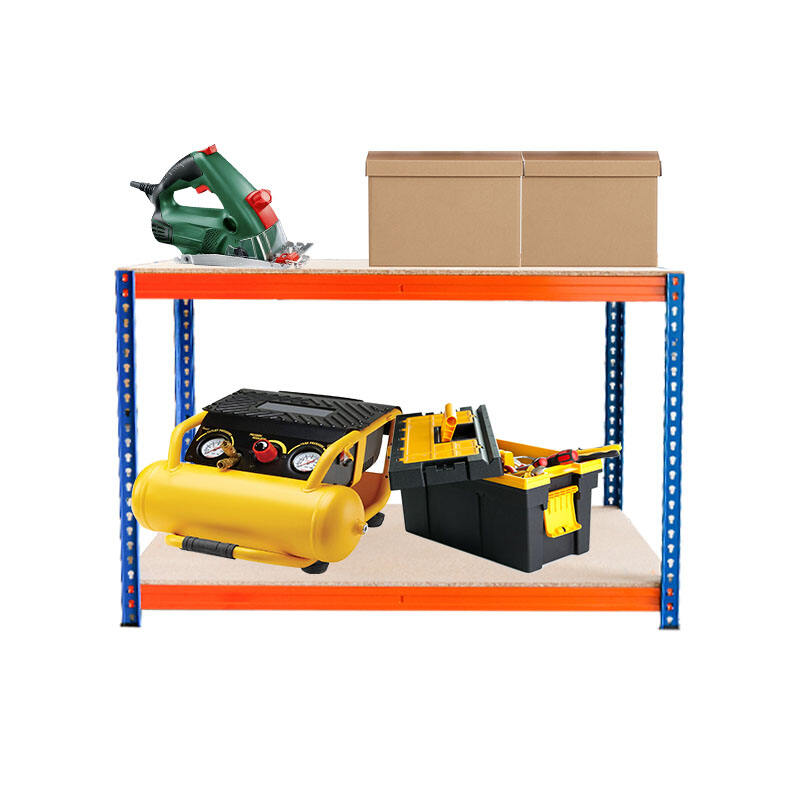
The geometric configuration of a heavy duty steel work table frame fundamentally determines how effectively it transfers loads from the work surface to the floor without excessive deflection or structural failure. Vertical leg placement, horizontal support spacing, and diagonal bracing patterns all contribute to overall load distribution efficiency. Tables with legs positioned at corners only may exhibit dangerous center deflection under heavy loads, while designs incorporating mid-span support legs dramatically improve capacity by reducing unsupported span distances. Buyers should evaluate frame geometry relative to their specific loading patterns rather than relying solely on published capacity numbers.
Cross-member and stretcher arrangements create critical horizontal support networks that prevent lateral movement and enhance vertical load resistance. Heavy duty steel work table designs featuring multiple parallel cross-members spaced at regular intervals distribute concentrated loads more effectively than minimalist frames with limited horizontal elements. The depth and placement of these support components directly correlate with deflection characteristics under load. Professional buyers examine detailed dimensional drawings to verify adequate support structure exists beneath anticipated load zones, ensuring the frame geometry aligns with their operational requirements.
Material Specifications and Yield Strength Properties
Steel grade selection profoundly impacts the load-bearing performance of any heavy duty steel work table, with higher strength alloys supporting greater loads in equivalent structural configurations. Common commercial grades include mild steel, high-strength low-alloy (HSLA) steel, and specialized industrial grades with enhanced yield strength characteristics. Yield strength represents the stress level at which steel begins permanent deformation, establishing a critical performance threshold that determines safe operating loads. Buyers should request specific material certifications documenting the steel grades used in frame components, leg assemblies, and work surfaces.
Material thickness specifications work in conjunction with steel grade to determine overall structural capacity, with gauge measurements indicating sheet metal thickness and dimensional measurements specifying tube and angle iron sizes. A heavy duty steel work table constructed from fourteen-gauge sheet steel exhibits fundamentally different load characteristics than one using eleven-gauge material, despite identical dimensions. Similarly, frame members fabricated from two-inch square tubing with one-eighth-inch wall thickness provide substantially different load resistance than those using one-sixteenth-inch walls. Comprehensive evaluation requires examining both material grade and dimensional specifications to accurately assess true load capacity.
Weld Quality and Joint Integrity Assessment
Structural joints represent potential failure points in any heavy duty steel work table, making weld quality a critical factor in load rating reliability. Continuous full-penetration welds create stronger joints than intermittent tack welds or spot welds, particularly under dynamic loading conditions. Manufacturing processes employing robotic welding typically achieve more consistent quality than manual welding, though skilled craftsmen can produce superior results in custom fabrication scenarios. Buyers should investigate welding standards applied during manufacturing and request information about quality control procedures verifying weld integrity.
Joint reinforcement techniques including gussets, brackets, and doubled material at connection points significantly enhance load capacity at critical stress locations. These reinforcements prevent stress concentration that could initiate crack propagation or joint separation under heavy loads. When evaluating heavy duty steel work table options, examination of leg-to-frame connections, cross-member attachments, and surface-to-frame joints reveals the level of engineering sophistication applied to the design. Tables intended for maximum load capacity should exhibit visible reinforcement at all major structural joints, indicating manufacturer commitment to performance rather than cost minimization.
Testing Methodologies and Certification Standards
Industry Standard Load Testing Protocols
Reputable manufacturers subject heavy duty steel work table designs to rigorous load testing procedures that simulate real-world operating conditions and verify published capacity claims. Standard testing protocols typically involve applying loads exceeding rated capacity by specific safety margins, maintaining these loads for extended periods, and measuring deflection characteristics throughout the test cycle. Progressive load testing incrementally increases weight until structural failure occurs, establishing empirical failure thresholds that inform safety factor calculations. Buyers should request detailed test reports documenting the specific protocols applied and the results achieved during validation testing.
Deflection measurement under load provides critical performance data beyond simple pass-fail capacity verification. Excessive deflection, even when well below failure thresholds, can compromise precision work, damage mounted equipment, or create safety hazards. Industry standards typically specify maximum acceptable deflection ratios relative to span distances, commonly expressed as fractions like L/240 or L/360 where L represents the unsupported span length. A heavy duty steel work table exhibiting minimal deflection under rated loads demonstrates superior structural rigidity compared to designs that sag noticeably despite technically supporting the specified weight.
Third-Party Certification and Compliance Verification
Independent certification from recognized testing organizations provides objective validation of manufacturer claims regarding load capacity and structural performance. Organizations such as ANSI, BIFMA, and ISO establish standardized testing criteria and performance benchmarks that enable meaningful comparison across different heavy duty steel work table products. Third-party certification indicates the manufacturer invested in professional validation rather than relying solely on internal testing or theoretical calculations. Buyers operating in regulated industries or safety-critical applications should prioritize certified products that demonstrate compliance with relevant standards.
Compliance documentation should specify the exact standards applied during testing and clearly identify which performance criteria the table satisfies. Generic certification claims without specific standard references provide limited assurance of actual performance capabilities. Professional procurement teams verify certification authenticity through direct contact with certifying organizations when substantial investments or critical applications are involved. Understanding the certification landscape for heavy duty steel work table products enables buyers to distinguish between superficial marketing claims and legitimate third-party validation of structural performance.
Field Performance Validation and User Feedback Analysis
While laboratory testing provides controlled performance data, real-world field performance often reveals capabilities and limitations not apparent during standardized evaluations. Experienced buyers seek operational feedback from existing users working in similar applications to understand how heavy duty steel work table products perform under actual industrial conditions. Field reports may uncover issues such as premature fatigue in high-cycle applications, unexpected deflection under specific load configurations, or superior durability compared to laboratory predictions. This empirical evidence complements technical specifications and testing data to create comprehensive performance assessments.
Long-term durability under sustained loading represents a critical performance dimension often overlooked during initial procurement evaluations. A heavy duty steel work table that maintains structural integrity and load capacity after years of continuous use demonstrates superior engineering and manufacturing quality compared to products exhibiting degradation, loosening joints, or increasing deflection over time. Buyers should investigate manufacturer track records, seek references from long-term users, and consider warranty provisions that indicate confidence in sustained performance. Field-validated reliability often justifies premium pricing compared to products with uncertain long-term performance characteristics.
Application-Specific Evaluation Criteria and Decision Frameworks
Matching Load Requirements to Operational Scenarios
Effective load rating evaluation begins with comprehensive analysis of actual operational requirements rather than generic capacity assumptions. Buyers must document maximum anticipated loads including equipment weight, material quantities, tool masses, and potential accumulation scenarios where multiple heavy items could simultaneously occupy the work surface. This analysis should account for worst-case loading conditions rather than typical scenarios, ensuring adequate capacity exists for peak demand situations. A heavy duty steel work table selected based on average loads may fail catastrophically when unusual circumstances create temporary overload conditions.
Different industrial applications impose vastly different loading characteristics that influence appropriate capacity selection. Precision assembly operations may require rigid surfaces with minimal deflection even under moderate loads, while heavy fabrication shops prioritize maximum weight capacity over deflection specifications. Manufacturing cells incorporating powered equipment generate dynamic loads and vibration that demand higher safety margins than static storage applications. Buyers should categorize their specific use case and select heavy duty steel work table models engineered for similar operational profiles rather than applying generic capacity ratings across diverse applications.
Future Capacity Planning and Expansion Considerations
Strategic procurement decisions incorporate anticipated future requirements beyond immediate operational needs, recognizing that industrial facilities evolve and expand over time. Selecting a heavy duty steel work table with excess capacity relative to current requirements provides operational flexibility for process changes, equipment upgrades, or product line expansions without necessitating furniture replacement. This forward-looking approach often proves more cost-effective than purchasing minimally adequate capacity that becomes obsolete when operations intensify or diversify. Experienced buyers budget for growth potential by specifying capacities twenty to thirty percent above calculated current maximums.
Modular design features and reconfiguration capabilities enhance long-term value by allowing capacity adjustments without complete replacement. Some heavy duty steel work table systems support additional reinforcement installation, supplementary leg additions, or surface upgrades that increase load ratings as requirements evolve. Buyers should evaluate not only initial capacity specifications but also the potential for future enhancement when comparing alternative products. Tables designed with expansion capability deliver superior lifecycle value compared to fixed-capacity designs that offer no upgrade path when operational demands increase.
Cost-Benefit Analysis of Capacity Versus Investment
Load capacity and price typically exhibit direct correlation, with higher-capacity heavy duty steel work table models commanding premium pricing due to increased material content, more sophisticated engineering, and enhanced manufacturing processes. Buyers must balance capacity requirements against budget constraints while recognizing that inadequate capacity creates false economy through premature failure, safety incidents, or operational limitations. A comprehensive cost-benefit analysis considers total ownership costs including replacement frequency, downtime expenses, safety risk exposure, and productivity impacts rather than focusing exclusively on initial purchase price.
Value optimization involves identifying the capacity threshold that satisfies operational requirements without paying for unnecessary excess that provides no practical benefit. A heavy duty steel work table rated for five thousand pounds delivers no advantage over a three thousand pound model in applications where maximum loads never exceed two thousand pounds, making the premium pricing economically unjustifiable. Conversely, saving several hundred dollars by selecting marginally adequate capacity creates substantial risk exposure if occasional overload scenarios occur. Sophisticated buyers establish clear capacity requirements through operational analysis then seek the most cost-effective solution meeting those specifications with appropriate safety margins.
FAQ
What is the difference between static and dynamic load ratings for a heavy duty steel work table?
Static load ratings indicate the maximum weight a heavy duty steel work table can support when loads remain stationary and evenly distributed, representing ideal testing conditions. Dynamic load ratings account for forces generated during active work including vibration, impact, and movement, typically ranging from fifty to seventy percent of static capacity. Buyers should select tables based on dynamic ratings when applications involve powered equipment, material handling, or high-intensity fabrication work, as these conditions create additional stress beyond simple static weight support.
How do safety factors affect published load capacity specifications?
Safety factors represent the ratio between actual structural failure thresholds and published capacity ratings, typically ranging from 2:1 to 4:1 in industrial furniture applications. Manufacturers incorporate these margins to account for material variability, manufacturing tolerances, and unpredictable operating conditions. When evaluating a heavy duty steel work table, buyers should verify the specific safety factor applied and consider whether additional internal margins are appropriate for their risk tolerance level, particularly in safety-critical applications or regulated industries where operational failures could have serious consequences.
Why does frame geometry matter as much as total load rating?
Frame geometry determines how effectively a heavy duty steel work table distributes loads from the work surface to the floor, directly influencing deflection characteristics and structural stability. Tables with legs positioned only at corners may exhibit dangerous center sagging under heavy loads, while designs incorporating mid-span support legs dramatically improve capacity by reducing unsupported distances. Buyers should evaluate leg placement, cross-member spacing, and bracing patterns relative to their specific loading scenarios rather than relying solely on published capacity numbers that assume ideal uniform distribution.
What certifications should buyers require when purchasing industrial work tables?
Professional buyers should seek third-party certification from recognized organizations such as ANSI, BIFMA, or ISO that verify compliance with established performance standards through independent testing. Certification documentation should specify the exact standards applied and clearly identify which performance criteria the heavy duty steel work table satisfies. Generic certification claims without specific standard references provide limited assurance, while legitimate third-party validation demonstrates manufacturer commitment to verifiable quality. Buyers in regulated industries or safety-critical applications should prioritize certified products and verify certification authenticity through direct contact with certifying organizations when substantial investments are involved.
Table of Contents
- Understanding Load Rating Fundamentals and Classification Systems
- Structural Design Elements That Influence Load Performance
- Testing Methodologies and Certification Standards
- Application-Specific Evaluation Criteria and Decision Frameworks
-
FAQ
- What is the difference between static and dynamic load ratings for a heavy duty steel work table?
- How do safety factors affect published load capacity specifications?
- Why does frame geometry matter as much as total load rating?
- What certifications should buyers require when purchasing industrial work tables?

